
A former military officer and aviation security expert, John Ojikutu, has criticised Nigerian aviation authorities for focusing more on revenue generation and commercial projects instead of improving aviation safety and security across the country’s airports.
Ojikutu, who is the Chief Executive Officer of Centurion Aviation Security Limited, accused agencies in the aviation sector of neglecting critical responsibilities such as airport security, operational infrastructure, and safety regulation.
The agencies mentioned include the Federal Airports Authority of Nigeria, the Nigerian Civil Aviation Authority, and the Nigerian Airspace Management Agency.
According to him, too much attention is being placed on commercial activities and projects that generate money, while the core areas that ensure safe aviation operations are being ignored.
In a statement released on Wednesday, Ojikutu expressed concern about the government’s spending pattern in the aviation industry. He questioned why authorities had struggled for over two decades to pay former workers of the defunct Nigeria Airways, despite spending huge amounts of money supporting private airlines.
He explained that about N36 billion owed to former Nigeria Airways employees and retirees has remained unpaid for 26 years. At the same time, he claimed that more than N300 billion had been spent within the last ten years as intervention funds for private airline operators.
The retired Group Captain also alleged that several airlines that benefited from the intervention funds still owe government aviation agencies over N100 billion.
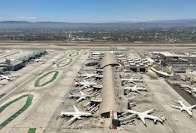
Ojikutu further criticised the Federal Government’s proposed N712 billion spending on the reconstruction of airport passenger terminals. According to him, terminal buildings are non-aeronautical projects that could easily be managed by private investors instead of relying heavily on public funds.
He pointed to the concession of the Murtala Muhammed Airport Terminal Two to Bi-Courtney Aviation Services in 2004 as an example of successful private sector involvement in airport operations.
The aviation expert argued that allowing more private participation in non-aeronautical services would reduce unnecessary government borrowing and improve operational efficiency in the sector.
He also raised concerns about the lack of publicly available reports regarding aviation security audits conducted by the International Civil Aviation Organization. According to him, Nigeria often focuses more on publicising safety ratings while paying less attention to aviation security compliance.
Ojikutu added that concerns had also been raised by the International Air Transport Association over the high cost of airport charges in Nigeria. He said these charges could increase insurance costs for foreign airlines operating in the country.
The aviation consultant warned that if authorities continue to prioritise commercial interests over safety and security, Nigerian airports could face serious structural and operational risks in the future.
As part of his recommendations, Ojikutu advised the Federal Government to immediately settle the outstanding payments owed to former Nigeria Airways workers and retirees.
He also urged the government to focus investments on critical aviation infrastructure, especially airport security and safety systems. In addition, he recommended the concession or privatisation of non-aeronautical airport services to capable private firms such as NAHCO and SAHCO.
According to him, Nigeria’s aviation industry cannot compete globally if authorities continue to focus mainly on generating revenue instead of strengthening safety and security standards.