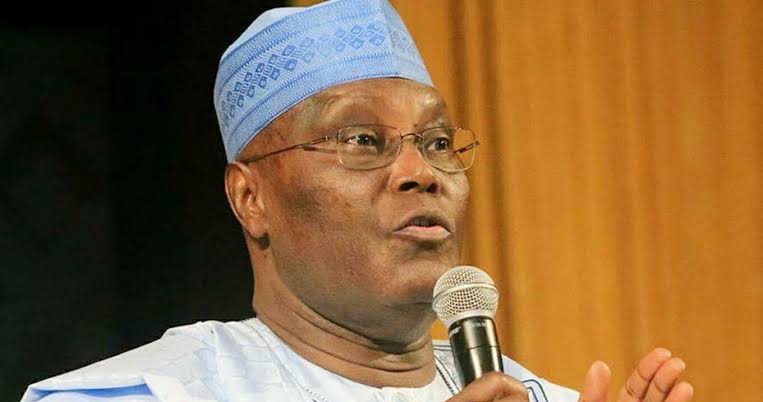

Former Vice President and African Democratic Congress (ADC) presidential candidate, Atiku Abubakar, has criticised the Federal Government’s decision to approve a uniform ₦50,000 registration fee for candidates sitting for the West African Senior School Certificate Examination (WASSCE) and the National Examinations Council (NECO) examinations, warning that the policy could significantly reduce access to education for low-income households.
The revised fee, scheduled to take effect from 2027, represents an 82% increase from the current ₦27,500 registration charge. Students intending to sit both WAEC and NECO examinations could pay as much as ₦100,000 in examination fees alone, excluding additional administrative charges imposed by schools.
The Federal Ministry of Education approved the new fee structure through a memorandum dated June 18, 2026, signed by the Director of Senior Secondary Education, Adeniji Ibrahim, on behalf of the Minister of Education. According to the ministry, the decision followed a March 31 meeting involving examination bodies and education officials, where both WAEC and NECO were directed to adopt a harmonised pricing framework.
The ministry’s Director of Press and Public Relations, Folasade Boriowo, confirmed that the upward review had received official approval.Reacting to the development, Atiku described the increase as “cruel” and “economically insensitive,” arguing that it comes at a time when millions of Nigerian households are struggling with persistent inflation, rising food prices, higher transport costs, elevated electricity tariffs and stagnant incomes.
In a statement issued by his Senior Special Assistant on Public Communication, Phrank Shaibu, the former vice president said education should remain a public investment rather than becoming an additional financial burden for struggling families.
“A government that genuinely believes in the future of its people does not erect financial barriers between children and education. It removes them,” Atiku said.
He warned that the higher examination fees could worsen Nigeria’s out-of-school children crisis by discouraging students from completing secondary education and qualifying for tertiary admission.
According to Atiku, estimates indicate that between 10.5 million and 15 million Nigerian children and young people remain outside the formal education system, making affordability a critical policy concern.
The ADC presidential candidate further argued that the fee adjustment could disproportionately affect students from poor and middle-income families, many of whom already struggle to meet tuition, transportation and other school-related expenses.
He also pointed to Nigeria’s existing university admission constraints, noting that although more than two million candidates seek admission annually, higher institutions collectively admit only between 500,000 and 700,000 students each year. Raising the cost of qualifying examinations, he said, risks creating another barrier before prospective students even reach the admission stage.
Atiku urged President Bola Ahmed Tinubu to reverse both the recently increased Unity Schools fees and the proposed ₦50,000 WAEC and NECO examination charge, while convening education stakeholders to develop a sustainable funding framework that protects access to public education without placing excessive financial pressure on families.
The National Association of Nigerian Students (NANS) has also opposed the fee increase, warning that it could make secondary school certification unaffordable for many households and widen educational inequality across the country.
For education stakeholders, the debate extends beyond examination costs. Analysts say the controversy underscores broader concerns about how Nigeria will finance its education sector while balancing rising operational costs with the need to keep learning accessible for millions of young people amid persistent economic pressures.