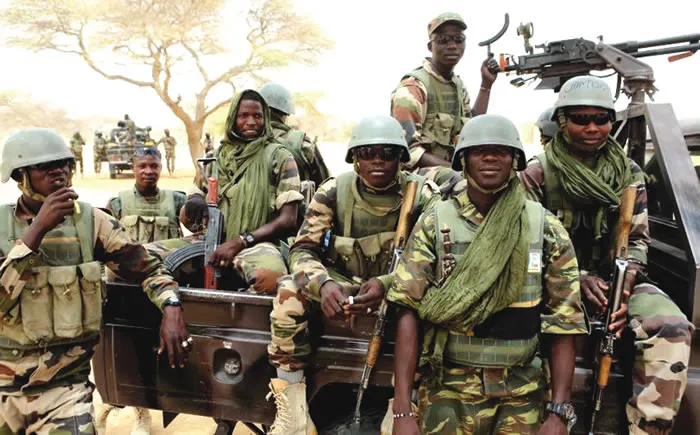

The Nigerian Army has issued a high-level assurance to traders at the Onitsha Main Market, pledging enhanced security measures to sustain the recent resurgence of Monday commercial activities in Anambra State. This commitment, delivered by the Commander of the 302 Artillery Regiment, Onitsha, follows Governor Chukwuma Soludo’s recent symbolic market visit aimed at dismantling the “sit-at-home” culture that has historically paralyzed the region’s economy. For the Nigerian economy, the Army’s involvement is a critical intervention designed to protect the Southeast’s most vital commercial artery, ensuring that the billions of Naira typically lost to enforced closures are reintegrated into the national GDP.
The economic consequence of a secure and fully operational Onitsha Main Market cannot be overstated, as it serves as a central clearinghouse for manufactured goods across West Africa. When security is guaranteed, it eliminates the “threat-induced” volatility that has forced many logistics firms to hike rates or bypass the region entirely on the first day of the workweek. By providing a visible deterrent against non-state actors, the military is effectively lowering the risk profile of the Southeast, which is essential for attracting the long-term capital investment needed to revitalize the region’s ailing industrial clusters.
Analytically, the Army’s assurance addresses a fundamental barrier to economic growth: the breakdown of the ease of doing business due to insecurity. Historically, the Monday shutdowns have disrupted the “just-in-time” supply chains used by pharmaceutical and textile importers in Onitsha, leading to artificial scarcities and price hikes in markets across Nigeria. A stabilized trading environment in Anambra allows for a more predictable flow of goods, which helps temper regional inflation and supports the Central Bank’s broader goals of price stability. Furthermore, the resumption of full-scale trading provides a much-needed boost to the state’s internally generated revenue (IGR), providing the fiscal buffers required for public infrastructure development.
The military’s presence also serves as a safeguard for the banking and financial services sector in Onitsha. With daily cash transactions in the market estimated in the billions, any disruption to the movement of value creates liquidity bottlenecks within the regional banking system. By ensuring that banks and cash-in-transit services can operate securely on Mondays, the Army is supporting the velocity of money a key metric for economic health. This security shield is vital for formalizing transactions that might otherwise move into the unregulated “underground” economy where they escape taxation and regulatory oversight.
However, the long-term economic outlook depends on the transition from military-led security to a sustainable, intelligence-driven policing model. While the Army’s assurance provides immediate confidence, businesses require the permanence of civil law and order to make significant expansion plans. The synergy between the 302 Artillery Regiment, the Nigeria Police, and local market vigilantes must be institutionalized to ensure that the cost of maintaining security does not become a permanent burden on the state’s budget or a hidden “tax” on the traders themselves.
Ultimately, the restoration of peace and productivity in Onitsha is a prerequisite for the success of the African Continental Free Trade Area (AfCFTA) within the Nigerian context. As a hub for cross-border trade with Cameroon, Niger, and Chad, Onitsha must function as a reliable and secure node in the continental trade network. The Nigerian Army’s commitment to protecting the market is a foundational step in re-establishing the Southeast as a safe haven for commerce, thereby fostering a more resilient and inclusive national economy.