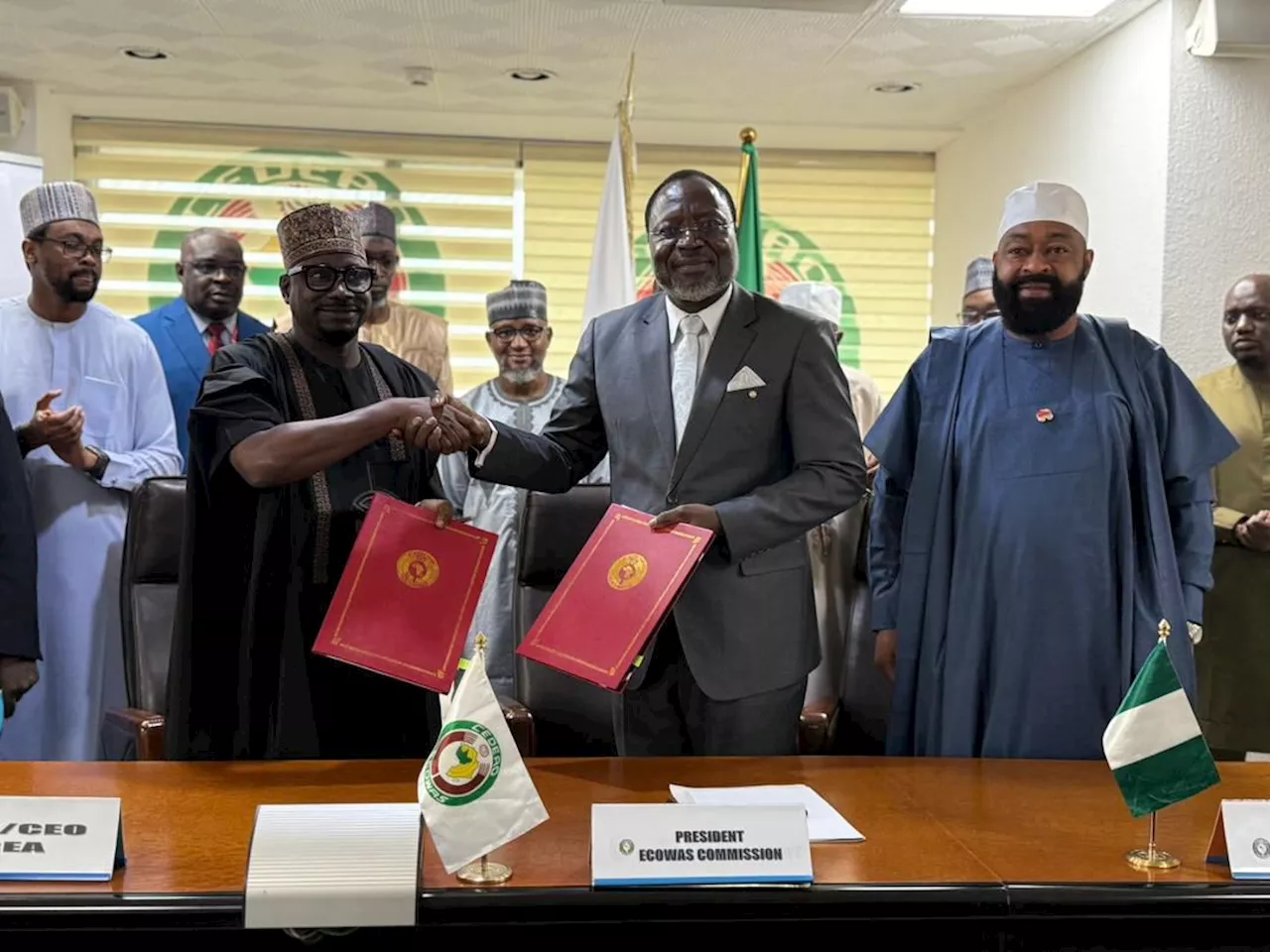

The Rural Electrification Agency (REA) has formalised a strategic partnership with the Economic Community of West African States (ECOWAS) Commission to deploy reliable solar power systems to selected public institutions in Nigeria. This collaboration is part of the Regional Off-Grid Electricity Access Project (ROGEAP), a World Bank-supported initiative designed to expand off-grid electrification across West Africa and the Sahel region.
Under the agreement announced in Abuja, ECOWAS will provide a $700,000 grant to fund solar photovoltaic (PV) installations at 15 public health and education facilities in the Federal Capital Territory, Niger State, and Nasarawa State.
The project marks a pilot phase of Nigeria’s participation in ROGEAP, with the REA designated as the technical and financial implementing agency. By delivering off-grid solar solutions, the initiative aims to reduce energy deficits in critical institutions that historically rely on diesel generators or limited grid supply.
“This partnership with ECOWAS reinforces Nigeria’s commitment to expanding reliable electricity access to critical public institutions,” said Dr. Abba Aliyu, Managing Director of the REA.
Improved power supply at public health centres and schools is essential for enhancing core service delivery in communities. Stable electricity can improve healthcare operations, support education technology needs, and reduce operational costs tied to fossil fuel use. These outcomes align with broader national development and energy transition goals.
ECOWAS officials also emphasised the regional significance of the project. “This pilot phase in Nigeria is a cornerstone of our regional strategy to eliminate energy poverty,” said the President of the ECOWAS Commission, Dr. Omar Touray. “By providing sustainable solar solutions to schools and clinics, we are not just lighting up buildings; we are powering the future of West Africa.”
Effective project execution will be supported by a dedicated Project Implementation Unit (PIU) established within the REA. The unit will work in coordination with the ROGEAP implementation team and an oversight steering committee to monitor progress, manage resources, and ensure accountability in the deployment of solar systems.
In parallel with the ECOWAS partnership, the REA signed a separate agreement with the Niger State Government to enable state-level collaboration and co-financing for selected project sites. The subnational arrangement is intended to strengthen institutional coordination and ensure that infrastructural upgrades reflect local priorities and operations.
Governor Mohammed Bago of Niger State noted that the initiative aligns with his administration’s infrastructure agenda, designed to deliver reliable electricity to rural health and educational facilities. His office indicated commitment to providing counterpart support and oversight to maximise the programme’s long-term impact.
The solar electrification scheme is expected to improve energy reliability at targeted facilities, cut fuel-based energy costs, and contribute to Nigeria’s ongoing energy transition. By embedding solar systems in public institutions, the project also supports national policies aimed at expanding clean energy adoption and narrowing the electricity access gap in underserved regions.
Overall, this $700,000 grant agreement signals a targeted, results-oriented approach to addressing persistent energy access challenges in Nigeria’s public sector. If effectively implemented, it could serve as a model for scaling decentralised renewable energy solutions in similar contexts.