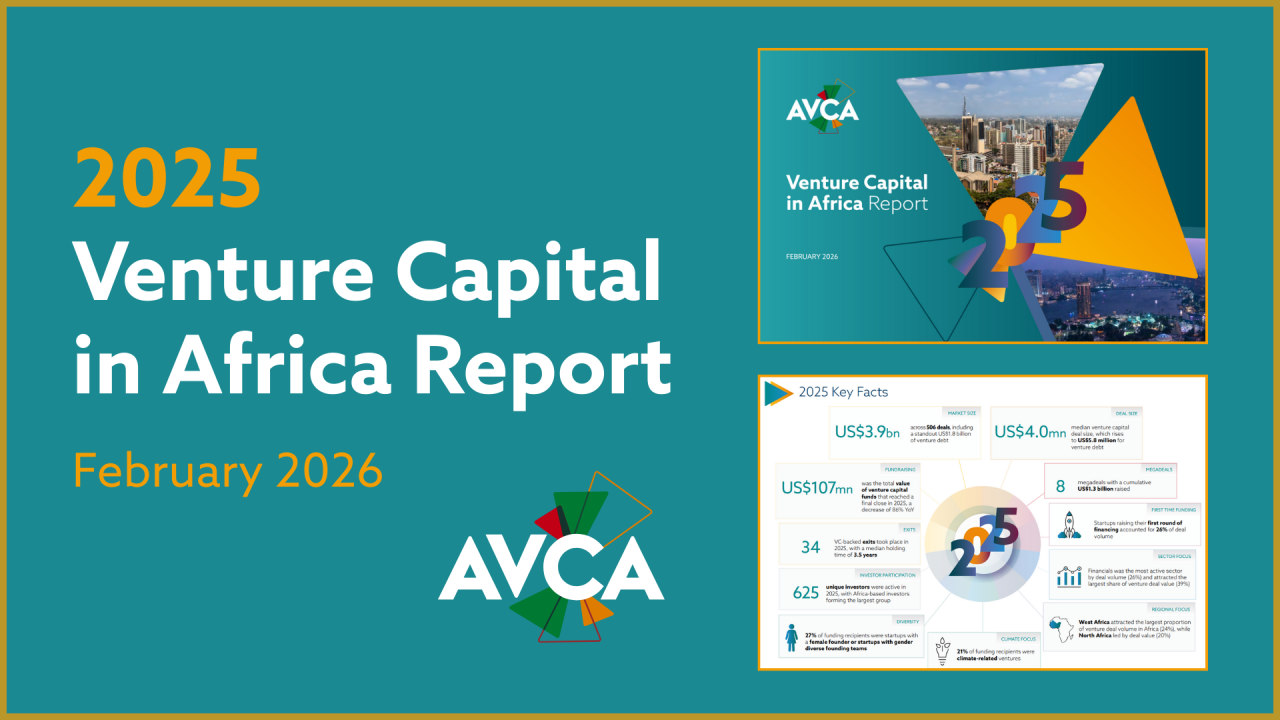

African startups attracted $3.9bn in funding across 506 deals in 2025, signalling renewed stability in the continent’s venture capital ecosystem after two years of global market correction.
The figures were released in the 2025 Venture Capital Activity in Africa report by the African Private Capital Association, which noted that although total capital deployed remains below previous peak cycles, deal activity held firm during the year. According to the report, deal volume increased by four per cent year on year, making Africa the only global region where venture activity did not decline. Early-stage funding showed particular strength, with both seed and early-stage median deal sizes reaching multi-year highs.
Venture activity in Africa showed surprising resilience over the past year, with total deal volume rising by four per cent year-on-year—making it the only region globally to avoid a downturn in startup funding. Activity at the seed and early-stage levels strengthened, and median deal sizes at both stages climbed to multi-year highs, signalling deeper investor confidence at entry even as capital deployment became more selective.
As the statement noted, “Deal volume rose four per cent year-on-year, making Africa the only global region where venture activity did not decline.”
The study also pointed to faster transitions from Seed to Series A, reflecting more efficient early-stage progression. At the top end of the market, eight megadeals collectively raised $1.3bn. These large transactions helped cushion a slowdown in late-stage equity deals, which fell to their lowest level since 2020.
Domestic investors are leading the scene
A notable development in 2025 was the growing role of domestic investors. African investors accounted for 45 per cent of total venture fund commitments, up sharply from an average of 23 per cent between 2022 and 2024. Corporates and African Development Finance Institutions drove much of this shift.
While overall participation by development finance institutions declined by 27 per cent, African DFIs made up 63 per cent of DFI capital deployed, marking a reversal from previous years dominated by international players. The report suggests that stronger local participation is helping reduce the ecosystem’s reliance on foreign capital.
The growing role of debt
Venture debt also emerged as a central financing tool. Total venture debt reached $1.8bn in 2025, nearly doubling from the previous year and extending a three-year growth streak. The instrument is increasingly used by growth-stage startups seeking to manage dilution and extend runway. East Africa accounted for more than two-thirds of the total regional deal value involving debt.
Exit activity hit a record 34 deals, up 31 per cent year on year, outpacing the one per cent growth recorded globally. North Africa led in exit volume, while Southern Africa recorded the highest exit value at $288m. Trade sales accounted for over 70 per cent of exit activity, and Africa-based buyers represented 54 per cent of total exits.
Commenting on the findings, AVCA Chief Executive Officer Abi Mustapha-Maduakor said, “The African venture capital ecosystem is recalibrating towards patient, structured, and locally anchored capital. The record-breaking domestic participation and exit activity we see shows that African investors are increasingly confident in backing homegrown businesses and achieving exits, providing strong validation of the ecosystem’s long-term investability.
“The priority now is to continue supporting the industry in diversifying its allocation pool to ensure adequate funding reaches the investors backing high-growth startups across the continent.”