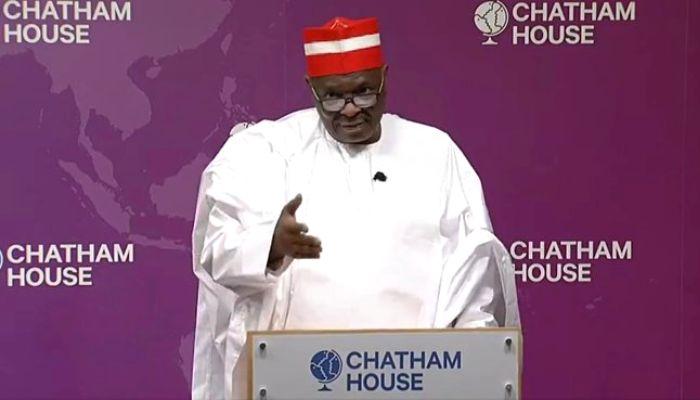

In a significant escalation of diplomatic and legislative pressure, a group of United States Republican lawmakers has introduced a bill seeking targeted sanctions against Rabiu Musa Kwankwaso, former Governor of Kano State, and major Fulani sociocultural organizations. The Nigeria Religious Freedom and Accountability Act of 2026 (H.R. 7457), unveiled on Tuesday, February 10, 2026, by Congressman Riley Moore and co-sponsored by Chris Smith, marks a sharp shift in Washington’s approach to Nigeria’s internal security and religious freedom challenges.
The economic consequence of this bill lies in its potential to trigger the Global Magnitsky Human Rights Accountability Act, which would lead to the freezing of U.S.-based assets and stringent visa bans. For the Nigerian political and business elite, this serves as a high-stakes warning: the “safe haven” of the U.S. financial system and international travel may soon be closed to those accused of complicity in communal violence. Furthermore, the bill directs the U.S. Secretary of State to determine if certain “Fulani-ethnic nomad militias” qualify as Foreign Terrorist Organizations (FTOs). Such a designation would carry profound macroeconomic risks, potentially complicating trade finance, foreign direct investment (FDI), and international banking relationships for entities linked to the listed groups.
Analytically, the bill is rooted in allegations of systemic religious persecution and “mass atrocities” against Christian communities in Nigeria’s Middle Belt. The sponsors specifically cited Kwankwaso’s historical role in implementing Sharia law during his tenure in Kano and referenced laws prescribing capital punishment for blasphemy. However, the New Nigeria Peoples Party (NNPP) has vehemently rejected the bill as “contrived” and selective, pointing to Kwankwaso’s history of selecting a Christian running mate and his efforts against Boko Haram as evidence of his religious tolerance. From a geopolitical perspective, the bill underscores the Trump administration’s 2025 redesignation of Nigeria as a “Country of Particular Concern” (CPC), signalling that the U.S. is now ready to use its “economic and security tools” to force accountability.
The impact on “Regional Security and Humanitarian Aid” is another vital dimension of the proposed law. Beyond punitive measures, the bill suggests that the United States provide expanded humanitarian assistance to affected communities in the Middle Belt, co-funded by the Nigerian government. This aid would be bypassed through “trusted civil society and faith-based organizations,” reflecting a growing distrust of state-led distribution channels. For the Nigerian government, this represents a “diplomatic affront,” as it challenges the state’s narrative that the violence is driven by land disputes and criminality rather than religious persecution.
Furthermore, the bill includes a strategic mandate to counter “hostile foreign exploitation,” specifically targeting illegal Chinese mining operations in Nigeria. This indicates that the U.S. is leveraging human rights legislation to address broader “Great Power” competition and resource security. For the Nigerian mining and energy sectors, this means that transparency is no longer just a local requirement but a prerequisite for avoiding the crosshairs of U.S. congressional oversight. The bill must now pass through committee reviews and votes in both chambers of the U.S. Congress before it can be signed into law.
The long-term economic outlook for Nigeria’s diplomatic relations hinges on how the federal government responds to this “naming and shaming” strategy. If the bill passes, it could lead to a “chilling effect” on Nigerian-American security cooperation and complicate the procurement of military hardware. As Nigeria seeks to maintain its status as Africa’s top investment destination, the threat of sanctions against high-profile national figures creates a “reputational risk” that could deter global capital. For now, the “Nigeria Religious Freedom and Accountability Act” serves as a sobering reminder that in the 2026 global economy, local human rights records have direct consequences for international financial access.