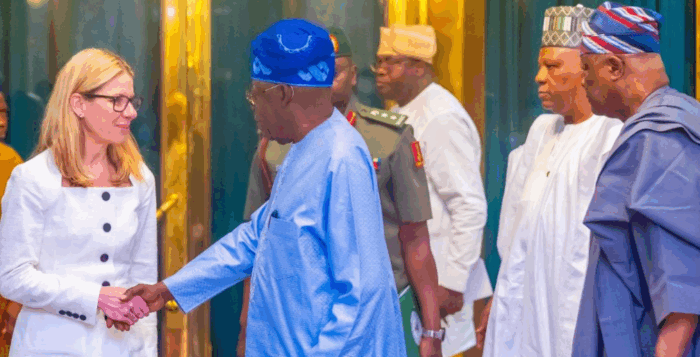

President Bola Tinubu has formally communicated to the World Bank that Nigeria will maintain its current trajectory of aggressive economic reforms, signaling a definitive end to the era of populist subsidies and restrictive currency controls. During a high-level meeting with World Bank executives, the President emphasized that while the transition remains challenging for the Nigerian populace, the structural adjustments are non-negotiable prerequisites for long-term fiscal viability and industrial growth. This stance reinforces the administration’s focus on market-driven price discovery and the elimination of systemic inefficiencies that have historically drained the federation’s accounts.
For the Nigerian economy, this unwavering commitment to reform is a critical signal to both domestic and international investors. The removal of the fuel subsidy and the unification of the foreign exchange windows were designed to plug massive fiscal leakages and attract foreign direct investment (FDI). By confirming that there will be no reversal of these policies, the government aims to reduce the “uncertainty premium” that often plagues emerging markets undergoing transition. In the short term, however, the persistence of these reforms means that the economy must continue to grapple with high headline inflation which remains a primary concern for household consumption and the cost of doing business.
Analytically, the decision to stay the course suggests a pivot toward a more orthodox fiscal and monetary framework. The World Bank and the International Monetary Fund (IMF) have long advocated for these measures as the only path to sustainable debt management. With Nigeria’s debt-to-revenue ratio reaching precarious levels in recent years, the administration is prioritizing the expansion of the tax net and the enhancement of non-oil revenue. The President’s message to the World Bank also serves as a request for continued technical and financial support to provide a social safety net, mitigating the immediate impact of these reforms on the most vulnerable segments of the population.
The manufacturing and agricultural sectors are particularly sensitive to this policy direction. While the unification of the exchange rate aims to make Nigerian exports more competitive, the immediate effect has been an increase in the cost of imported raw materials and machinery. The government’s refusal to backtrack implies that local industries must now accelerate their backward integration strategies to survive. For the banking sector, the reforms have triggered a period of recapitalization and adjustment, as lenders recalibrate their portfolios to align with a more transparent, albeit volatile, currency environment.
Furthermore, the President’s stance highlights a strategic shift in Nigeria’s relationship with global financial institutions. By taking ownership of these “tough pills,” the administration is positioning Nigeria as a disciplined reformer capable of managing its internal affairs without being coerced by external lenders. This perceived autonomy is vital for sovereign credit ratings. If the reforms yield the expected results specifically narrowed fiscal deficits and increased foreign reserves—Nigeria could see an improvement in its creditworthiness, potentially lowering the cost of borrowing in international capital markets.
The long-term success of this “no-reversal” policy hinges on the government’s ability to translate fiscal savings into tangible infrastructure and social services. The economic consequence of maintaining these reforms without a corresponding improvement in the ease of doing business or power supply could lead to social friction. Therefore, the administration is under immense pressure to ensure that the “pain” of the present leads to a “gain” in productivity. The government’s strategy now moves from policy enactment to the more difficult phase of institutionalizing these changes within the civil service and broader regulatory framework.
As Nigeria navigates this transformative period, the global community’s role is shifting from mere observation to active partnership. The World Bank’s support in funding critical areas like digital identity, primary healthcare, and rural electrification will be the litmus test for whether these macro-level reforms can deliver micro-level benefits. The path chosen by the administration is one of high risk but potentially high reward, aiming to decouple Nigeria’s economic fortunes from the volatility of global oil prices and build a diversified, resilient domestic economy.