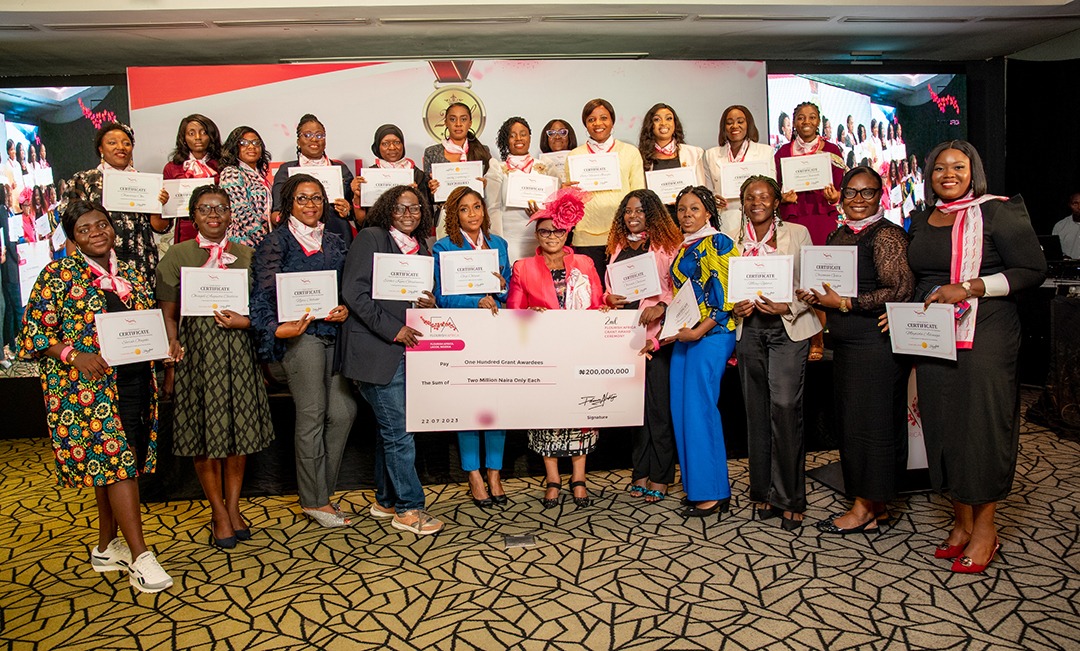

Flourish Africa, a women-focused empowerment initiative founded by Apostle Folorunsho Alakija, has disbursed ₦300 million in grants to support women-owned businesses across Nigeria after a competitive national training and pitch programme.
The grants were announced at the organisation’s ninth annual conference in Lagos, themed “She Champions”, which convened women entrepreneurs, regulators, development partners, and private-sector stakeholders.
The funding was awarded under the fourth cycle of the Flourish Africa Grants Programme, which trained 506 women entrepreneurs in business management, governance, and investment readiness. Following the training, 409 participants submitted business plans, 200 advanced to the pitching stage, and 100 businesses emerged successful, each receiving ₦3 million after assessment by an independent panel of judges.
Speaking at the event, Alakija said the programme was intentionally structured to prioritise merit, discipline, and accountability rather than broad-based funding.
“The process is rigorous by design. Access to capital must be matched with structure, capacity, and accountability. Only 100 out of 506 women trained qualified for funding, and that discipline is critical if businesses are to survive and scale,” she said.
Flourish Africa noted that while Nigeria ranks among countries with the highest levels of female entrepreneurship globally, many women-led businesses still struggle to access formal financing and growth opportunities. The initiative aims to close this gap by combining funding with skills development and exposure to governance and investment standards.
The selected businesses span sectors including manufacturing, agribusiness, food processing, fashion, beauty, and services.
Judges involved in the selection process reported noticeable improvements in business presentations, clarity of models, and market positioning compared to previous cohorts, while also identifying financial literacy as a continued area for improvement.
Beyond grants, the programme emphasises record-keeping, governance, and scalability, preparing beneficiaries for engagement with lenders, investors, and institutional markets.
Alakija said empowering women entrepreneurs has far-reaching economic benefits. “When women succeed in business, they reinvest in their families and communities, creating a multiplier effect that drives inclusive growth,” she added.
As economic pressures persist for small businesses nationwide, initiatives supporting sustainable women-led enterprises are expected to play an increasingly important role in job creation and local economic development.