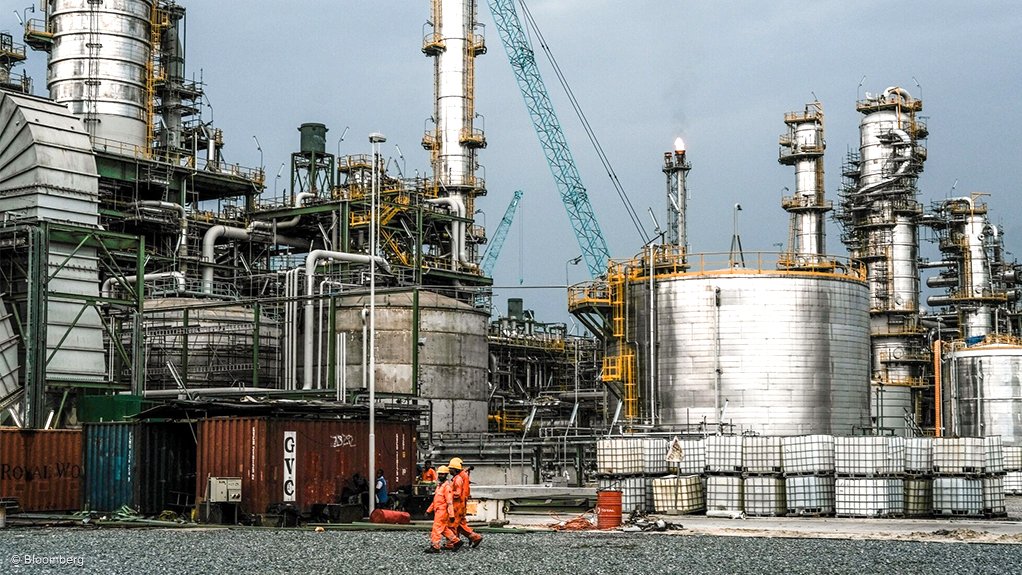

Nigeria’s oil-dependent economy faced a sobering reality in 2025 as the country’s hallmark revenue earner, the Nigerian National Petroleum Company (NNPC), delivered a fraction of the funds expected to the nation’s treasury, underscoring deep structural and fiscal challenges in Africa’s largest oil producer. Rather than bolstering government revenues, the oil sector has instead become a stark example of volatility and underperformance, with the NNPC remitting just ₦604.61 billion to the Federation Account Allocation Committee (FAAC) between January and December 2025 an 86 percent shortfall against the ₦4.20 trillion target set in the federal budget.
The disappointing outturn represents one of the most dramatic compressions in the state-owned company’s remittances in recent memory. Traditionally a cornerstone of government receipts, oil revenues are fundamental to Nigeria’s budgetary architecture, fuelling public expenditure, infrastructure investment, and social services. But the yawning gap between expectations and actual remittances in 2025 has exposed the fragility of Nigeria’s fiscal foundations, heavily tied to a commodity whose returns have proven unpredictable.
The shortfall did not merely dent projections it upended them. Analysts and policymakers had anticipated that oil and gas receipts would provide stable inflows over the year, underpinning federal, state, and local financing plans. Instead, the remittance data revealed an alarming erosion of that expectation. With only about 14 percent of projected oil revenue paid into FAAC, the deficit haunts budget execution and heightens pressure on other revenue streams such as taxes, levies, and non-oil earnings.
This vast discrepancy has rippled across government planning circles. Federal ministries reliant on monthly FAAC disbursements have been forced to adjust their spending, slowing procurement and delaying key developmental projects. States with narrow internally generated revenue bases have felt the squeeze even more acutely, as their monthly allocation from FAAC has shrunk in tandem with oil receipts. The cascading effects threaten to slow economic activity in regions already grappling with unemployment, inflation, and rising debt service obligations.
The reasons behind the stark underperformance are multifaceted. Global oil prices have fluctuated throughout 2025, creating uncertainty around export receipts. International sanctions, production quotas by OPEC and its allies, and domestic output disruptions including maintenance downtimes and logistical hurdles on major fields have contributed to intermittent production performance throughout the year. These factors have combined to suppress gross revenue available for remittance.
Moreover, internal challenges within the NNPC itself have drawn scrutiny. Critics argue that the state-owned company’s accounting and reporting practices have lacked transparency, complicating efforts to reconcile expected revenue with what actually lands in government coffers. Calls for clearer disclosure have grown louder, with policy experts and civil society groups pressing for more robust oversight of Nigeria’s oil fiscal regime.
The revenue shortfall has also sparked broader debates on Nigeria’s economic strategy. Years of heavy reliance on crude oil receipts, with limited diversification into agriculture, manufacturing, and services, have left the national budget vulnerable to swings in global energy markets. The 2025 shortfall has amplified long-standing calls for accelerated economic diversification strengthening sectors that can provide steady employment and revenue irrespective of oil cycles.
Within the federal government, officials have defended efforts to stabilize oil revenues but acknowledge that the shortfall is a wake-up call. Some have pointed to efforts to boost natural gas production and export volumes, seeking to partially offset the volatility in crude oil markets. Others have pushed for reforms in how oil revenues are managed and shared, to restore confidence among investors and citizens alike.
For many Nigerians watching from the sidelines, the dramatic drop in remittances is a palpable reminder of the country’s struggle to translate resource wealth into tangible prosperity. In towns and cities across the country, ordinary citizens continue to confront the consequences of fiscal strain from deteriorating public services to rising consumer prices. The failure to meet oil revenue targets in 2025, in this light, is more than a line item in a budget report; it is a signal that Nigeria’s economic model may need fundamental redirection.
As policymakers, industry players, and civil society digest the implications of the 86 percent remittance gap, one clear message emerges: without systemic reforms to energise production, improve transparency, and broaden the economic base, Nigeria’s fiscal fortunes will remain precarious vulnerable to the unpredictable tides of global oil markets and internal structural weaknesses.