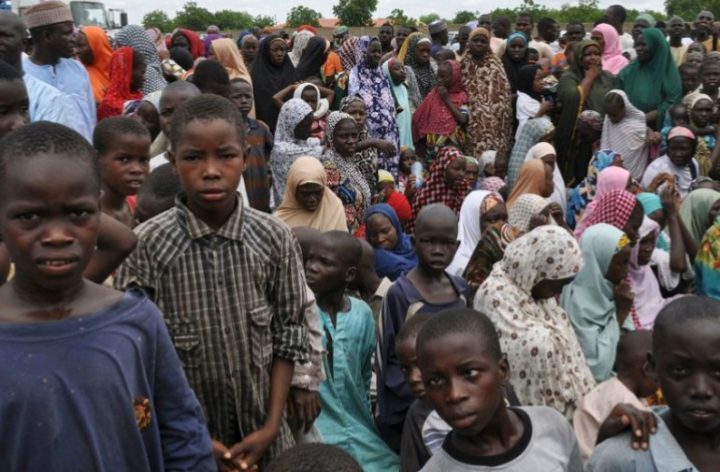

Nigeria’s northeastern region is edging toward its most severe hunger crisis in over a decade, a development that reveals more than humanitarian distress. It exposes a deep economic failure shaped by shrinking global aid, persistent insecurity, inflationary pressures, and weak resilience mechanisms. In mid-January 2026, the United Nations World Food Programme (WFP) warned that food insecurity in the region, particularly in Borno State, has reached catastrophic levels, placing thousands at immediate risk of starvation. This warning signals not a sudden shock, but the cumulative effect of long-neglected structural vulnerabilities.
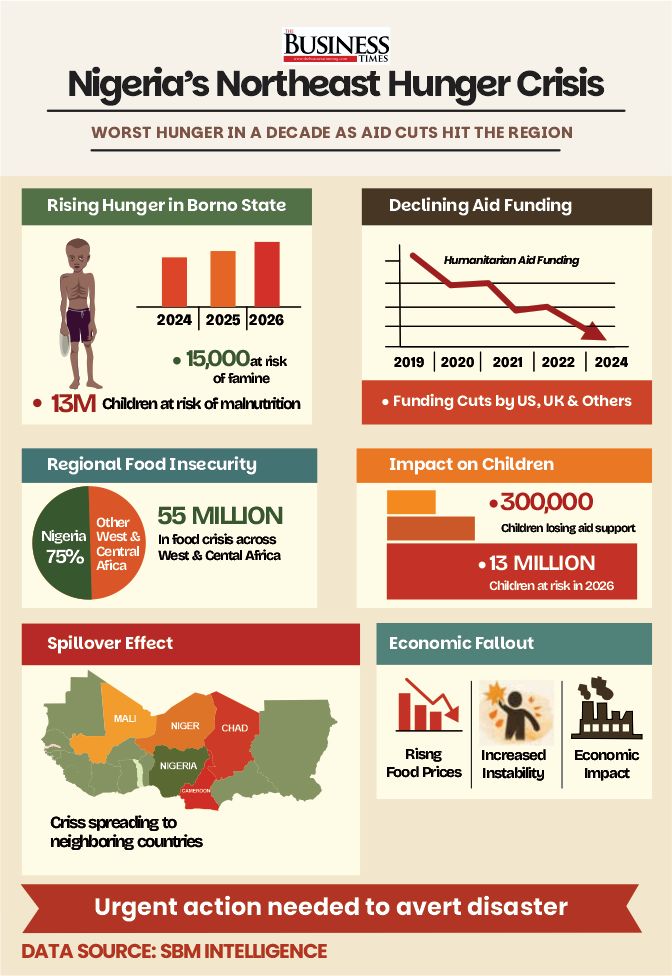
Around 15,000 people in Borno State are now on the brink of extreme food deprivation, while Nigeria accounts for the majority of the estimated 55 million people facing severe food insecurity across West and Central Africa. These figures reflect a collapse in household purchasing power rather than an absolute absence of food. Inflation, unemployment, climate shocks, and rising transport and fuel costs have pushed food prices far beyond what wages and informal incomes can sustain.
As Abu Toheeb, a rural farmer in Ondo, observes, hunger is being driven by “inflation, unemployment, climate shocks, and the collapse of household incomes in the northeast.” Food inflation has consistently outpaced income growth, leaving families exposed even when markets remain nominally supplied. The recent withdrawal of aid has intensified this exposure. “Recent aid cuts removed a critical safety net,” he notes, “reducing food availability, cash transfers, and health support when families are already at their most vulnerable.”
Aid Cuts, Conflict, and Market Breakdown
At the centre of the crisis lies a sharp contraction in international humanitarian funding. Major donor countries have reduced aid budgets as global priorities shift toward domestic pressures and defence spending. In fragile regions like northeastern Nigeria, however, humanitarian assistance has long functioned as an economic stabiliser, supporting consumption, sustaining local markets, and preventing total collapse in conflict-affected communities. Its sudden reduction has therefore had immediate multiplier effects.
The timing could not be worse. Elevated global food prices, currency depreciation, and climate-related shocks are already constraining supply and purchasing power. The removal of aid under these conditions acts as an economic shock, accelerating hunger rather than merely revealing it.
Persistent insecurity compounds the damage. Insurgent violence has disrupted farming cycles, destroyed storage facilities and transport routes, and forced mass displacement. Abu Toheeb explains that “insecurity keeps farmers off their land and traders away from markets.” The economic mechanics are clear: reduced agricultural output shrinks supply, disrupted logistics raise costs, and market participation declines. Prices rise while incomes fall, trapping households in a vicious cycle of deprivation.
Over time, livelihoods disappear, savings are exhausted, and communities slide into debt and informal survival strategies. Private sector activity retreats, investment dries up, and agricultural value chains stagnate. What begins as a security challenge evolves into long-term economic paralysis.
Human Capital Losses and Regional Spillovers
One of the most damaging consequences of the crisis is its effect on children. The WFP projects that more than 13 million children across the region are at risk of malnutrition in 2026. In Nigeria, funding shortfalls have already forced cuts to nutrition programmes affecting hundreds of thousands of children. These disruptions carry lasting economic costs.
According to economist Tomilola Favour, “widespread child malnutrition will quietly undermine Nigeria’s future economy.” Malnourished children face impaired cognitive development, weaker educational outcomes, and lower lifetime earnings. At scale, these losses translate into reduced labour productivity, higher healthcare spending, slower GDP growth, and diminished national competitiveness. The hunger crisis therefore threatens not only current welfare but Nigeria’s long-term development trajectory.
The crisis also carries significant regional implications. Food insecurity in northeastern Nigeria is closely linked to instability in Chad, Niger, Cameroon, and Mali, where similar combinations of conflict, climate stress, and aid shortages prevail. As Tomilola Favour notes, hunger “can easily spill across borders through refugee flows and informal trade disruptions.” Migration pressures strain neighbouring labour markets and public services, while disrupted trade routes raise food prices and increase smuggling. These spillovers weaken investor confidence and undermine regional economic integration.
The Cost of Inaction and the Path Forward
Beyond the humanitarian toll, food insecurity imposes heavy fiscal and political costs. Governments are forced into reactive crisis spending, diverting resources from long-term investments in infrastructure, education, and industrial development. Hunger also heightens the risk of social unrest and political instability, eroding trust in institutions and creating fertile ground for crime and insurgency.
The WFP has appealed for over $453 million to sustain operations in the near term, underscoring the urgency of immediate intervention. Yet funding alone is insufficient. As Tomilola Favour argues, policy must combine short-term relief with long-term resilience. Restoring food aid, expanding cash transfers, and stabilising prices are essential to prevent collapse, but sustainable recovery requires deeper investment in security, climate-smart agriculture, rural infrastructure, education, health, and nutrition.
The hunger crisis in Nigeria’s northeast is not an isolated humanitarian episode. It is an economic warning of what happens when aid retrenchment, conflict, and weak resilience converge. Without swift, coordinated action, the crisis will entrench poverty, weaken growth, and destabilise both Nigeria and its neighbours. Addressing it is not charity, it is an economic and strategic imperative.