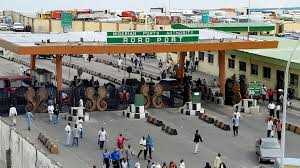

Nigeria’s ports must undergo urgent modernisation to support economic growth, enhance trade competitiveness, and position the country as a leading maritime hub in Africa, the Managing Director of the Nigerian Ports Authority, Dr Abubakar Dantsoho, has said.
Dantsoho, who was recently appointed Regional Vice President for Africa at the International Association of Ports and Harbors, said Nigeria’s port system requires significant upgrading to match the scale of its economy and population, which now exceeds 230 million.
He explained that while cargo handling operations have been concessioned to private terminal operators, the NPA remains responsible for navigation, safety, and channel maintenance. According to him, many of Nigeria’s legacy ports were built decades ago and are no longer suited to modern shipping demands.
Dantsoho noted that Apapa Port, constructed over a century ago, and Tin Can Island Port, built nearly 50 years ago, suffer from ageing infrastructure, shallow draughts, and limited capacity for larger vessels. These limitations, he said, have allowed neighbouring countries such as Ghana, Togo, Benin, and Côte d’Ivoire to attract cargo originally destined for Nigeria.
To address these challenges, the NPA has intensified efforts to develop deep-sea ports, including the Lekki Deep Seaport, which is fully automated and has a natural draught of 17 metres. He said additional deep-seaport projects were being pursued to expand capacity and improve efficiency.
Dantsoho attributed renewed momentum in port reforms to the creation of the Federal Ministry of Marine and Blue Economy by President Bola Tinubu and the leadership of the Minister of Marine and Blue Economy, Adegboyega Oyetola. He said the reforms align with a long-term master plan modelled partly on international best practices.
On Africa’s wider maritime potential, Dantsoho said the continent remains underutilised despite its vast population and natural resources. He pointed out that while Africa handled about 34 million containers last year, China’s Shanghai port alone processed more than 40 million, highlighting a major development gap.
He said modernised Nigerian ports would play a critical role in supporting exports from agriculture and mining, attracting foreign investment, and strengthening regional trade.
Dantsoho added that his role at the IAPH would help foster collaboration, investment support, and technical cooperation for developing port systems across Africa.