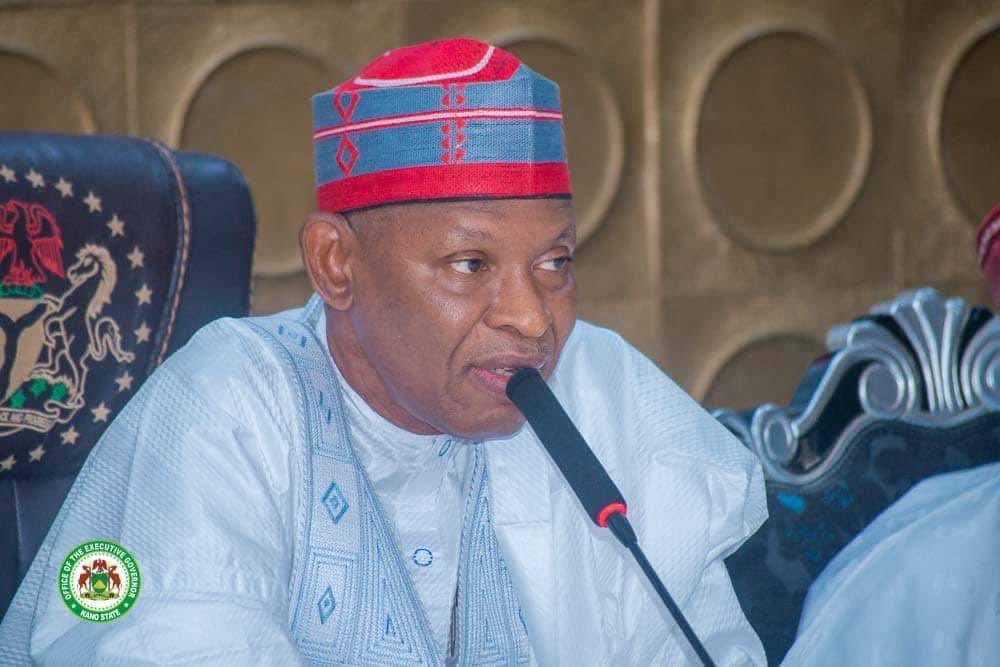

The political foundations of Nigeria’s northern commercial heart have been shaken by the formal departure of Governor Abba Yusuf from the New Nigeria People’s Party (NNPP). This move, anticipated for weeks, was immediately followed by the People’s Democratic Party’s (PDP) withdrawal of a key election petition, a decision they attributed to perceived judicial partiality. Together, these events create a volatile and fluid political environment in Kano State that directly threatens economic predictability, investment sentiment, and the stability of a crucial national supply chain hub.
Governor Yusuf’s exit from the NNPP, the platform that brought him to power, marks a profound disintegration of a major political force in the North. His expected decamping to the All Progressives Congress (APC) signifies more than a personal realignment; it represents a potential consolidation of power that could reshape political and, by extension, economic patronage networks across the region. For the business community, such a fundamental shift creates immediate uncertainty. Long-term projects, public-private partnerships, and regulatory enforcement can become subject to the whims of a new political calculus, discouraging the capital investment necessary for growth. The focus of the state administration may inevitably turn inward toward political consolidation rather than outward toward economic development and problem-solving.
Compounding this instability is the PDP’s dramatic withdrawal of its election petition. By publicly citing a lack of faith in judicial impartiality, the party has cast a shadow not just over this particular case but over the broader legal framework for resolving commercial disputes in the state. A judiciary perceived as politicized is a critical deterrent to investment, as it undermines the enforceability of contracts and the protection of property rights—cornerstones of any functional market economy. Businesses, both domestic and international, require a predictable legal environment, and this development erodes confidence in Kano’s.
The direct economic repercussions are severe. Kano is more than a political entity; it is Nigeria’s second-largest commercial center, the epicenter of agricultural produce trade in the North, and a vital manufacturing and distribution link to the Sahel. Political turmoil disrupts the entire value chain. Farmers and commodities traders face uncertainty in logistics and market access. The state’s famous textile and manufacturing industries, already under pressure, cannot thrive amidst constant political distraction. Furthermore, Kano’s role as a key consumer market means that instability there dampens demand for goods from across Nigeria, creating ripple effects throughout the national economy.
This situation presents a critical test for Nigeria’s federal system, demonstrating how subnational political crises can quickly morph into national economic concerns. The concentration of commerce in Kano means that its political health is inextricably linked to the economic health of the entire northern region and beyond. The potential paralysis of governance threatens not only local job creation but also national food security and the efficacy of key trade corridors.
Ultimately, Kano’s political crisis is a stark reminder that economic growth cannot be divorced from political stability. The coming weeks will be telling. Whether the realignment leads to a new, predictable status quo or simply fuels further instability will determine if Kano can fulfill its economic potential. For Nigeria’s broader economic ambitions, a stable and prosperous Kano is not optional; it is essential. The resolution of this crisis will send a powerful signal to the investment community about the country’s capacity for cohesive and stable governance.