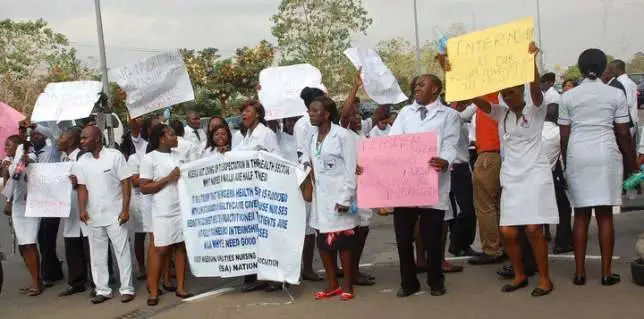

The Trade Union Congress (TUC) and Nigeria Labour Congress (NLC) have issued a stringent 14-day nationwide ultimatum to the federal government over the delayed implementation of the Consolidated Health Salary Structure (CONHESS), escalating a dispute that threatens to paralyze Nigeria’s already fragile public health system and exacerbate the country’s severe brain drain. This confrontation over wages is not merely an industrial relations issue but a direct catalyst for a deeper healthcare exodus, increased government expenditure, and heightened inflationary pressures on household incomes.
At the core of the dispute is the government’s failure to finalize and fund an adjusted CONHESS, a wage scale for health professionals. Unions allege the government has disregarded a prior collective bargaining agreement, leaving workers’ salaries stagnant despite soaring living costs. NLC President Joe Ajaero frames the delay as a “grave injustice,” eroding the value of work in a sector critical to national productivity. Each day of inaction pushes skilled nurses, doctors, and technicians closer to industrial action or, more permanently, towards employment abroad, deepening Nigeria’s costly health worker brain drain.
The economic implications of a potential strike are severe. A shutdown of public health services would immediately affect millions of Nigerians, reducing the productive workforce due to untreated illness and overwhelming the private health sector, where costs are prohibitive for most. The resulting decline in national health outcomes has long-term consequences for labor productivity and economic growth. Furthermore, the government faces a fiscal dilemma: acceding to the demands imposes a substantial, recurring wage bill on the treasury, while refusing risks even costlier strikes and accelerated emigration of state-trained professionals. Nigeria essentially subsidizes the healthcare systems of wealthier nations by funding the education of health workers who then emigrate, representing a catastrophic loss on human capital investment.
This standoff also intensifies Nigeria’s inflation crisis. For health workers, stagnant wages amidst 30%+ headline inflation mean a dramatic fall in real income. The unions’ demand is, in part, a defensive move against this erosion. However, a significant upward revision to public sector wages could itself become an inflationary trigger, potentially forcing the government to print more money or reallocate funds from essential infrastructure and social services, creating a vicious economic cycle.
The resolution of this ultimatum will signal the government’s prioritization of human capital. A failure to negotiate in good faith will not only provoke unrest but will further validate the decision for Nigeria’s best and brightest to seek opportunities overseas. It reinforces a perception of a state unwilling to invest in its own people, damaging morale and retention across all skilled public sectors. Conversely, a structured, funded agreement could stabilize the health sector, slow the brain drain, and demonstrate a commitment to retaining the skilled workforce necessary for national development. The outcome will directly influence Nigeria’s economic resilience and its ability to maintain a functional society.