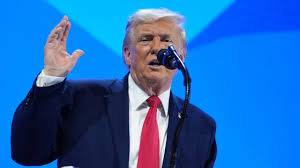

In a striking shift that eased rising tensions across the Atlantic, U.S. President Donald Trump announced on Wednesday that he was backing down from threatened tariffs on several European nations tied to his controversial bid to secure Greenland for the United States. The dramatic turn came after discussions with NATO Secretary-General Mark Rutte on the sidelines of the World Economic Forum in Davos, Switzerland, where Trump unveiled what he described as the beginnings of a “framework” for a future deal on the strategic Arctic territory.
For weeks, Trump had raised the stakes dramatically by threatening to impose escalating tariffs on eight NATO and European Union members unless they acquiesced to U.S. demands regarding Greenland, a vast, resource-rich island that is a self-governing territory of Denmark. The proposed tariffs starting at 10 percent on Feb. 1 and rising to 25 percent by June — would have targeted exports from countries including Denmark, France, Germany, the United Kingdom, the Netherlands, Finland, Norway and Sweden, according to earlier reports.
Speaking to reporters in Davos, Trump said that after his meetings with Rutte, “It’s a deal that everybody’s very happy with… especially as it pertains to security and to minerals,” indicating that the outlines of a broader cooperation agreement had been discussed. He announced that the tariffs scheduled for February would not be imposed “based upon a very productive meeting” with the NATO chief and that negotiations would continue on what he framed as mutual interests across the Arctic.
Trump’s pivot marked a remarkable retreat from a combative stance that had alarmed U.S. allies. Just days earlier, he had publicly floated the idea of using tariffs and even hinted at potential military options to secure Greenland comments that drew swift rebukes from European capitals. “People thought I would use force… but I don’t have to use force. I don’t want to use force. I won’t use force,” he told the assembled audience, stressing a preference for diplomatic negotiation.
Rutte, for his part, downplayed talk of territorial transfer, telling Fox News that discussions with Trump did not focus on Greenland’s sovereignty, an issue that Denmark and Greenland’s government have firmly rejected as negotiable. “That issue did not come up anymore in my conversations tonight with the president,” Rutte said. He emphasized that the focus was instead on how NATO allies could work together to protect the Arctic region from growing Russian and Chinese influence.
Denmark’s Foreign Minister Lars Løkke Rasmussen welcomed the de-escalation, urging that any differences be resolved through discreet diplomacy rather than public pronouncements. “What is crucial for us… is that we end this with respect for the integrity and sovereignty of the kingdom and the right of the Greenlandic people to self-determination,” he said in comments carried by Danish media.
Markets reacted positively to the news. U.S. equities rallied as investor fears over a looming transatlantic trade dispute eased, with the S&P 500 recording its largest one-day percentage gain in weeks. The earlier threats had roiled financial markets, contributing to significant stock declines as traders worried that an expanded trade war could inflict damage on global growth.
Trump’s Greenland gambit had also strained diplomatic relations with the European Union and individual NATO allies. The specter of tariffs prompted some EU officials to halt progress on a pending U.S.–EU trade agreement in protest, arguing that coercive trade tactics threatened the transatlantic alliance and undermined trust among partners.
Despite the retreat on tariffs, Trump’s insistence on securing American interests in the Arctic and Greenland framed around strategic security concerns and access to critical minerals underscored a broader shift in U.S. foreign policy priorities. The Arctic’s significance has surged as climate change accelerates ice melt and opens new shipping routes, making control and influence there a priority for global powers.
Trump indicated that Vice President J.D. Vance, Secretary of State Marco Rubio, and special envoy Steve Witkoff would lead ongoing discussions with Denmark and Greenland, reporting directly to him as the talks evolve. He portrayed the emerging accord as beneficial not just for the United States but for NATO allies as well, even as concrete details of the deal remain vague.
While the announcement in Davos represented a diplomatic win of sorts, many questions linger. Denmark has reiterated that Greenland is not for sale, and Greenlandic leaders have not publicly commented on the emerging framework. For now, the immediate threat of tariffs has evaporated, and the prospects of a negotiated coexistence in the Arctic have taken center stage.