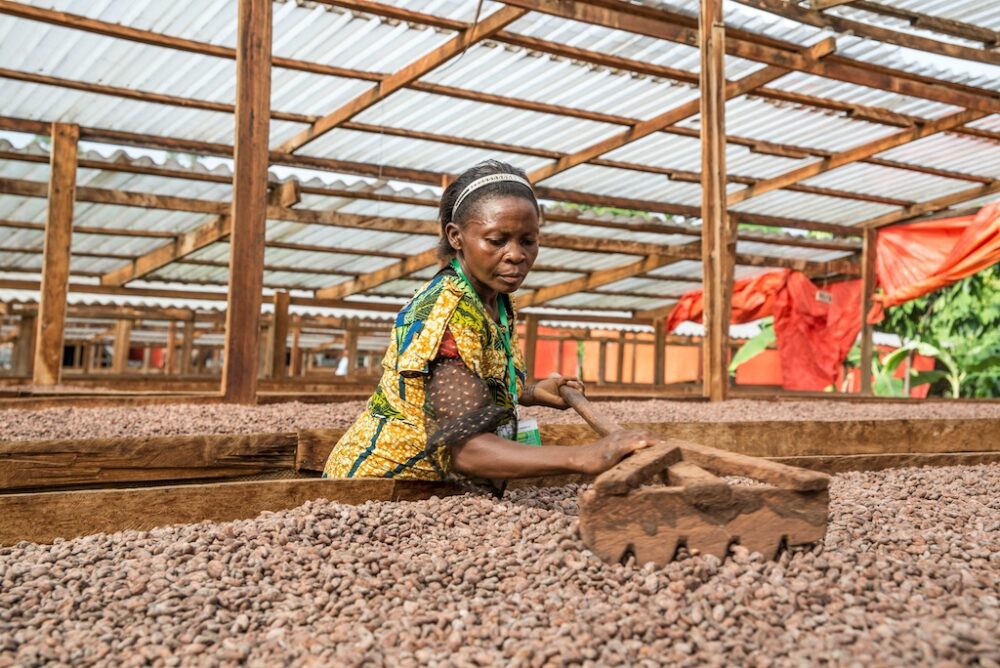

Some cocoa farmers in Ghana have yet to receive payments under a new purchasing system, raising concerns about financing for the upcoming harvest, sources say. The revised model, introduced for the 2024/25 season, shifted the responsibility for pre-financing from the Ghana Cocoa Board (COCOBOD) to international traders. Under the system, traders are expected to provide advance payments of at least 60% of forward contract values to farmers. However, sources indicate that many traders have been reluctant to make these upfront payments, leaving the country—the world’s second-largest cocoa producer—with a growing stockpile of unsold beans.
The reluctance comes amid a downturn in global cocoa prices, which have fallen by approximately 20% this year following a sharp decline in 2024. Analysts say this makes advance payments less attractive for traders, particularly when Ghana’s farmgate price remains closely aligned with international levels. Farmer groups warn that delayed payments are jeopardising critical loan repayments and essential farm maintenance, including pruning, fertilisation, and pest management, which could affect yields in the next season.
Ghanaian cocoa plays a pivotal role in the country’s economy. Cocoa exports generate significant foreign exchange earnings, employ millions of farmers and seasonal workers, and support the livelihoods of rural communities. Payment delays, therefore, have broader economic implications, potentially straining local economies in key cocoa-growing regions and affecting the financial stability of households that rely on predictable income streams.
The shift in the purchasing model was intended to reduce COCOBOD’s upfront financing burden while encouraging greater participation by international buyers in Ghana’s cocoa sector. In theory, the model could improve efficiency and strengthen supply chain linkages. In practice, however, it has exposed a mismatch between farmer expectations and trader risk appetites, particularly in a market affected by volatile global prices.
Observers note that if the payment delays persist, farmers may struggle to secure the financing needed to maintain plantations ahead of the next planting cycle. Many rely on short-term loans from local banks or cooperatives, often collateralised against expected cocoa sales. Late payments can therefore trigger liquidity pressures, leading to reduced inputs, delayed harvesting, and ultimately lower production.
The situation also has potential implications for international cocoa markets. Ghana and neighbouring Ivory Coast together supply more than 60% of global cocoa, meaning disruptions in supply or quality could influence market pricing and trade flows. Traders’ hesitancy to pre-finance production may also affect contract negotiations and long-term supply agreements, creating uncertainty for both exporters and buyers.
COCOBOD has not commented publicly on the payment delays. Farmer groups, however, are urging the government and traders to intervene swiftly to ensure timely payments, stressing that sustained disruptions could undermine confidence in the sector and threaten Ghana’s standing as a reliable cocoa supplier.
Economists highlight that structural reforms in commodity financing often come with short-term challenges. While reducing the state’s pre-financing obligations may improve fiscal management, adequate mechanisms must be in place to protect farmers and ensure that liquidity flows through the supply chain. Without such safeguards, both production and rural livelihoods risk being compromised.
Ghanaian cocoa farmers are confronting delayed payments under a new pre-financing system that places greater responsibility on international traders. Combined with falling global prices and tight farmgate margins, these delays threaten not only the next harvest but also rural financial stability and Ghana’s position in the global cocoa market. Coordinated action by COCOBOD, traders, and farmer associations will be critical to resolving the impasse and ensuring that the sector continues to support both local communities and national economic growth.