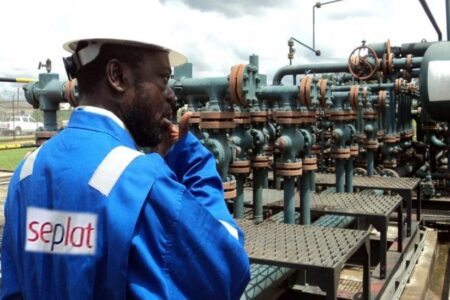

Seplat Energy Plc has announced that its ANOH gas project in Imo State has started supplying gas to Indorama, marking a significant milestone for Nigeria’s midstream energy sector. The project, a 300 million standard cubic feet per day gas processing plant, began deliveries on January 16, 2026, following the completion of the 11-kilometre Indorama gas export pipeline and the receipt of regulatory approval from the Nigerian Upstream Petroleum Regulatory Commission.
Four upstream wells, which had been on standby since November 2025, were brought online to support supply under a combination of firm and interruptible gas sales agreements. The ANOH Gas Processing Company joint venture is co-owned by the Nigerian government and major energy companies, including Seplat, Shell, TotalEnergies, and Agip. The collaboration reflects a growing trend in Nigeria of leveraging public-private partnerships to accelerate infrastructure development and expand domestic energy supply.
Seplat reported that condensate production at the facility has reached between 2,000 and 2,500 barrels of oil equivalent per day and is expected to rise as production ramps up. Analysts note that this output not only enhances Seplat’s production profile but also contributes to Nigeria’s broader energy transition goals, providing a cleaner alternative to fuel oil and helping to reduce gas flaring in the region.
Economically, the operationalisation of the ANOH gas project has multiple implications. For Seplat, the project strengthens revenue streams through both firm and flexible gas supply contracts, offering predictability while creating capacity for future expansion. For industrial users like Indorama, access to reliable gas supply is expected to reduce energy costs and support higher manufacturing output. Analysts suggest that the project may also attract further investment into Imo State and surrounding regions, particularly in downstream manufacturing and petrochemical processing, where stable gas supply is a critical input.
Beyond industrial benefits, the project contributes to national energy security. Nigeria continues to face challenges in domestic gas supply and distribution, which have historically constrained industrial growth and limited power generation capacity. The ANOH project demonstrates how strategic infrastructure investments can improve the availability of gas for industrial, commercial, and power-generation purposes, supporting economic growth and job creation.
The project is also aligned with environmental and sustainability priorities. By processing and supplying gas, the facility helps reduce flaring and provides a cleaner-burning fuel alternative for industrial operations. This aligns with both corporate ESG commitments and national goals for reducing carbon emissions, which are increasingly important for foreign investors and international partners.
Seplat and its partners view the ANOH gas project as a key component in the company’s production growth strategy. As output ramps up and condensate volumes increase, the project is expected to contribute meaningfully to Seplat’s overall production targets while reinforcing Nigeria’s position as a competitive gas supplier in West Africa. The successful commencement of gas deliveries also highlights the importance of regulatory approvals and the coordinated efforts of multiple stakeholders in realising large-scale energy projects.
The ANOH gas project represents a significant development for Nigeria’s midstream gas sector. By providing a steady supply of natural gas to industrial users, boosting condensate production, and supporting cleaner energy initiatives, the project enhances both Seplat’s business prospects and the broader economic and environmental landscape in Nigeria. The collaboration between the government and private energy majors underscores the potential for public-private partnerships to drive infrastructure development, energy security, and sustainable industrial growth across the country.