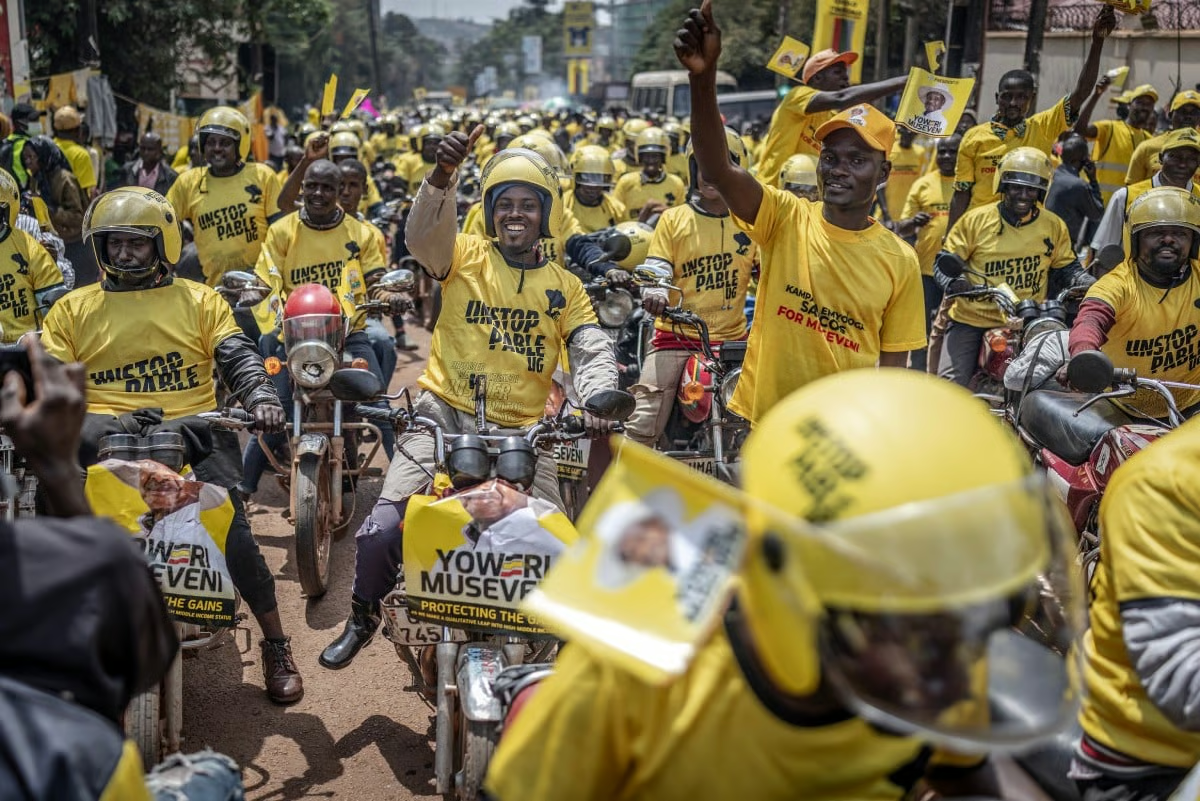

Ugandan authorities on Tuesday imposed a nationwide internet shutdown and restricted mobile services ahead of Thursday’s presidential election, citing concerns over misinformation, disinformation, and electoral risks. The move comes amid a broad security clampdown, with reports of hundreds of opposition supporters detained and campaign events for the leading challenger, Bobi Wine, forcibly dispersed using live bullets and tear gas. The restrictions affected both public and private networks, limiting access to social media, messaging platforms, and online news sources, which critics say undermines citizens’ ability to engage in the electoral process.
Two prominent local human rights organisations were also ordered to cease operations, a decision condemned by the UN Human Rights Office. In a statement, the UN warned that the vote is taking place “in an atmosphere of repression,” noting that civil and political liberties are under significant strain. Observers say that curtailing digital communication gives the incumbent government a distinct advantage in shaping public perception and restricting opposition outreach, particularly as social media has become a critical tool for mobilisation and voter education.
President Yoweri Museveni, who has ruled Uganda since 1986, is seeking a seventh term in office, in what many analysts describe as a highly contentious election. Opposition figures and international observers have raised concerns about the fairness of the vote, citing restrictions on media, the detention of political opponents, and the heavy security presence at rallies. The internet blackout is widely viewed as a mechanism to control narratives, suppress dissent, and reduce real-time reporting of electoral irregularities or incidents of violence.
Beyond the political ramifications, the shutdown carries economic consequences. Uganda’s economy, like many across Africa, increasingly relies on mobile and internet connectivity for business operations. E-commerce, mobile banking, fintech solutions, and digital trade platforms are all dependent on reliable networks. Disruptions can slow transactions, reduce business efficiency, and deter foreign investment. Analysts warn that prolonged restrictions may affect confidence in Uganda’s business environment, as companies factor in operational risk, potential losses, and uncertainty around market access.
Financial services are particularly vulnerable. Mobile money platforms, which are widely used for payments and savings in Uganda, could face interruptions, disrupting both consumer transactions and merchant operations. Small and medium-sized enterprises (SMEs), which rely heavily on digital tools to reach clients and process payments, may bear the brunt of the economic impact. In the longer term, such disruptions could influence foreign investors’ perceptions of Uganda as a reliable investment destination, particularly in sectors like technology, trade, and services.
The internet and mobile restrictions also intersect with broader development challenges. Social media platforms are critical not only for political engagement but also for education, access to health information, and business networking. By limiting connectivity, authorities inadvertently restrict access to essential services and reduce the flow of information that supports entrepreneurship and economic decision-making, which are key drivers of growth in a country where youth unemployment remains high.
Analysts caution that political control and economic stability are closely intertwined. While the government may justify the blackout as a preventive measure against misinformation and electoral fraud, the measures risk undermining investor confidence and the broader business climate. Uganda’s digital economy has been a source of innovation and growth in recent years, attracting both local and international investment. Disruptions during high-stakes political events could dampen this momentum.
Uganda’s internet and mobile shutdown ahead of the election highlights the country’s complex political and economic landscape. The move illustrates how governance decisions, particularly in the digital sphere, have consequences that extend beyond politics into the realm of commerce, investment, and social development. For citizens, the blackout limits participation in the democratic process, while for businesses and investors, it introduces operational and reputational risks. As Uganda heads to the polls, the balance between political control, civil liberties, and economic stability remains a critical concern, demonstrating the multifaceted implications of restricting digital communication in a connected economy.