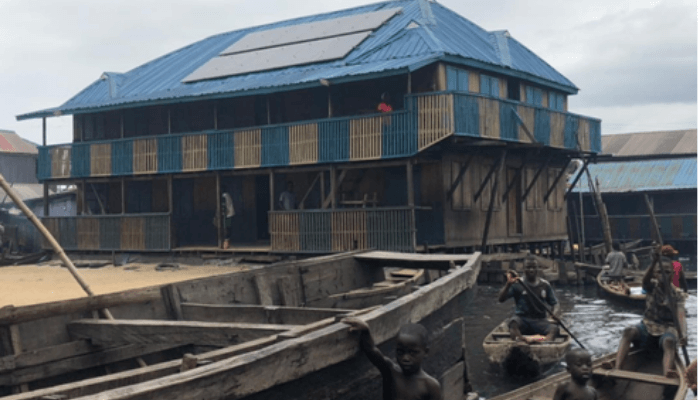

Civil society organisations and residents of three informal settlements in Lagos have strongly criticised the Lagos State Government over what they describe as a forced and unlawful eviction that has uprooted thousands of families and threatens to displace tens of thousands more without any resettlement plan. In a joint statement, groups including Justice & Empowerment Initiatives and the Nigerian Slum/Informal Settlement Federation said the demolitions in Makoko, Oko Agbon and Sogunro were carried out in violation of existing court orders and both Nigerian and international law.
According to the statement, the operation began two days before Christmas when crews started clearing a 30-metre safety setback around a high-tension power line that runs between the waterfront communities and the Third Mainland Bridge. Residents initially cooperated, organisers said, after being assured that the clearance was limited to the 30-metre buffer prescribed in Lagos building regulations, and that affected families would receive some form of compensation.
The first phase of demolition continued until January 3, displacing people and forcing some to seek shelter in overcrowded homes or sleep in canoes on the lagoon. Organisers hailed the cooperation of community members despite the hardship, but said the situation sharply deteriorated on January 4 when heavy machinery began destroying structures well beyond the agreed 30-metre zone.
Residents attempted to protest on January 4 and 5, but were reportedly faced with a heavy police presence. Teargas was fired and some homes were set on fire as security forces protected the demolition teams, the statement said. While the protests were underway, community leaders travelled to Alausa to meet officials from the Lagos State Ministry of Physical Planning and Urban Development. They were reportedly told that the state intended to clear up to 100 metres or more, far beyond what the community had understood would be the limit and what is provided under current law.
By January 9, organisers said, the demolition had moved beyond the extended boundary and was still ongoing. Thousands have already lost their homes, and many more are at risk, they warned. Youths from Makoko, supported by informal settlement groups, conducted a house-to-house numbering exercise in 2020-2021 that estimated the population of the four villages within Makoko alone at more than 80,000 people, with tens of thousands more living in neighbouring Oko Agbon and Sogunro.
Critics say the scale and method of the operation have flouted both judicial directives and basic human rights. They argue that the demolition has been carried out without meaningful consultation, adequate notice or plans for relocation, raising fears of a deepening humanitarian crisis. Rights advocates also point to broader patterns of forced eviction across Lagos in recent years, where waterfront and informal communities have repeatedly been cleared to make way for development projects without adequate safeguards for vulnerable residents.
Lagos State officials have not responded publicly to the latest allegations. Previous government positions have framed similar demolitions as necessary for urban renewal and public safety, though those justifications have done little to assuage the concerns of affected residents and advocacy groups.