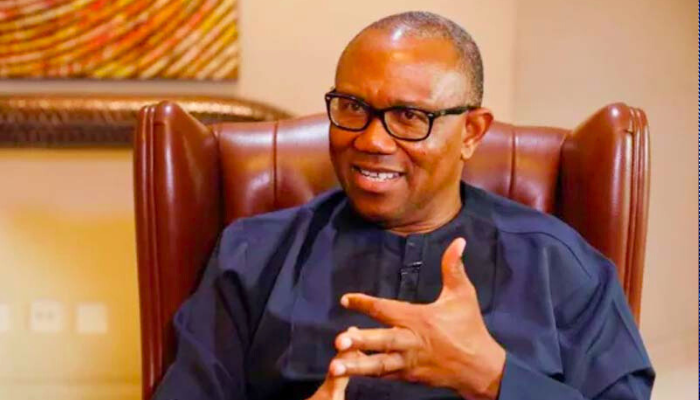

Former presidential candidate of the Labour Party, Peter Obi, has criticised the Federal Government’s decision to approve the write-off of nearly ₦8 trillion in debts owed by the Nigerian National Petroleum Company Limited (NNPC Ltd), describing the move as fiscally irresponsible.
In a statement posted on X on Wednesday, Obi expressed concern that the debt cancellation was approved despite unresolved audit issues surrounding the national oil company and worsening economic conditions for citizens.
President Bola Tinubu had approved the cancellation of outstanding debts amounting to ₦5.57 trillion and $1.42 billion owed by NNPC Ltd to the Federation Account, clearing liabilities accumulated up to December 31, 2024.
Reacting to the decision, Obi said the approval sends a troubling signal at a time when Nigerians are grappling with high inflation, rising energy costs, and increased taxation.
According to him, the debt forgiveness involves a company that recently announced profitability while still facing audit queries over trillions of naira allegedly unaccounted for. Obi referenced ongoing scrutiny over about ₦210 trillion linked to NNPC’s financial records, noting that the figure exceeds the combined Federal Government budgets over multiple years.
He cited federal budget figures of ₦21.83 trillion in 2023, ₦43.56 trillion in 2024, ₦54.99 trillion in 2025, and an estimated ₦58.18 trillion for 2026, amounting to roughly ₦178.56 trillion, far below the sum under audit review.
Obi further argued that the timing of the write-off is particularly concerning, given the removal of fuel and electricity subsidies, which has intensified the cost-of-living crisis without corresponding improvements in welfare.
He added that the nearly ₦8 trillion forgiven could have been invested in critical sectors, noting that it exceeds the combined ₦7.1 trillion allocation for education, health, and agriculture in the 2025 budget, and is almost double the ₦4.9 trillion earmarked for national security.
Calling for transparency, Obi urged the President, who also oversees the petroleum sector, to provide clear explanations to Nigerians, stressing the need for fiscal discipline and accountability in public finance management.