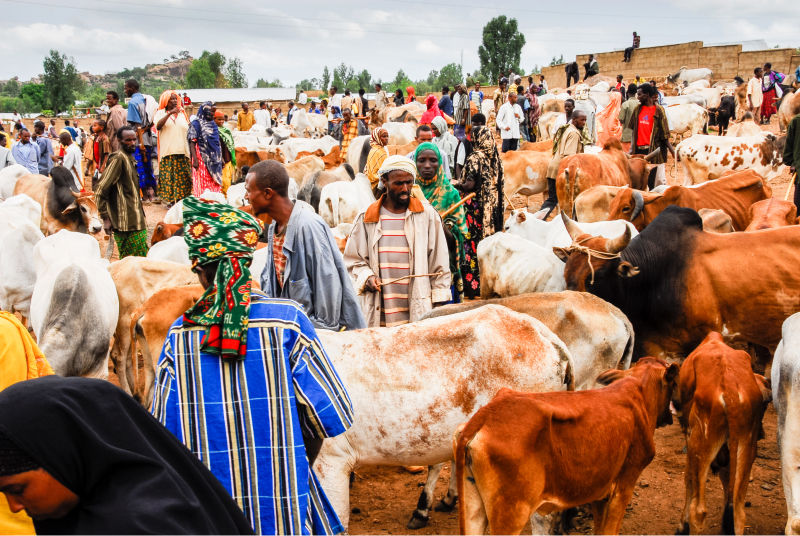

The vibrant energy of the Artisan Market in Enugu, typically a hub of haggling and heavy trade, has been replaced by a somber quietude as the prices of livestock reach unprecedented heights. For both traders and consumers, the current economic climate has transformed meat—once a staple of the Nigerian pot—into a luxury item that many can no longer afford. Recent surveys of the market reveal a startling trend: the cost of goats and rams has nearly doubled over the last year, leaving the marketplace filled with livestock but devoid of buyers.
A large goat, which sold for approximately ₦80,000 to ₦100,000 during the last festive season, now commands a price tag of ₦150,000 to ₦180,000. Even the smaller breeds, previously accessible to middle-income earners for ₦30,000, have climbed toward the ₦60,000 mark. Traders attribute this surge to a cocktail of systemic challenges: the skyrocketing cost of animal feed, the relentless rise in transportation fuel, and the lingering insecurity in the northern regions where much of the country’s livestock is reared. For the dealers, the struggle is not just about profit but survival; as prices rise, turnover slows, and the cost of maintaining the animals while they wait for a buyer eats into their dwindling margins.
The ripple effect on the local economy is profound. Small-scale “Mama Put” vendors and restaurateurs, who form the backbone of the informal food sector in Enugu, are being forced to make difficult choices. Some have reduced portion sizes, while others have substituted goat meat with cheaper, less nutritious alternatives. For the average family, the tradition of slaughtering a goat for celebrations or Sunday stews is becoming a memory of a more prosperous era. The Enugu situation is a microcosm of a broader national crisis where the cost of protein is outstripping the minimum wage, leading to growing concerns over nutritional deficiency and food security.
Beyond the numbers, there is a palpable sense of frustration among the market community. Many traders lament that even during the peak of the Christmas and New Year festivities, sales were a fraction of what they used to be. The high cost of logistics, driven by the removal of fuel subsidies and the volatility of the Naira, means that moving a truckload of cattle or goats from the North to the Southeast now costs triple what it did two years ago. These overheads are inevitably passed down to the consumer, who is already grappling with the rising costs of electricity, rent, and education.
As the 2025 fiscal year progresses, the livestock market in Enugu serves as a stark reminder of the inflationary pressures choking the Nigerian consumer. Without targeted interventions in the livestock value chain—such as improved security for herders, subsidies for animal feed, and more efficient transport corridors—the “Artisan Market blues” may become a permanent fixture of the regional economy. For now, the residents of Enugu watch the market stalls with longing, waiting for a reprieve that seems increasingly distant.
The crisis in Enugu’s livestock market is a localized symptom of Nigeria’s runaway food inflation, which continues to defy various monetary interventions. According to the National Bureau of Statistics (NBS) latest Consumer Price Index reports, food inflation has remained the primary driver of headline inflation, frequently hovering above the 35% mark. This surge is reflected in the SBM Jollof Index, which tracks the cost of preparing a pot of Jollof rice across Nigeria. The index shows that the cost of basic ingredients—rice, peppers, oil, and protein—has reached a threshold where a single meal for a family of five now costs more than the daily earning of an average laborer.
The human and economic cost of this trend is significant. In a November 2025 briefing, an official from the National Bureau of Statistics (NBS) noted, “The persistent pressure on food prices is no longer just a seasonal fluctuation but a structural emergency; it is eroding the purchasing power of households so rapidly that it threatens to push millions more into multidimensional poverty before the end of the fiscal year.” This sentiment is echoed by the private sector, where the focus is on the long-term productivity of the workforce.
Reflecting on the macroeconomic implications, an analyst from SBM Intelligence stated in December 2025: “When a population spends over 60% of its income on food, there is zero room for savings, healthcare, or education. This food-induced inflation is effectively de-capitalizing the Nigerian middle class and turning the country into a ‘subsistence economy’ where growth is stifled by the simple struggle to stay fed.” As the gap between stagnant wages and rising food costs widens, the stability of the broader economy remains precarious.