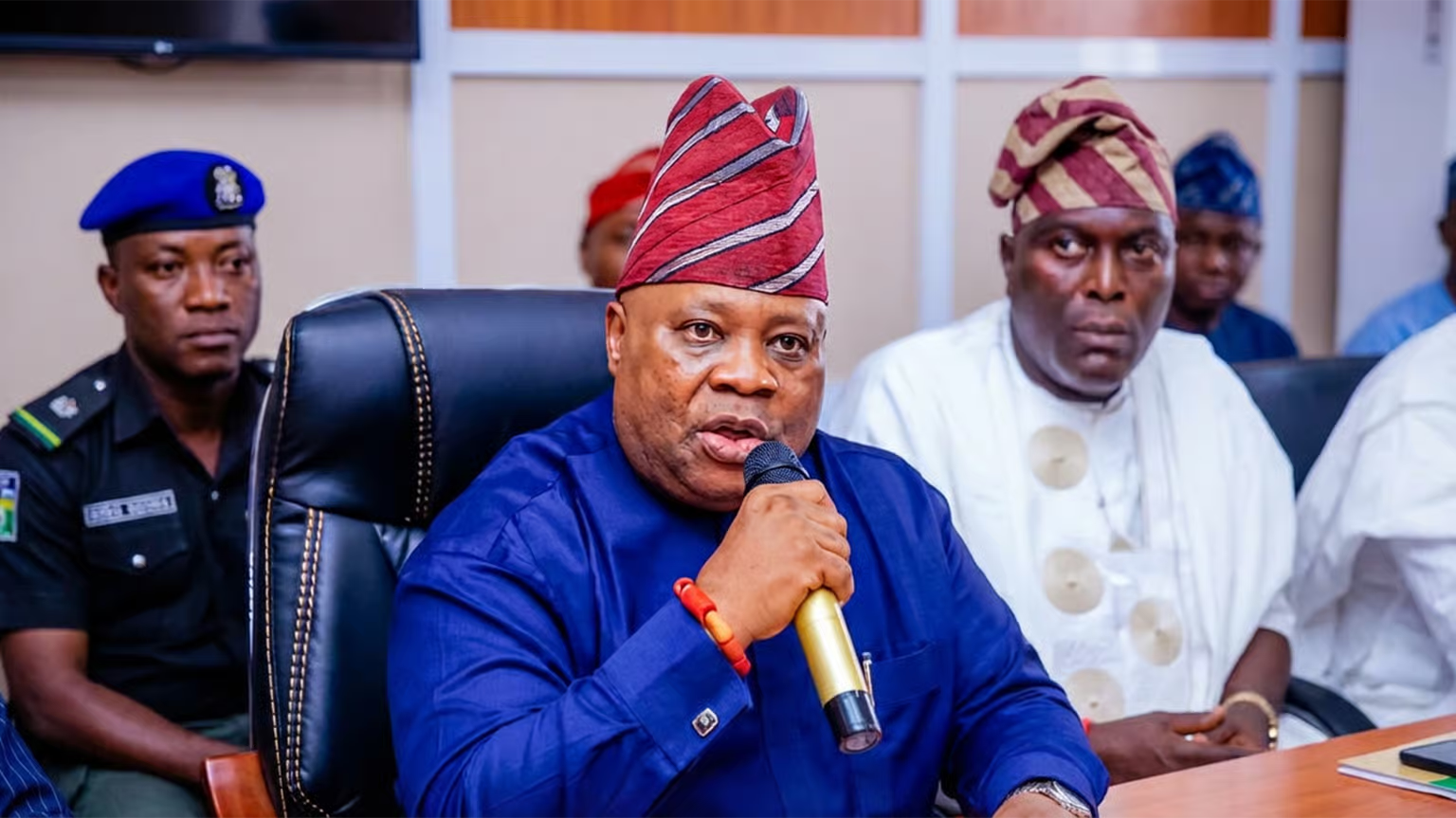

Osun State is poised for a significant revitalization of its grassroots administration as local government services are scheduled to fully resume this coming Monday, January 5, 2026. This resumption marks the definitive end of a prolonged and debilitating industrial action that paralyzed local councils for nearly eleven months. Governor Ademola Adeleke has publicly lauded the decision, signaling a new chapter for the state’s third tier of government.
The cessation of the strike, orchestrated by the state chapter of the National Union of Local Government Employees (NULGE), has been welcomed with relief by the state administration. Governor Adeleke, in an official statement, characterized the union’s decision to return to work as a “patriotic and people-oriented” move. He emphasized that the restoration of active service at the local level is a critical development for governance, one that directly addresses the yearnings and aspirations of the ordinary people who rely most heavily on council services. For nearly a year, the absence of these essential administrative functions had created a void in social delivery, a gap the Governor is now optimistic will be swiftly closed.
A major focus of the resumption process has been security. The atmosphere leading up to the return to work has been charged with political tension, necessitating a robust response from law enforcement. Governor Adeleke expressed profound gratitude to the police hierarchy, specifically the Inspector General of Police, the Assistant Inspector General for Zone 11, and the Osun State Commissioner of Police. Their collective commitment to providing a security umbrella for the returning workers has been pivotal. The Governor noted that the police command acted responsibly to preempt potential anarchy and violence, which he alleged were being plotted by certain “elements” within the state.
The fear of disruption was not unfounded. Security reports had hinted at plots to disturb the peace at various council secretariats. In response, the police have been proactive, nipping these potential threats in the bud. To ensure a smooth transition, NULGE President Dr. Nathaniel Ogungbangbe had previously outlined specific security prerequisites. These included the adequate deployment of officers to all 30 local government councils, area offices, and Local Council Development Areas (LCDAs). The union’s primary concern was to prevent the intimidation or harassment of its members and to stop any unauthorized persons from illegally occupying the secretariats.
The Osun State Police Command has echoed these concerns, issuing stern warnings to those who might attempt to derail the resumption. A directive was issued stating that non-employees of the Local Government Areas must steer clear of council premises. The police have been instructed to deal professionally but firmly with anyone inciting unrest. CP Ibrahim Gotan has reassured the public of the police’s unwavering commitment to protecting lives and property during this sensitive period.
Beyond the immediate logistics of ending the strike, Governor Adeleke used the opportunity to address the broader, often contentious issue of local government autonomy. He clarified that his administration is not opposed to the principle of autonomy, acknowledging that the presidential decision to devolve power is well-intentioned. However, he drew a sharp line regarding the implementation, insisting that the rule of law and due process must not be sacrificed for “political shenanigans.” He maintained that financial and administrative operations must strictly adhere to the constitution, and rightfully elected leadership must be allowed to exercise their mandate without hindrance.
As workers prepare to unlock the gates of the secretariats on Monday, the prevailing sentiment from the state government is one of hope. Governor Adeleke concluded his remarks by stressing that the dividends of democracy can only be delivered under conditions of peace and unity. The resumption of duties is not just an administrative reset, but a step toward stabilizing the state’s democratic infrastructure after a year of stagnation.