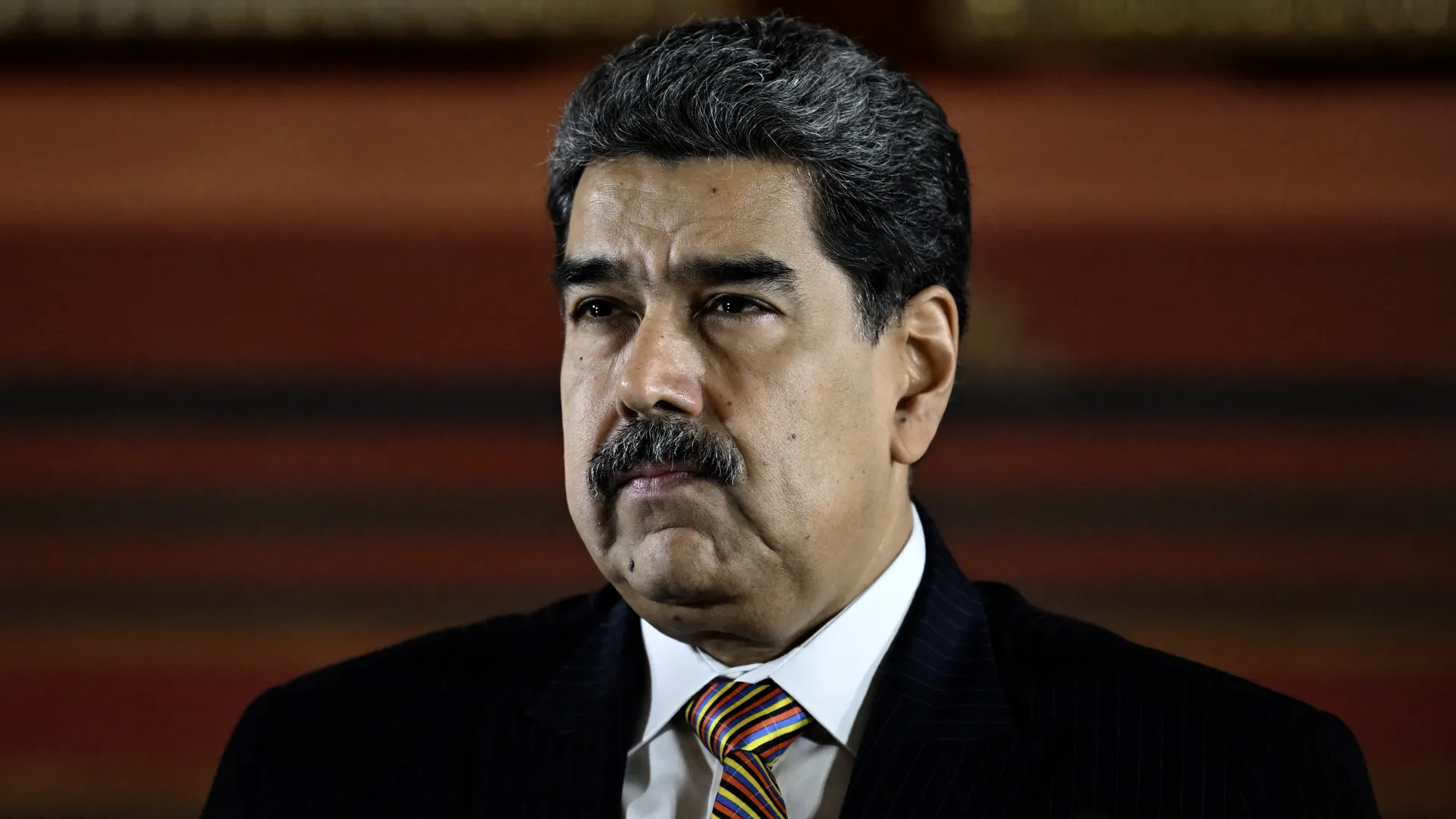

In a dramatic operation that has fundamentally reshaped the geopolitical landscape of the Western Hemisphere, U.S. forces have captured Venezuelan President Nicolás Maduro. President Donald Trump announced the stunning development early Saturday morning via Truth Social, confirming that the United States had executed a “large-scale strike against Venezuela” in coordination with law enforcement agencies. According to reports, Maduro and his wife, Cilia Flores, have already been flown out of the country, marking the potential end of a monthslong, high-stakes campaign to oust the authoritarian leader.
The capture followed a series of powerful explosions that rocked the Venezuelan capital, Caracas, and other regions, leaving many neighborhoods in total darkness. The Venezuelan government had earlier reported military attacks on a key base in the city, but by dawn, the situation had escalated into a full-scale U.S. intervention. While the Venezuelan constitution suggests that Vice President Delcy Rodríguez should assume power, the country has entered uncharted territory. The U.S. and its allies do not recognize Maduro’s administration as legitimate, instead pointing toward exiled opposition figure Edmundo González as the rightful leader.
For years, Washington has viewed Maduro not merely as a political adversary, but as the head of a sophisticated criminal enterprise. Since 2020, the U.S. Department of Justice has held an indictment against him for narco-terrorism, conspiracy to import cocaine, and weapons-related offenses. U.S. prosecutors allege that Maduro led the “Cartel de los Soles,” a drug-trafficking network embedded within the Venezuelan military and political elite, working with Colombia’s FARC rebels to “flood the United States with cocaine.” To facilitate his apprehension, the U.S. had placed a $15 million bounty on his head in 2020, which was aggressively increased to $50 million by August 2025.
Secretary of State Marco Rubio defended the move as a purely legal necessity rather than an ideological one, stating that the designation of the Maduro circle as a narcoterrorist organization was grounded in grand jury evidence. The Trump administration has consistently argued that Maduro’s rule—characterized by economic collapse, hyperinflation, and the dismantling of democratic institutions—posed a direct threat to U.S. national security and regional stability.
The international community is currently reacting with a mixture of shock and condemnation. According to analysts speaking with Al Jazeera, the capture of a sitting foreign leader by U.S. forces is “raising the bar against international norms.” Sultan Barakat, a professor of public policy, warned that this action gives the U.S. a perceived “green light” to conduct similar operations in other countries, potentially unraveling long-standing principles of national sovereignty. Global powers like Russia and China, who remained key allies of the Maduro regime until the final moments, have condemned the operation as an act of blatant aggression.
As Caracas remains in a state of emergency, the world watches to see how the Venezuelan military responds and whether a transition to the opposition-led government can occur without further bloodshed. With Maduro now in U.S. custody, the focus shifts to the Southern District of New York, where he is expected to face a historic criminal trial. This unprecedented intervention not only ends Maduro’s thirteen-year reign but also signals a transformative and controversial era in American foreign policy under the second Trump administration.