
Nigeria’s Lagos–Calabar Coastal Highway has taken a significant step forward after the Federal Government secured approximately US$1.2 billion in financing backed by lenders from the United Arab Emirates. This latest injection of funds comes as part of ongoing efforts to complete one of the most transformative transport corridors in West Africa, linking key economic hubs along Nigeria’s southern coastline.
In a statement released on Friday, the Presidency confirmed that the financing package will be applied to an approximately 56-kilometre segment of the highway, reinforcing momentum on a project that is central to the government’s infrastructure agenda. President Bola Tinubu described the funding as a “major achievement” that will ensure uninterrupted progress on the road’s construction. He emphasised that the government will continue to pursue creative financing solutions to deliver critical economic infrastructure across the country.
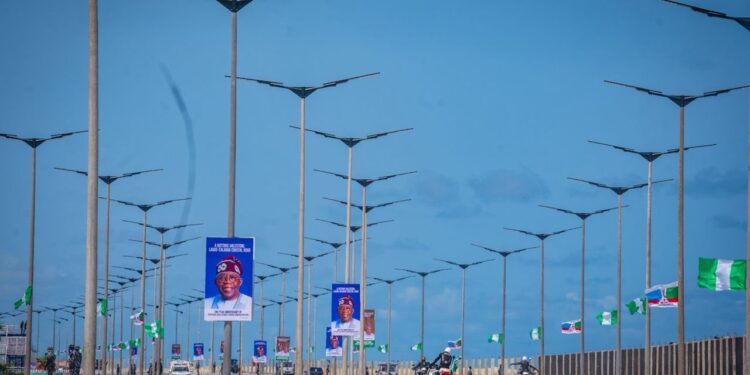
The Lagos–Calabar Coastal Highway is envisaged as a roughly 700-kilometre thoroughfare that will stretch from Lagos in the west to Calabar in the east, passing through Ogun, Ondo, Edo, Delta, Bayelsa, Rivers and Akwa Ibom states. When complete, it is expected to ease traffic congestion, reduce travel times, improve logistics efficiency and stimulate economic activity in coastal communities.
Officials say the latest financing deal underscores international confidence in Nigeria’s infrastructure programme and its broader economic reforms. The transaction was reportedly underwritten by major financial institutions based in the Gulf, with risk mitigation support provided by international insurers. This level of backing signals sustained investor interest in Nigeria’s growth potential and the bankability of major projects.
The highway’s development is being pursued in phases, with this tranche following an earlier successful financing close for another section. In July, Nigeria secured about US$747 million in funding for Phase 1, Section 1 of the road, which runs from Victoria Island in Lagos to Eleko Village. That tranche was led by Deutsche Bank and included a consortium of regional and international lenders, highlighting the project’s appeal to diverse capital partners.
Construction is being managed by Hitech Construction Company Limited under an arrangement designed to align engineering delivery with financial structuring, ensuring both efficiency and strategic oversight. So far, significant progress has been made on completed segments, with some stretches already benefiting road users.
Government authorities and development partners have framed the highway not just as a road but as a catalyst for broader economic transformation. By improving connections between industrial zones, ports, tourism centres and agricultural hubs along the coast, the infrastructure is expected to unlock trade opportunities, create jobs and attract additional foreign investment.
However, this large-scale financing and construction drive also draws scrutiny regarding transparency, long-term sustainability and social-environmental impacts. Advocates stress the importance of clear accountability and reporting mechanisms as the government continues to steward public and private funds in delivering such a pivotal asset.
As the Lagos–Calabar Coastal Highway advances, the latest UAE-backed loan represents both a milestone in the project’s evolution and a tangible demonstration of international market confidence in Nigeria’s infrastructure development trajectory.