


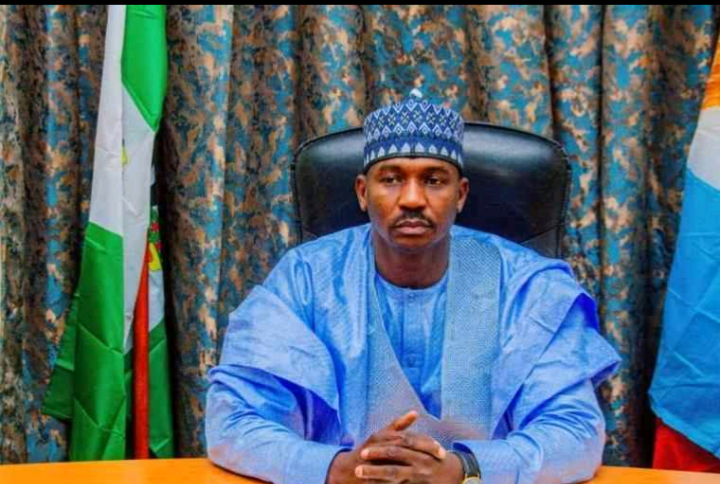

Sokoto State Governor Dr. Ahmed Aliyu has unveiled a ₦758,700,526,537.89 budget proposal for the 2026 fiscal year to the Sokoto State House of Assembly, setting a course for expanded infrastructure, better social services and sustained economic momentum. The plan, officially named the Budget of Socio-Economic Expansion, is crafted to deepen the state’s development gains and confront ongoing challenges such as security and rising living costs.
Governor Aliyu explained that this budget was shaped through broad citizen participation, including town-hall meetings across Sokoto’s three senatorial districts and all local government areas, reflecting the priorities of residents and aligning with the state’s strategic planning framework.
In presenting the budget, the governor identified the size of the fiscal plan and outlined its revenue structure, noting contributions from the Federation Accounts Allocation Committee (FAAC), internally generated revenue, and grants and development funds.
“The total budget size is N758,700,526,537.89, with projected revenue made up of N389.3 billion from the Federation Accounts Allocation Committee (FAAC), N74.5 billion in internally generated revenue, and N233.8 billion from grants, aids and capital development funds,” Aliyu stated.
Under the proposed expenditure framework, about 72 per cent of the total outlay (₦551.4 billion) is allocated to capital projects, while 28 per cent (₦207.2 billion) is set aside for recurrent costs, a structure aligned with international fiscal benchmarks that prioritises long-term investment over ongoing operational expenses.
A significant portion of the budget is directed at security, with more than ₦45.2 billion earmarked for the procurement of equipment, patrol vehicles and motorcycles to support agencies tackling banditry and violent crime in parts of the state.
The governor also addressed funding for core public services:
In health, the government proposed ₦122.7 billion, exceeding the Abuja Declaration benchmark to support the completion of major health facilities and the procurement of ambulances and modern equipment.
Education received ₦115.9 billion to bolster schools and learning outcomes in line with UNESCO recommendations.
Works and transportation are set to receive ₦109.1 billion for road construction, rehabilitation, and improvements in public infrastructure.
Other allocations include funding for water resources, agriculture, religious affairs, humanitarian services, and youth empowerment programs, all aimed at improving quality of life and reducing poverty.
Governor Aliyu highlighted that the budget reflects an emphasis on economic and social sectors, with 41 per cent of funds dedicated to economic initiatives and 37 per cent to social development. This distribution demonstrates a balanced approach between stimulating growth and enhancing welfare.
The proposal also builds on the state’s improved fiscal performance in the previous year, during which Sokoto achieved more than 65 per cent implementation of its 2025 budget, executed key projects without resorting to borrowing, and remained debt-free with no outstanding contractor liabilities.
By prioritising capital projects such as infrastructure and health facilities, the budget is positioned to stimulate local economic activity, attract investment, and create jobs, helping to strengthen Sokoto’s economy amid national fiscal constraints and rising living costs. Investments in human capital and public services also boost productivity and resilience.
The next step for this proposal is thorough scrutiny by the Sokoto State House of Assembly before it can be enacted into law and guide the state’s fiscal direction in 2026.


