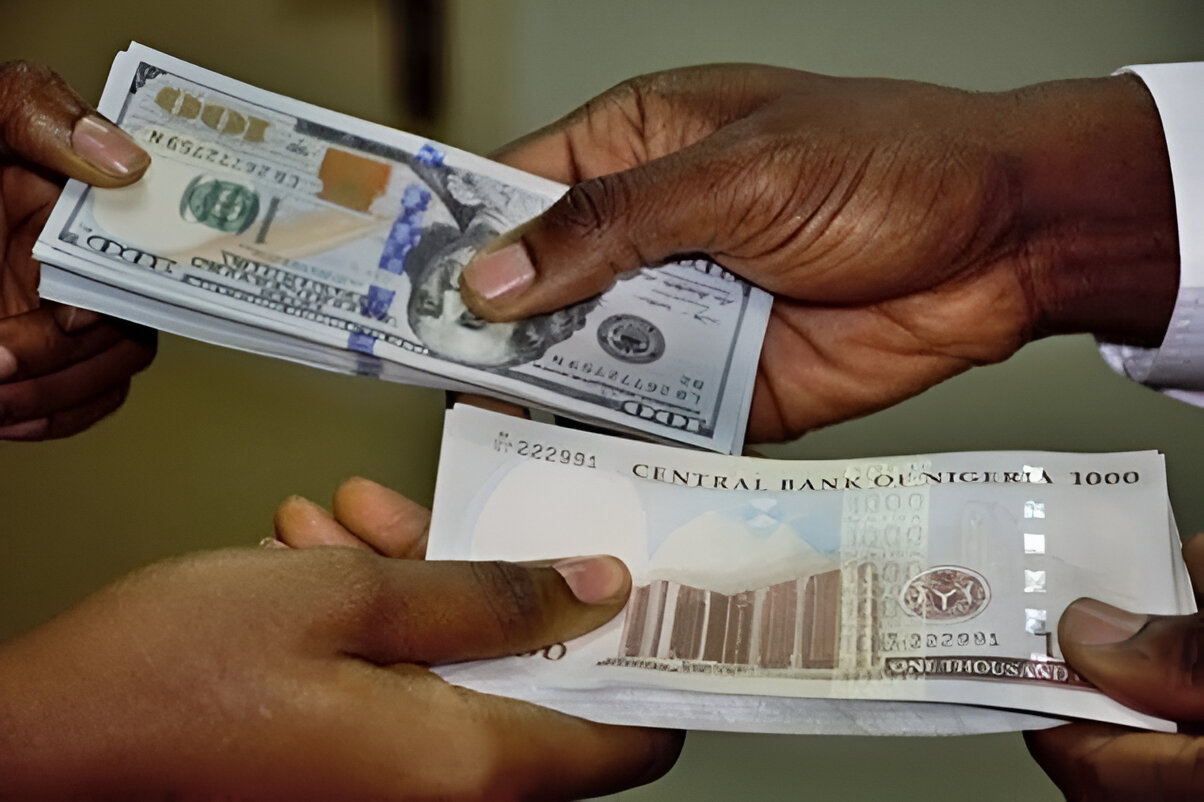

The persistent chasm between Nigeria’s official and parallel foreign exchange markets deepened on December 16, 2025, as the local currency continued to bear the strain of acute dollar scarcity. According to market sources in Lagos, the US dollar traded at a selling rate of ₦1485 and a buying rate of ₦1480 in the parallel market, commonly known as the black market. This rate stands in stark contrast to the official Central Bank of Nigeria (CBN) exchange window, where the dollar traded within a tighter range, registering a highest rate of ₦1455 and a lowest of ₦1450.
The wide arbitrage of approximately ₦30 highlights the ongoing difficulties faced by businesses and individuals seeking foreign currency for basic needs, a trend that continues to undermine the nation’s efforts to stabilise its economy.
The black market operates as a vital but unregulated alternative, absorbing the immense demand that the official Nigerian Autonomous Foreign Exchange (NAFEX) window is unable to satisfy. Despite the CBN’s stringent measures and repeated directives urging citizens and businesses to transact only through licensed banks, the parallel market thrives on necessity. Major factors driving this divergence are a shortfall in dollar supply from traditional sources and the immense transactional speed and lower bureaucratic requirements offered by black market operators.
Nigeria’s primary source of foreign exchange remains crude oil sales, and despite global price fluctuations, lower than expected production levels, often due to pipeline vandalism and production cuts, restrict the central bank’s ability to inject sufficient liquidity into the NAFEX market. This constrained supply is quickly overwhelmed by the overwhelming aggregate demand for imports, debt servicing, and capital repatriation, pushing desperate end-users toward the parallel market.
Beyond oil revenue constraints, the Naira’s value is being eroded by several deep-seated macroeconomic challenges. High inflation, which continues to hover around historic peaks, diminishes the purchasing power of the Naira both domestically and internationally. This inflationary environment, combined with global economic uncertainties, encourages capital flight and speculative hoarding of foreign currency. Forex speculators often capitalise on the arbitrage opportunity, withdrawing funds from the official window and selling them at the higher parallel rate, further exacerbating the scarcity.
For the CBN, unifying the various exchange rate windows remains a critical, yet elusive, policy goal. A unified rate is essential for improving transparency, attracting Foreign Direct Investment (FDI), and restoring global confidence in the Nigerian market. However, any attempt to close the gap requires a delicate balance: adjusting the official rate risks politically and socially explosive devaluation, while tightening regulation risks drying up the parallel market supply without providing a viable official alternative.
The high parallel market rate of ₦1485 has severe, tangible consequences for the average Nigerian and local industries. Manufacturers rely heavily on imported raw materials, machinery, and spare parts. The elevated cost of dollars translates directly into higher operational expenses, forcing businesses to increase the prices of finished goods, thereby driving up domestic inflation. Furthermore, the higher exchange rate makes essential imports—from pharmaceuticals to agricultural inputs—significantly more expensive, eroding household savings and worsening the cost-of-living crisis.
The situation also directly impacts remittances and diaspora funds. While a high parallel rate may benefit recipients initially, the resulting domestic inflation often cancels out any perceived gains, trapping the economy in a vicious cycle of currency depreciation and price instability.
As the year draws to a close, market analysts suggest that sustained dollar scarcity and elevated demand for foreign exchange will likely keep the parallel market rate under severe pressure. Until structural reforms—focused on boosting non-oil exports, attracting long-term capital, and securing domestic crude oil production—yield substantial results, the gap between the official and black market rates will remain an unavoidable economic reality for Nigeria.