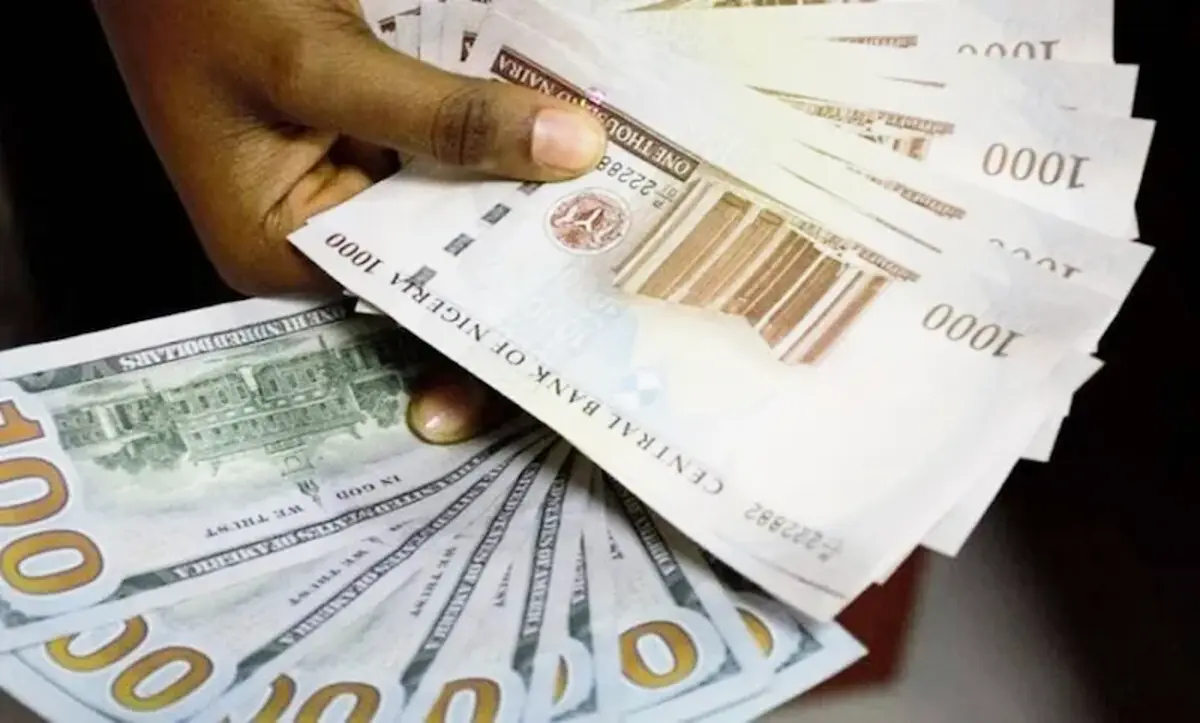

The naira has recorded a decline for seven consecutive trading days, signaling sustained pressure on the Nigerian foreign exchange market. Traders attribute this downward trend to heightened demand for imports as the festive season approaches, with businesses rushing to settle foreign exchange obligations before the year ends.
Data from the Central Bank of Nigeria (CBN) reveals a marginal depreciation of the currency. The dollar was quoted at N1,454.38 on Tuesday, December 9, 2025, representing a 0.4 percent decline from N1,448.43 on December 1. On a daily basis, the naira slipped by 0.2 percent from Monday’s close of N1,451.86. The parallel market mirrored this trend, where the local currency weakened by N3 to close at N1,483 per dollar.
Market participants note that this volatility underscores persistent liquidity challenges. Foreign exchange inflows dropped significantly in November to just $2 billion, marking a 16-month low and a sharp 67 percent decline from the $6.1 billion recorded in October. Analysts at FBNQuest highlighted that this contraction in supply, coupled with relentless demand, fueled the naira’s depreciation throughout the month.
In response to the evolving market dynamics, the CBN has updated guidelines for travelers seeking foreign currency. Under the new rules for Business Travel Allowance (BTA) and Personal Travel Allowance (PTA), beneficiaries can now access up to 25 percent of their entitlement in cash. The remaining 75 percent must be transferred to a prepaid card. The apex bank emphasized that all necessary documentation must be provided to access these funds.
Additionally, the CBN clarified access to funds for medical and educational purposes through Bureau De Change (BDC) operators. Nigerians traveling for medical treatment can obtain up to $5,000 from BDCs upon submission of required documents. For expenses exceeding this limit, customers are directed to commercial or non-interest banks. Similarly, for school fees, students or their sponsors can access up to $10,000 annually from BDCs for payments to foreign institutions, subject to documentation.
The sustained cooling of the naira highlights the ongoing struggle to balance liquidity with demand in Nigeria’s foreign exchange market as the year draws to a close.