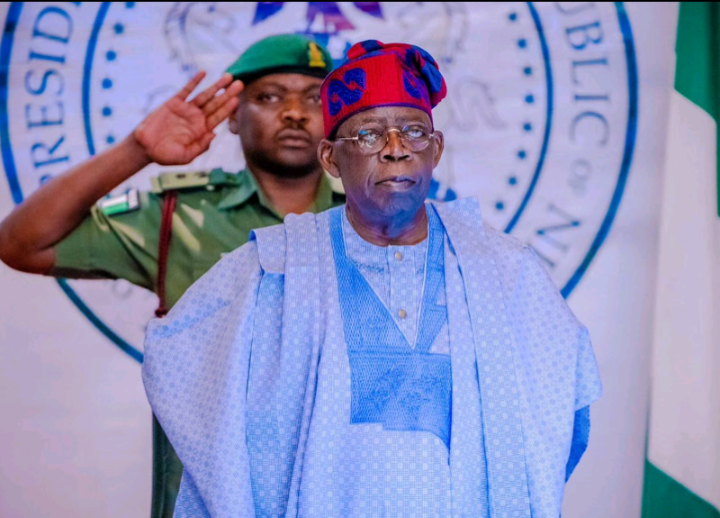

President Bola Ahmed Tinubu has approved and inaugurated new governing boards for three major federal institutions: the National Agricultural Development Fund (NADF), the Bank of Agriculture (BOA) and the Universal Basic Education Commission (UBEC). The appointments, announced by presidential spokesman Bayo Onanuga, are designed to strengthen leadership in agriculture financing and basic education, two sectors considered vital to Nigeria’s long-term economic development.
For UBEC, the presidency confirmed that the chairmanship of Umaru Tanko Al-Makura, first announced in July, remains unchanged. The president also approved a new set of zonal representatives to reflect Nigeria’s six geopolitical regions. Those appointed include Uchendu Ikechi Mbaegbulem for the South East, Gift Ngo for the South South, Mrs Ibiwunmi Akinnola for the South West, Dr Meiro Mandara for the North East, Dr Abdu Imam Saulawa for the North West, and Professor Paul Ibukun-Olu Bolorunduro for the North Central. Each member is expected to serve a four-year term.
At the Bank of Agriculture, the presidency reaffirmed the earlier appointment of Muhammad Babangida as Chairman and Ayo Sotinrin as Managing Director/Chief Executive Officer. The board also includes three executive directors who will lead key operational departments, as well as five non-executive directors selected from the geopolitical zones to ensure broad representation and oversight. The appointments are expected to enhance accountability in BOA’s loan administration and strengthen its capacity to support smallholder farmers across the country.
For the National Agricultural Development Fund, Tinubu named seasoned banker Bello Maccido as Chairman. Maccido, a respected figure in Nigeria’s financial sector and the pioneer chairman of FBNQuest Merchant Bank, leads a board composed of experienced professionals from different regions of the country. NADF was created to improve access to affordable agricultural financing, especially for small and medium-scale farmers who struggle to obtain credit through commercial banks.
The establishment of a full board for NADF is expected to accelerate the fund’s operational rollout. Since its creation under the 2022 Act, stakeholders have repeatedly noted that the absence of a governing board slowed the institution’s ability to disburse funds and fulfil its mandate. With leadership now in place, NADF is positioned to support farmers, agripreneurs and agricultural institutions through grants, low-interest loans and structured financing models aimed at boosting food production.
Analysts say the appointments at BOA could help address Nigeria’s long-standing agricultural credit gap. The bank, which has undergone years of restructuring and recapitalisation, is central to federal plans to support rural farming communities and reduce the country’s heavy dependence on food imports. With a strengthened board and leadership team, BOA is expected to expand its reach and implement more transparent lending frameworks.
In the education sector, the newly constituted UBEC board is expected to enhance oversight of basic education funds and ensure more transparent allocation of resources across states. With fresh zonal representation, education experts anticipate stronger monitoring of Universal Basic Education (UBE) projects and better efforts to address inequalities in school infrastructure, teacher distribution and learning outcomes.
The presidency described the appointments as part of ongoing reforms intended to improve governance, strengthen institutions and enhance service delivery in key sectors that directly affect Nigerians. The new board members are expected to resume work immediately, guiding policy direction, strengthening accountability and ensuring that the agencies fulfil their statutory mandates.
Strengthening NADF, BOA and UBEC could stimulate agricultural expansion, boost food production, improve rural income and enhance education outcomes. With increased financing for farmers and stronger oversight of basic education, these reforms may contribute to higher productivity, reduced import dependence and more stable long-term economic growth across Nigeria.