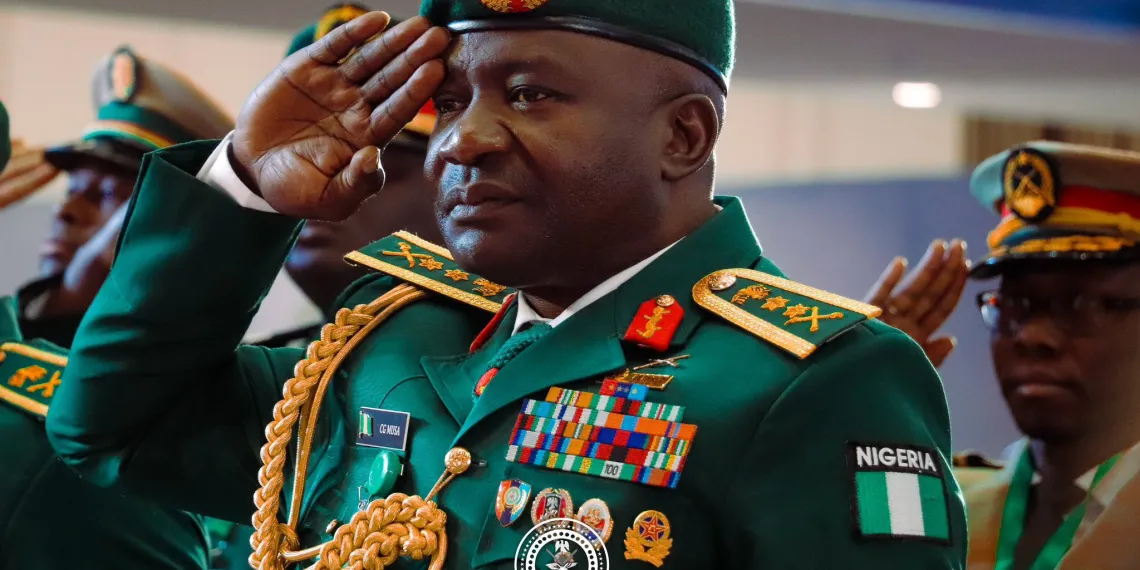

The sudden resignation of Nigeria’s defence minister has laid bare a national emergency where escalating violence now directly sabotages economic stability, creating a paradox of growth without prosperity.
In a move that underscores the severity of Nigeria’s security breakdown, Defence Minister Mohammed Badaru Abubakar resigned on December 1, 2025, citing health reasons requiring “urgent and sustained attention.” His departure is not an isolated political event but a symptom of a system under extreme duress. It coincides with President Bola Tinubu’s declaration of a national security emergency, triggered by a horrific wave of mass kidnappings that have seized over 400 people, mostly schoolchildren, since mid-November.
This moment represents more than a cabinet reshuffle; it is a critical juncture where Nigeria’s profound security failures are colliding with its fragile economic gains. The country presents a stark contradiction: macroeconomic growth figures signal potential, while the daily reality for millions—defined by fear, displacement, and hunger—tells a story of a nation held hostage by instability.
A Security Crisis at a Tipping Point
The catalyst for the current emergency is a brutal resurgence of mass kidnappings, a crime that has become a lucrative industry for armed groups. The abduction of more than 300 pupils and staff from St. Mary’s school in north-central Nigeria on November 21 was a devastating echo of past tragedies. The crisis has spread indiscriminately, with gunmen in recent raids seizing “a Christian pastor, a Muslim bride and her bridesmaids,” demonstrating a ruthless disregard for identity or occasion.
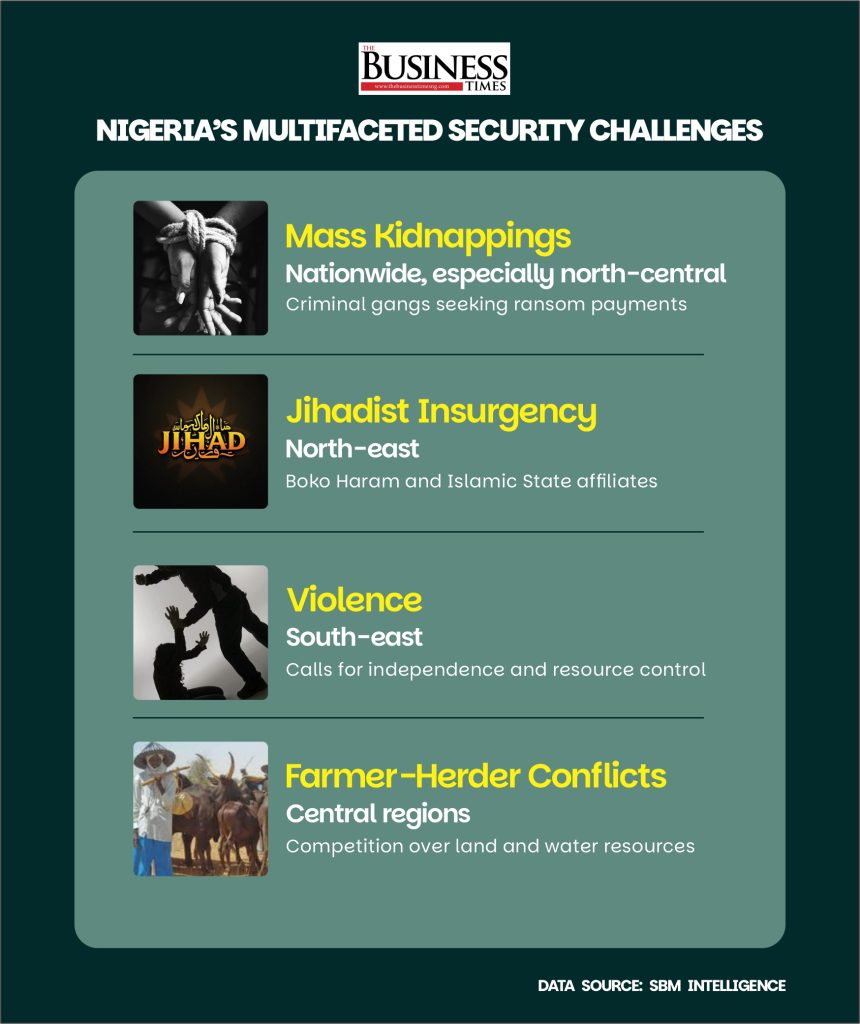
This violence is layered atop existing threats: a persistent jihadist insurgency in the northeast, separatist agitation in the southeast, and chronic clashes between herders and farmers in the central belt. While officials debate whether jihadist groups or criminal gangs are responsible for the kidnappings, the effect is identical: a paralyzing climate of fear that stifles community life and economic activity. The government’s response, now in flux with the minister’s exit, has been widely perceived as inadequate, allowing these groups to operate with impunity across vast swathes of territory.
The Economic Paradox: Growth That Cannot Be Felt
Here lies Nigeria’s central paradox. Officially, the economy is growing. GDP expanded by 3.98% in the third quarter of 2025, powered by agriculture and industry. Yet, this growth is an abstraction to most citizens. Economists identify a fatal disconnect between national statistics and household welfare. As Prof. Segun Ajibola explains, Nigeria suffers from “weak transmission mechanisms” between macroeconomic gains and the lived experience of its people. The improved GDP rate, he cautions, “does not automatically translate to better living conditions for ordinary Nigerians.”
The reasons are inextricably linked to insecurity. Gbolade Idakolo of SD & D Capital Management acknowledges positive government initiatives but states plainly that the current minimum wage “is still insufficient for most households,” with many struggling to meet “their basic feeding needs.” Stubbornly high food inflation, a primary driver of hardship, is fuelled directly by insecurity that dislodges farmers, destroys fields, and disrupts supply chains. Prof. Godwin Oyedokun calls the growth a “mixed picture,” emphasizing that “Nigerians want growth they can feel — stable prices, affordable food, functional markets and stronger purchasing power.” Insecurity ensures they cannot feel it.
The economic damage is multifaceted. Research firm SBM Intelligence classifies Nigeria as “critical” on its Instability Risk Index, a label that scares off vital foreign investment and hampers business planning. Academic studies confirm a vicious cycle: unemployment and inflation drive crime, while crime disrupts the education and economic activity needed to solve unemployment. The agricultural sector, the very engine of the recent growth, is particularly vulnerable. Each attack displaces more farmers, threatening future harvests and setting the stage for the next round of food price shocks.
Political Reckoning and a New Strategy
Minister Abubakar’s resignation, accepted by President Tinubu with thanks for his “services to the nation,” has forced a political reckoning. It has ignited speculation about broader cabinet changes ahead of the 2027 election cycle and prompted a significant strategic pivot.
In response, President Tinubu has nominated retired General Christopher Musa, the former chief of defence staff, as the new minister. General Musa, 58, is “widely regarded as one of the country’s most experienced military strategists,” known for commanding major counter-insurgency operations. His expected task is to oversee “Nigeria’s most ambitious security overhaul in decades.” His appointment signals a recognition that the previous approach has failed and that security is now the government’s paramount challenge.
Perhaps more consequentially, the crisis has sparked unprecedented assertiveness from regional leaders. Northern governors and traditional rulers, in a major political shift, recently gave their “unanimous endorsement of state police,” a reform long resisted in the region. They also demanded a six-month suspension of mining activities, a direct admission that “illegal mining is intricately linked to worsening insecurity.” This emerging regional consensus could force a fundamental restructuring of Nigeria’s security architecture, moving power away from the notoriously inefficient federal centre.
The International Gaze and a Precarious Future
Nigeria’s turmoil is drawing intensified international scrutiny, which carries its own economic and diplomatic risks. The United States Congress has held briefings on the violence and alleged religious persecution. In October, former U.S. President Donald Trump escalated tensions by designating Nigeria a “Country of Particular Concern” and hinting at drastic measures. While Nigeria’s government rightly notes that “both Muslims and Christians have been victims of attacks,” the international perception of a state losing control can further isolate it economically.
Amid this pressure, there are flickers of cooperation. Following talks in Washington, the U.S. and Nigeria agreed to establish a bilateral working group on defence and security, a potential lifeline for expertise and resources.
The Insecurity Tax
Nigeria stands at a precipice. The resignation of its defence minister is a stark marker of a system struggling under the weight of a crisis it has failed to contain. The fundamental truth now evident is that insecurity functions as a crippling tax on Nigeria’s economy and future. It taxes farmers, forcing them off their land. It taxes businesses, adding unbearable costs for security and logistics. It taxes the national budget, diverting billions from education and healthcare into a military campaign with elusive results. Most cruelly, it taxes the poor most heavily, trapping them in a cycle of violence and poverty.
The path forward requires more than a new minister. It demands a holistic recognition that security and economic development are two sides of the same coin. Strengthening the links between growth and welfare, as Prof. Ajibola suggests, will require “a combination of monetary, fiscal, and political efforts.” The boldness of northern governors on state police and mining suggests a new political will may be emerging.
General Christopher Musa inherits not just a military portfolio, but a national test. His success will not be measured solely in battles won or hostages freed, but in whether Nigerians can finally begin to feel the economic growth that has, until now, been stolen from them by violence and fear. The security of the nation and the security of its economy have become one and the same.