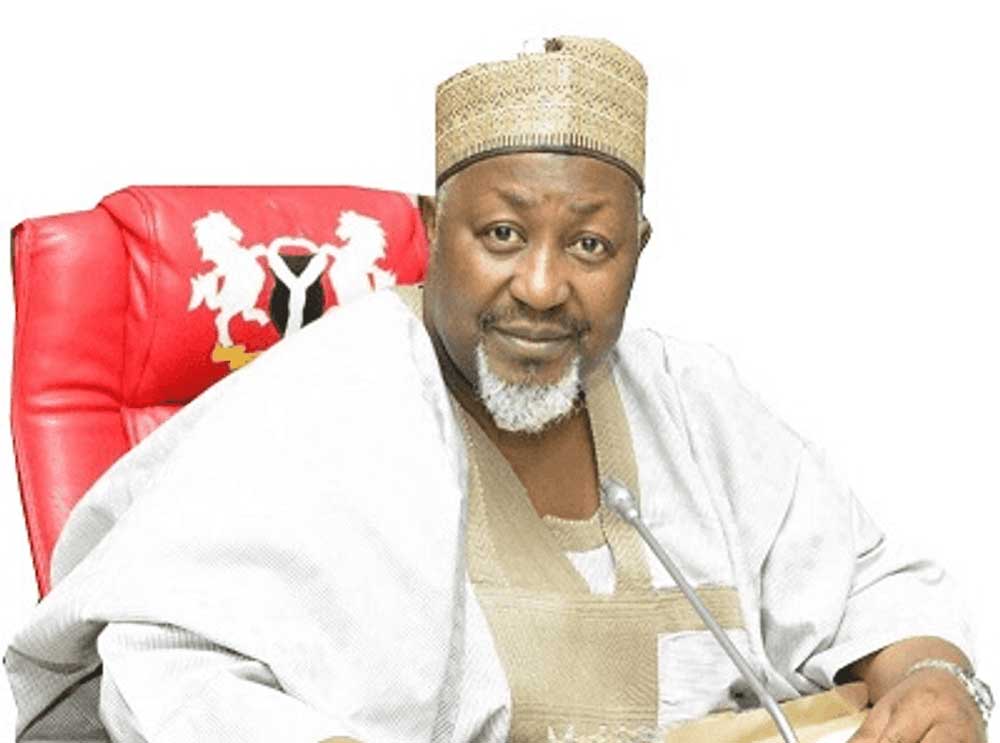

Nigeria’s minister of defence, Mohammed Badaru, has resigned from office with immediate effect, citing health concerns, in a development that has added new uncertainty to the country’s already fragile security and economic landscape. The resignation was conveyed in a letter dated 1 December and addressed to President Bola Tinubu. Presidential spokesperson Bayo Onanuga confirmed the departure on Monday and said the president has accepted the decision while expressing appreciation for Badaru’s service. Tinubu is expected to inform the Senate of a replacement later this week.
Badaru, 63, joined the federal cabinet in August 2023 after serving two terms as governor of Jigawa State. His tenure at the Ministry of Defence coincided with what many analysts describe as one of the most challenging security periods in Nigeria’s recent history. The country continues to grapple with persistent insurgency in the northeast, rising banditry and mass abductions in the northwest, separatist tensions in the southeast and worsening violence linked to farmer-herder clashes across several states.
The resignation comes at a time when Tinubu has declared a national security emergency and is under pressure to demonstrate progress on stabilising the country. Just days before Badaru’s exit, the president held a closed-door meeting with former Chief of Defence Staff Christopher Musa at the State House. Senior officials familiar with ongoing deliberations say the meeting forms part of a broader security realignment that the presidency has been weighing for months. Although no official link has been made between the meeting and Badaru’s departure, the timing has fuelled speculation that the administration is preparing significant changes in the defence and security architecture.
Badaru’s departure creates both a leadership vacuum and political implications for an already stretched federal government. A change in defence leadership at a critical moment risks slowing ongoing operational reforms and may disrupt communication lines with service chiefs who have been implementing new directives tied to Tinubu’s security emergency. The Ministry of Defence has also been central to recently announced initiatives aimed at strengthening intelligence coordination, improving counterinsurgency funding flows and accelerating acquisition of military hardware. Any temporary disruption to these processes could weaken the government’s immediate response capacity.
Beyond the security sector, the resignation carries economic consequences. Investors and development partners closely watch Nigeria’s security situation because persistent instability has been a major drag on growth and fiscal stability. Rising attacks on farmers have contributed to food inflation and supply disruptions. Insecurity along major highways continues to inflate logistics costs and erode business confidence. Nigeria’s manufacturing sector has repeatedly cited violent disruptions as a factor behind reduced output and rising operational expenses.
A sudden change in defence leadership could therefore heighten investor caution at a time when the government is attempting to attract foreign capital and restore macroeconomic stability. The economy is still adjusting to recent reforms, including fuel subsidy removal and exchange rate unification, both of which have exerted significant pressure on households and businesses. Improved security has been framed by economists as a necessary condition for the reforms to yield medium-term gains. Any perception of instability or policy discontinuity in the defence sector risks undermining these efforts.
Badaru’s political background adds further complexity. As a former two-term governor with extensive grassroots support in Jigawa and strong ties within the ruling All Progressives Congress, his exit marks the loss of one of the administration’s key northern political stabilisers. His presence in the cabinet helped balance regional representation and offered political cover for difficult policies. Analysts say the selection of his successor will be closely scrutinised for both competence and political signalling.
While the presidency has sought to frame the resignation purely as a health-related decision, its broader impacts are already visible in public discourse. Security analysts argue that Tinubu now faces a critical opportunity to recalibrate leadership within the defence establishment and inject fresh urgency into counterterror and stabilisation efforts. Others warn that frequent changes at the top could signal volatility rather than reform.
As the nation awaits the announcement of a new minister, the expectations are clear. The next defence chief will inherit a complex security environment, an overstretched military and a public demanding tangible improvements. The economic stakes are equally high. With inflation still elevated and investment sentiment fragile, the ability of the government to restore security will remain central to its efforts to rebuild confidence and sustain growth.
Badaru’s exit, therefore, represents more than a personal decision. It is a moment that exposes the intertwined nature of Nigeria’s security and economic challenges and one that places fresh pressure on a presidency seeking to steady the country’s trajectory.