
Kenya is moving forward with a major infrastructure initiative, finalising a $1.5 billion highway expansion just weeks after Nigerian businessman Tony Elumelu pledged $1 billion to support the country’s development projects. The government announced that two Chinese state-owned firms have commenced work on the dual-carriageway upgrade, a key route linking the port city of Mombasa to Nairobi and onward to Uganda and other landlocked countries.
Officials said the project represents a new approach to financing large-scale infrastructure, combining debt and equity from both Kenya and Chinese partners, rather than relying solely on traditional state-to-state loans. The first phase, valued at $863 million, will see China Road and Bridge Corporation collaborate with Kenya’s National Social Security Fund (NSSF) to widen 139 kilometres of single-lane road into four- and six-lane sections. The second phase, led by Shandong Hi-Speed Road and Bridge International, will convert an additional 94 kilometres into a six-lane highway at a cost of $678.56 million.
President William Ruto described the project as a pragmatic public-private partnership, emphasising that traditional government financing alone would have delayed construction due to budget constraints. “This partnership allows us to accelerate development without placing unsustainable pressure on public finances,” he said during the launch ceremony.
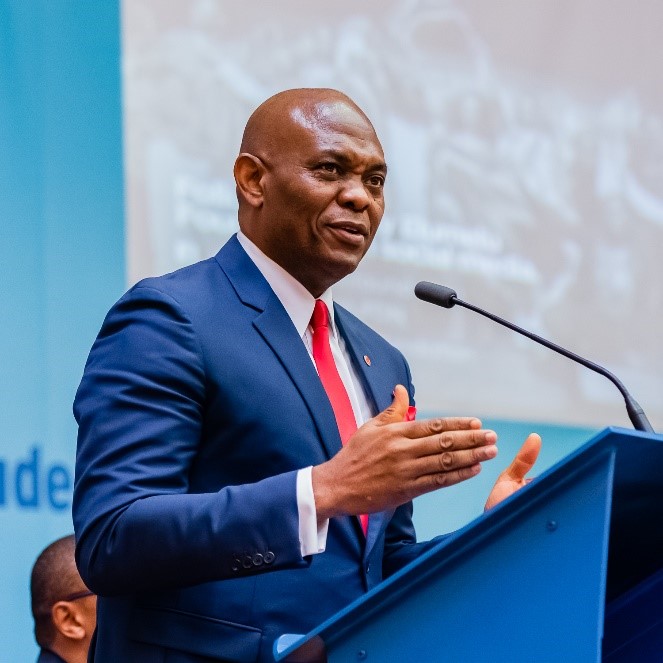
The Chinese-backed expansion comes shortly after Elumelu’s November 12 pledge, which aims to channel private capital into sectors such as energy, transport, and agriculture. Elumelu, who chairs United Bank for Africa Plc, Transcorp Group, and Heirs Holdings, highlighted his commitment to investments that can drive sustainable growth across the continent. President Ruto welcomed the pledge, noting it underscores growing confidence in Kenya as a destination for private investors seeking to participate in Africa’s economic rise.
The project marks a significant step in Kenya’s efforts to modernise its transport network and stimulate regional trade, while demonstrating the increasing role of private African investors alongside international partners in financing critical infrastructure.