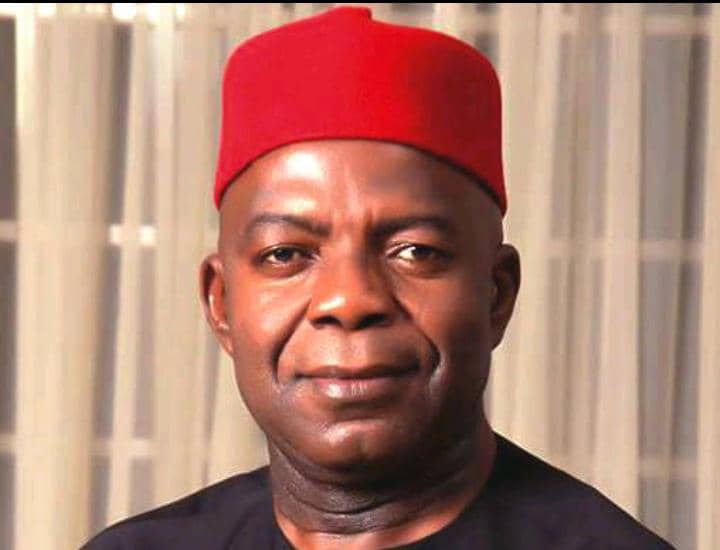

The governor of Alex Otti has submitted a ₦1.016 trillion budget proposal for 2026 to the Abia State House of Assembly. The plan, dubbed the “Budget of Acceleration and New Possibilities,” marks a 13% increase compared with the 2025 budget.
Of the total proposed amount, ₦811.8 billion, roughly 80%, is earmarked for capital expenditure, signalling a major investment drive in infrastructure and development projects. This allocation shows a 32% jump in capital spending compared to the previous year. Meanwhile, ₦204.4 billion, or 20% of the total, is allocated for recurrent expenditure which is a 33% rise from 2025, to cover ongoing administrative expenses, including salaries and expanded payrolls.
The governor explained that this budget’s structure reflects a clear priority: building sustainable infrastructure, strengthening social services, and enhancing the administrative capacity of the state.
As part of sectoral allocations, education stands out strongly: 20% of the budget, which is about ₦203.2 billion, is dedicated to education, covering the salaries of around 15,000 teachers and the construction of 17 model primary and secondary schools and three technical colleges. The plan also includes ICT labs and staff quarters in over 100 public schools. Health also receives a significant share, with ₦149.7 billion earmarked for the health sector roughly 15% of the budget, focusing on equipment upgrades, hospital renovations, and broader improvements in public healthcare infrastructure.
Moreover, the budget allocates ₦169.3 billion (about 16.7% of the capital expenditure) for road construction, reconstruction, rehabilitation, and maintenance, underscoring the administration’s commitment to improving infrastructure and connectivity across the state.
On financing, the administration projects internal and external revenues totaling around ₦607.2 billion for 2026. This includes internally generated revenue (IGR) estimated at ₦223.4 billion, as well as funds from the Federation Accounts Allocation Committee (FAAC), VAT collections, grants, and other federal allocations. To bridge the gap between projected revenue and planned expenditure, roughly ₦409 billion, the state plans to rely on concessionary loans, which the governor assured would be used solely for capital projects and not for recurrent spending.
The governor and state leadership argue that this ambitious budget reflects their ambition to drive rapid socioeconomic transformation in Abia, boosting infrastructure, improving quality of life, and laying the ground for long-term development.
If passed, the 2026 budget could reshape Abia State’s economic landscape, offering enhanced public services, modern infrastructure, and a stronger foundation for growth and development.
By allocating 80% of the ₦1.016 trillion budget to capital projects and projecting ₦223.4 billion in internally generated revenue, Abia’s 2026 plan seeks to stimulate local economic activity, attract investment, and reduce dependence on federal allocations, a strategic economic pivot that could enhance the state’s fiscal autonomy and long-term growth prospects.