
Nigeria’s Midstream and Downstream Gas Infrastructure Fund, MDGIF, has committed more than N287 billion to strategic gas projects nationwide as part of efforts to expand energy access, spur industrial growth and strengthen the country’s gas value chain under the Petroleum Industry Act.
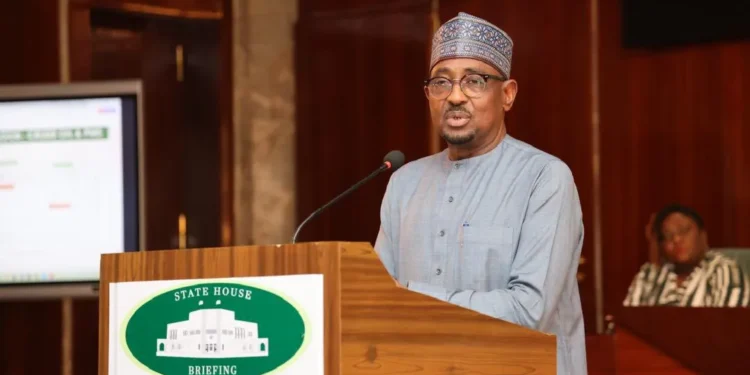
The Chief Executive of the Nigerian Midstream and Downstream Petroleum Regulatory Authority, Farouk Ahmed, revealed the progress at the maiden Energy Correspondents Association Conference in Abuja, marking four years of the PIA. He was represented by the agency’s Legal Adviser and Secretary, Joseph Tolorunse.
Ahmed said the investment spans 62 major gas infrastructure projects across 16 companies and has already drawn an additional $500 million in financing through a partnership with Afreximbank. This, he noted, reflects growing investor confidence in Nigeria’s gas prospects.
He added that the fund is playing a central role in attracting private capital to support industrialisation, improve domestic supply and establish Nigeria as a regional gas hub.
Regulatory gains under the PIA
Ahmed highlighted improvements in regulation and operational efficiency over the last four years. The Authority has gazetted 18 regulations, automated key processes to reduce bureaucracy and doubled crude supply to local refineries from 20,000 barrels per day in 2023 to more than 40,000 in 2025.
Refined fuel output has also improved sharply. Production of petrol rose to 3.8 billion litres in 2025 from 1.3 billion litres a year earlier.
Among the key projects benefiting from PIA-backed reforms are the UTM floating LNG development, NLNG Train 7, the AKK and OB3 pipelines, the Indorama fertiliser plant, Waltersmith refinery expansion and Supertech’s methanol project.
The Authority has issued 10 gas distribution licences for 692 kilometres of pipeline infrastructure with a combined capacity of 712 million standard cubic feet per day. It has also granted 23 refinery establishment licences expected to add more than 850,000 barrels per day to national refining capacity.
In March, three new refinery licences were issued to investors in Abia, Delta and Edo states, with a combined processing capability of 140,000 barrels per day.