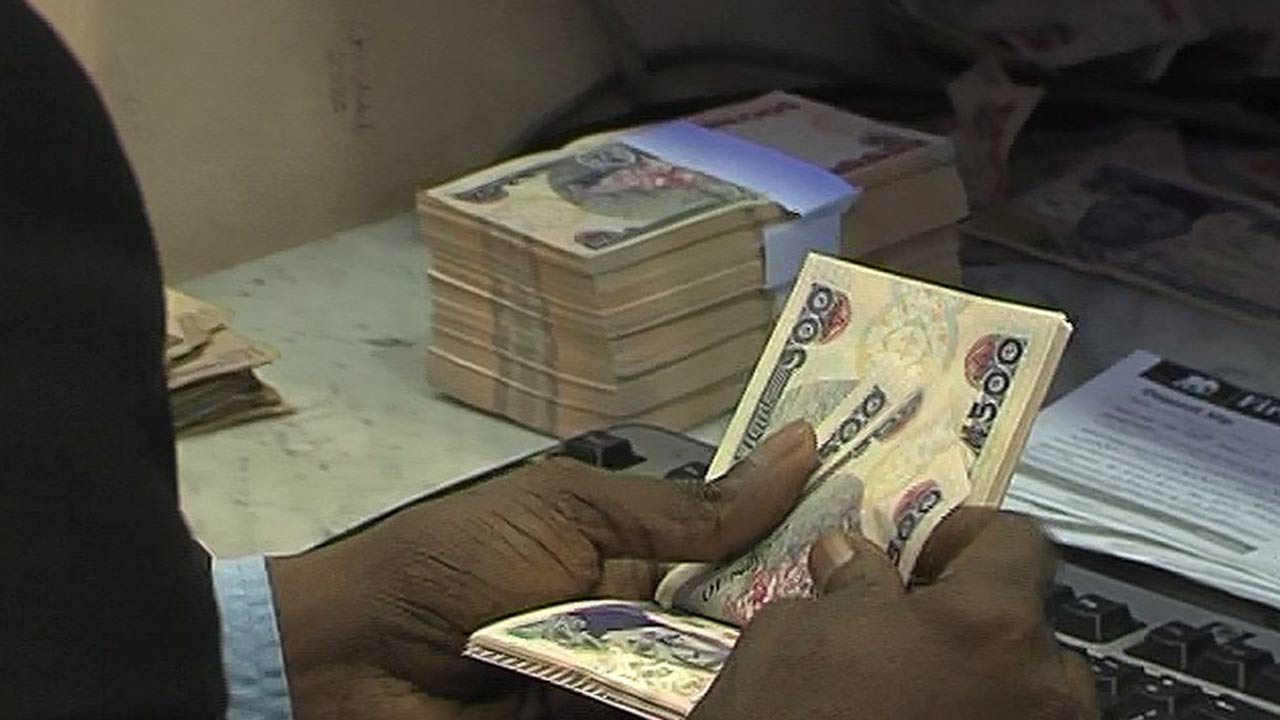

The naira weakened to an intraday low of ₦1,400 per dollar on Friday, November 20, despite the Central Bank of Nigeria (CBN) injecting $1.30 billion into the foreign exchange market over the course of the week. The slide has raised fresh questions about the durability of central bank interventions ahead of the upcoming Monetary Policy Committee (MPC) meeting.
According to Nairametrics’ review of CBN trading data published on November 21, the currency traded between ₦1,387.10 and ₦1,400 at the Nigerian Foreign Exchange Market (NFEM) before closing at ₦1,394 per dollar. Friday’s 2.50% drop extended the naira’s losing streak to five consecutive sessions, representing a ₦34 depreciation from Monday’s close of ₦1,360.
Although interbank foreign exchange turnover surged by roughly 1,088%, from $68.66 million on Monday to $815.57 million on Friday, higher trading volume did not translate into net dollar supply. Analysts at Cordros Securities noted that sustained demand from foreign portfolio investors (FPIs) outpaced the CBN’s $1.30 billion liquidity injection.
Similar pressure played out in the parallel market, where the naira fell 2.33% week-on-week to approximately ₦1,458 per dollar amid rising festive-season demand.
The currency’s weakness coincides with a sharp contraction in autonomous foreign exchange inflows. A weekly market report by Coronation Merchant Bank showed total inflows dropped 67.4% week-on-week to $807.6 million from $2.48 billion, the lowest weekly level in at least five weeks. Exporters and importers contributed $246 million, the CBN supplied $235.1 million, and FPIs accounted for $176.9 million (21.9% of the total), leaving the central bank to shoulder a heavier burden in supporting official market liquidity.
Defending the naira has also begun to weigh on external buffers. BusinessDay reported, citing CBN data, that Nigeria’s gross external reserves slipped to roughly $54.76 billion as of November 17, retreating from their October 27 peak of $55.26 billion.
Beyond immediate liquidity dynamics, political uncertainty surrounding the 2027 general elections, with presidential and National Assembly polls scheduled by the Independent National Electoral Commission for January 16, 2027, is emerging as a medium-term risk for investors. Both payment firm Verto and Coronation Asset Management flagged pre-election demand alongside seasonal pressures as key drivers of currency strain. In its fourth-quarter 2026 outlook, Coronation warned that election-related government spending could inject excess liquidity into the economy and push the naira to trade between ₦1,400 and ₦1,550 per dollar in 2027, with steeper losses possible if FPIs exit.
Attention now turns to Abuja, where the CBN’s 308th MPC meeting holds on Monday, November 23, and Tuesday, November 24. The committee will review the benchmark Monetary Policy Rate (MPR), currently at 23% following a 350-basis-point cut from 26.5% in September that was spurred by cooling inflation.
While National Bureau of Statistics data showed annual headline inflation eased to 14.06% in October 2026 from 14.63% in September, and food inflation dipped to 19.13% from 19.59%, month-on-month headline inflation accelerated to 0.43% in October from 0.06% in September. Given the uptick in monthly price pressures and ongoing foreign exchange volatility, all five analysts surveyed by Nairametrics expect the MPC to hold the MPR steady at 23%, signaling a renewed focus on exchange-rate stability and inflation containment as 2026 draws to a close.