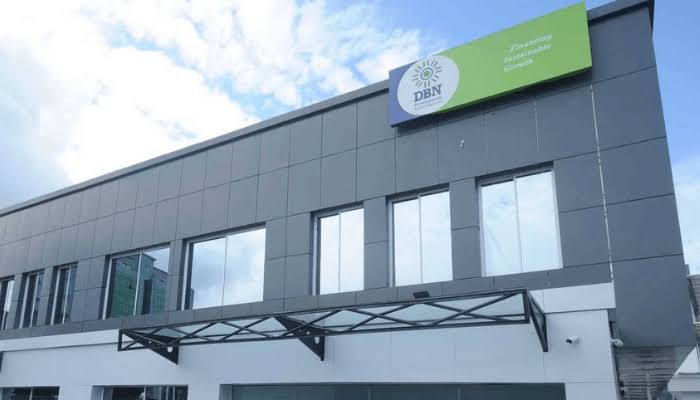

The Development Bank of Nigeria (DBN) has launched a $275 million climate finance programme to help micro, small and medium-sized enterprises (MSMEs) invest in renewable energy, improve agricultural resilience and reduce their exposure to climate-related risks.
The initiative, known as the Development Bank of Nigeria Enterprise Lending for Transition and Adaptation (DELTA) Programme, was unveiled on Friday, November 13, 2026, at the Nigeria Pavilion during the 31st United Nations Climate Change Conference (COP31) in Antalya, Türkiye.
The facility is expected to mobilise affordable, long-term financing for Nigerian businesses, with the Green Climate Fund (GCF) committing $100 million towards its total funding target. It is projected to reach approximately 1.3 million beneficiaries and reduce greenhouse gas emissions by an estimated 4.5 million tonnes of carbon dioxide equivalent.
Speaking at the launch, DBN Managing Director and Chief Executive Officer, Tony Okpanachi, said the programme would extend the bank’s mandate of addressing financing gaps among Nigerian businesses to include investments in climate adaptation and low-carbon operations.
Okpanachi said climate change was already affecting Nigerian businesses through unpredictable weather patterns, pressure on production and supply chains, and rising energy costs.
He explained that the programme would help businesses invest in cleaner energy, strengthen agricultural production and reduce operating expenses while improving their competitiveness.
One of the major targets is to address the financial barriers that prevent small businesses from adopting climate-friendly technologies. These include high upfront investment costs, expensive borrowing, inadequate loan repayment periods, collateral requirements and limited capacity to develop projects that financial institutions consider suitable for financing.
Under the programme, DBN will combine lending, risk-sharing arrangements and technical assistance to encourage financial institutions to expand their support for climate-related investments.
The bank operates a wholesale lending model, providing funding through participating financial institutions rather than lending directly to individual businesses. This structure is expected to enable the programme to reach more enterprises across different sectors and locations.
For businesses, the financing could support investments such as replacing diesel generators with solar power systems, particularly among food processors and manufacturers struggling with electricity costs.
Agricultural enterprises could also access funding for efficient irrigation systems and other climate-resilient technologies to reduce their vulnerability to unpredictable rainfall and changing weather conditions.
The German development agency, GIZ, is providing technical support for the programme. Its involvement is expected to strengthen the capacity of financial institutions and businesses to identify, develop and implement commercially viable climate projects.
Representing the Minister of Finance and Coordinating Minister of the Economy, Taiwo Oyedele, Deputy Director at the Federal Ministry of Finance, Abubakar Matazu, described climate change as a major economic, fiscal and development challenge for Nigeria.
He said its effects extended beyond environmental concerns to agricultural productivity, food security, livelihoods and the country’s broader economic stability.
Matazu stressed that Nigeria could not rely exclusively on public resources to finance its climate transition, highlighting the importance of concessional funding, guarantees and private-sector investment in mobilising the capital required.
The programme also comes amid growing pressure on Nigerian businesses to manage operating costs while adapting to climate-related disruptions, including flooding, drought and unpredictable rainfall.
For MSMEs, which frequently struggle to access affordable credit, the cost of transitioning to cleaner energy can be particularly difficult to absorb. High equipment costs and limited access to long-term financing have restricted investments in solar systems, energy-efficient machinery and other climate-friendly technologies.
By combining development finance with risk-sharing and technical assistance, DELTA seeks to reduce some of the obstacles discouraging lenders from financing such investments.
However, the programme’s projected impact will depend on how effectively participating financial institutions translate the funding into accessible loans for smaller businesses. The availability of affordable financing, transparent eligibility requirements and adequate project support will be important to ensuring that the facility reaches its intended beneficiaries.
The $275 million initiative represents a significant addition to Nigeria’s efforts to mobilise climate finance and encourage private-sector participation in the country’s transition towards more sustainable economic activities.
For Nigerian MSMEs, its success could mean access to financing for investments that reduce energy expenses, protect production from climate shocks and improve long-term business sustainability.