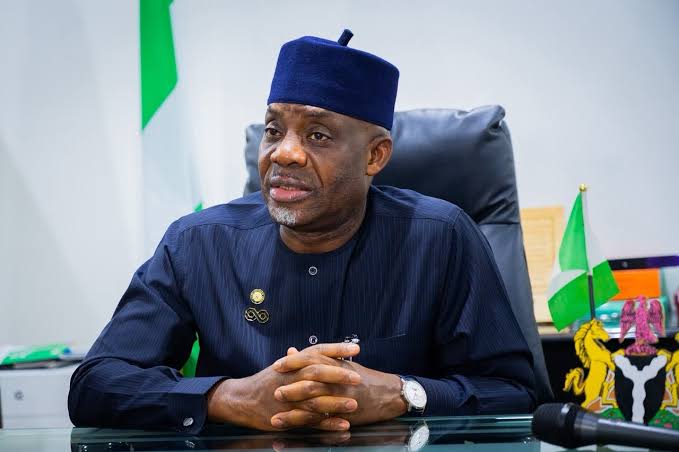

The Federal Government has introduced a virtual teaching programme, Inspire Live, to connect pupils in underserved Nigerian schools with qualified online teachers, as the country grapples with a shortage of teaching personnel in public schools.
The initiative, introduced through the Federal Ministry of Education, will enable pupils in primary, junior secondary and senior secondary schools to participate in live, interactive lessons delivered by remote instructors when their schools lack teachers for particular subjects.
Minister of Education, Dr Tunji Alausa, disclosed the initiative during an interview on Channels Television’s Politics Today on Tuesday, November 3, 2026.
According to the minister, Inspire Live is designed to ensure that pupils do not miss essential lessons because their schools lack qualified teachers in specific subjects.
Using Kaura Namoda in Zamfara State as an example, Alausa explained that pupils without an English Language teacher could join scheduled online classes and receive instruction from a remote teacher.
The platform covers subjects across the national curriculum, including English Language, Mathematics, Social Studies, Civic Education, Nigerian History, Physics, Chemistry and Biology.
Schools will follow a centrally prepared timetable to connect pupils to live lessons. Students will also have access to recorded classes to catch up on missed lessons and revise previously taught subjects.
To reduce the cost of accessing the programme, Alausa said the Federal Government had partnered with the Nigerian Communications Commission (NCC) to provide zero-rated data for students using the platform.
He explained that the arrangement would allow pupils to access Inspire Live without incurring additional data charges, particularly benefiting children in rural and low-income communities.
The initiative comes against the backdrop of a significant teacher shortage in Nigeria’s public education system.
Data from the Federal Ministry of Education’s Digital Nigeria Education Management Information System, reported by The PUNCH on August 18, 2026, showed that 31,827,244 learners in public schools were being served by 592,077 teachers, representing a learner-teacher ratio of 53.8 to one.
The pressure is considerably higher in some states, with Kano recording 88 learners per teacher, Katsina 87.4 and Imo 82.2.
The Nigeria Union of Teachers has also cited a Universal Basic Education Commission assessment identifying a shortage of 194,876 teachers in public primary schools nationwide.
Beyond connecting pupils with online instructors, the government is expanding digital support for existing teachers through the Ignite platform, which provides resources for lesson preparation, curriculum access and professional development.
Alausa also disclosed that the Federal Government’s Teacher Preparedness Programme was supporting nearly 50,000 teachers through professional development initiatives.
The Inspire Live programme forms part of wider efforts to use technology to improve access to education and address inequalities in the distribution of qualified teachers across the country.
Separately, the NCC’s Zero-Rated Data Access to Educational Platforms and Content initiative, scheduled for rollout from October 1, 2026, provides eligible users with up to 100MB of free daily data to access approved educational platforms.
The wider initiative targets about five million students, with industry estimates putting the annual value of the data provision at approximately ₦180 billion. The figure represents the estimated value of connectivity, not a direct cash allocation to students.
However, the success of virtual teaching will depend on access to functional digital devices, reliable electricity and adequate internet infrastructure, particularly in rural communities.
While Inspire Live could help schools overcome the absence of teachers in specific subjects, its long-term impact will depend on how effectively online instruction is integrated into classroom learning and whether pupils can consistently access the platform.