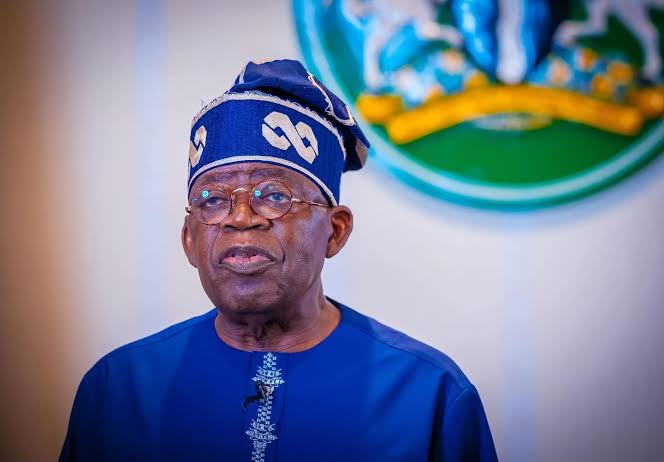

President Bola Tinubu has defended Nigeria’s proposed $21.7 billion external borrowing programme, saying the funds will support major infrastructure projects, create jobs and expand the country’s productive capacity as his administration pursues its ambition of building a $1 trillion economy by 2030.
Tinubu presented the argument in an essay titled From Reforms to Delivery: Our Infrastructure Investment and Growth Strategy, published yesterday Thursday, October 29, 2026, amid criticism of the Federal Government’s plans to secure additional loans from international financial institutions and commercial lenders.
In the essay, the President argued that government borrowing should be assessed by the economic value of the projects it finances rather than the amount of debt accumulated.
“The real question is not how much we borrow, but what we build, what value we create and what future we leave behind,” he said.
According to a report by The Punch published today Friday, October 30, 2026, the President’s defence comes after opposition figures and other critics questioned the implications of the administration’s proposed foreign borrowing for Nigeria’s debt burden.
The proposed borrowing programme covers 2026 and 2027 and comprises $20.52 billion and €1.05 billion, equivalent to approximately $1.17 billion. Reuters reported on October 27, 2026, that Tinubu had sought National Assembly approval for the financing plan.
The President identified the Lagos-Calabar Coastal Highway, Sokoto-Badagry Superhighway, Trans-Sahara Superhighway, electricity grid upgrades and the modernisation of major commercial ports in Lagos as priority projects expected to benefit from the infrastructure investment strategy.
He said the Lagos-Calabar Coastal Highway alone could reduce logistics costs along its corridor by 15% to 20% and contribute up to 2% to Nigeria’s Gross Domestic Product through increased industrial activity, trade and tourism.
Tinubu also projected that the coastal highway would generate about 100,000 direct jobs in construction and engineering, alongside more than 150,000 indirect jobs in logistics, materials and related services.
He said investments in the other highway corridors, electricity infrastructure, ports, healthcare and education would strengthen economic connections, support agricultural and industrial production and create employment opportunities across the country.
The President linked the proposed infrastructure spending to economic reforms introduced since May 2023, including petrol subsidy removal, foreign exchange market unification and tax reforms.
Presenting the administration’s economic performance, Tinubu said real GDP growth reached 4.43% in the second quarter of 2026, compared with 2.74% in 2023, while headline inflation declined to 14.63% in September 2026 from 20.98% a year earlier.
He also put Nigeria’s gross external reserves at $55.1 billion as of October 9, 2026, including approximately $46 billion in net reserves. The President said the country’s tax-to-GDP ratio had risen to 12.5% from 7%, while a ₦20.1 trillion trade surplus was recorded in the first half of 2026.
However, the borrowing strategy comes against the background of significant debt-servicing obligations. In his essay, Tinubu disclosed that public debt stood at 35.75% of GDP in the second quarter of 2026, while debt service accounted for about 65% of government revenue in the first half of the year.
He maintained that the government was shifting towards longer-term borrowing arrangements to match the repayment periods with the expected lifespan of infrastructure assets.
The President also cited improved international credit assessments, Nigeria’s return to Frontier Market status and renewed investor interest in the country’s Eurobond offerings as signs of improving confidence in the economy.
He said the ultimate test of the borrowing strategy would be the completion of projects, value for money, increased private investment, employment generation and improvements in Nigerians’ living standards.
Tinubu maintained that Nigeria could not achieve its $1 trillion economic ambition by 2030 without substantial investment in infrastructure, industrialisation, productivity and trade.