
The Africa Centres for Disease Control and Prevention (Africa CDC) has threatened to blacklist organisations that fail to account for donor funds received for Ebola response activities, after more than $700m in disbursed funding remained untraced in disclosures from implementing partners.
Africa CDC Director-General Dr Jean Kaseya said donors had disbursed about $962m from $3bn pledged for the response, but organisations attending a financial clarification meeting in the Democratic Republic of Congo (DRC) reported receiving only about $220m.
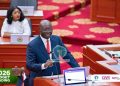
Speaking on Channels Television’s The Morning Brief on Thursday, October 22, 2026, Kaseya said only 19 of 92 invited partners attended the meeting, raising concerns about the transparency of funds intended to combat the outbreak.
According to Channels Television’s report published on October 22, Kaseya said Africa CDC was demanding traceability rather than alleging fraud or mismanagement.
“Where is the $700 million?” he asked, describing the gap between the amount reportedly disbursed and the funds disclosed by participating organisations.
Kaseya warned that organisations unable to explain how they used the money could face consequences, including blacklisting across Africa through the African Union.
“If today a partner got money from a donor, and the partner is unable to tell us what he did with this money, then I will start talking about fraud. Then I will start talking about mismanagement,” he said.
In a Reuters report published on October 16, 2026, Kaseya and Congolese health authorities similarly called for greater transparency. Reuters reported that participating organisations disclosed receiving $228m, of which $127m had been spent and approximately $100m remained available.
The figures differ slightly from those cited in Kaseya’s subsequent Channels Television interview. Both reports, however, identify a substantial gap between donor-reported disbursements and funding disclosed by implementing partners. The discrepancy does not, on its own, establish financial wrongdoing.
Kaseya said the United States was expected to provide details of funded organisations and allocations, while the European Union had already shared similar information.
The accountability drive comes as Nigeria responds to an imported case of Ebola Bundibugyo virus disease in the Federal Capital Territory.
In a statement published on October 20, 2026, the World Health Organisation (WHO) said laboratory tests confirmed the case that day. The patient, a woman with recent travel history involving Uganda, was receiving treatment in isolation.
WHO said 44 contacts had been identified and were being monitored, while health authorities strengthened infection prevention measures at the private facility where she sought care. Investigations into the source of infection and her travel and exposure history remained ongoing.
Reuters reported on October 22 that questions persisted over the patient’s possible exposure in Uganda or the DRC. Authorities had not established a definitive location of infection.
During his October 22 interview with Channels Television, Kaseya said he had assigned Africa CDC senior adviser Professor Aliko Ahmed to coordinate partners supporting Nigeria’s response and provide daily updates to Health Minister Professor Muhammad Ali Pate.
He added that Africa CDC was mobilising technical assistance, including test kits, while awaiting Nigeria’s national response plan before providing further support.
Kaseya also criticised the limited availability of vaccines targeting the Bundibugyo strain, saying existing Ebola vaccines have largely focused on the Zaire strain. He called for greater investment in African vaccine research, local manufacturing and domestic financing to strengthen the continent’s ability to respond to future outbreaks.
According to WHO’s October 20 update, Nigeria was the fifth country to detect the virus since the outbreak was declared in the DRC on May 15, 2026.