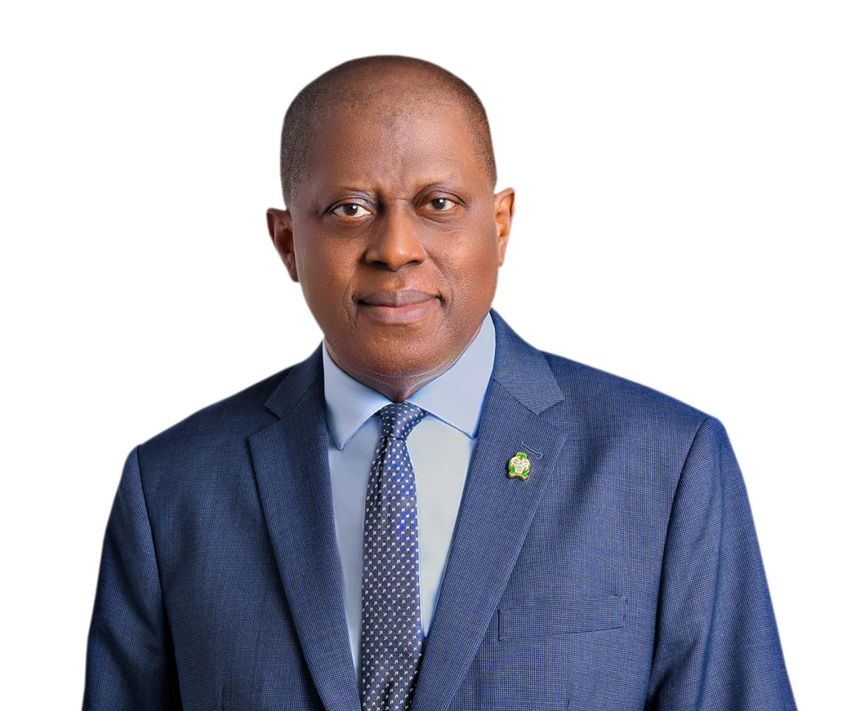

Nigeria’s foreign exchange reserves have climbed to $55.1 billion, their highest level in 18 years, strengthening the country’s ability to withstand global economic pressures, according to Central Bank of Nigeria (CBN) Governor Olayemi Cardoso.
Cardoso disclosed this at the ongoing International Monetary Fund and World Bank Annual Meetings in Bangkok, Thailand, where he discussed the impact of Nigeria’s economic reforms on households and businesses. The country’s gross external reserves stood at $55.1 billion as of October 13, 2026, providing a stronger financial buffer against external pressures, including geopolitical tensions and uncertainty over global trade tariffs.
The CBN governor said the growth in reserves was not merely a financial achievement but also had implications for ordinary Nigerians.
“What we’ve been able to accomplish in terms of having very robust external reserves, highest in 18 years, is also something that affects the ordinary person,” he said.
Cardoso explained that Nigeria could have experienced more severe economic difficulties without the increase in reserves, particularly as countries face global uncertainties.
“Without that, a lot of the headwinds that other countries face, we would be facing them, in fact, in a perhaps worse way than they are facing.”
He added that reforms introduced by the government and the CBN had helped strengthen the economy’s ability to withstand external shocks. Cardoso also identified relative stability in the naira as another benefit of the country’s economic adjustments, noting that exchange rate movements affect businesses, consumers and the wider economy.
“Our exchange rate has held stable, in fact, has appreciated, as a result of which it has a direct effect, or indirect effect on everybody,” he said.
The governor maintained that Nigerians were benefiting from the recent improvements, arguing that the absence of stronger reserves and exchange rate stability would have exposed the economy to greater pressure.
“You do, you feel it, definitely feel it. If it wasn’t there, then you would feel it in a very negative way,” he said.
He also stressed the importance of reducing inflation, particularly for low income households whose purchasing power suffers when the prices of goods and services rise.
“Arguably the most vicious tax you have on the poor is inflation. And being able to bring down inflation obviously affects the ordinary person. It affects everybody,” Cardoso said.
He urged Nigerians to acknowledge positive economic developments instead of dismissing the progress recorded.
“I hate to say something, but I will say it. I think Nigerians tend to perhaps be their worst enemies. The good things that we see, we want to trash away, is the bad things that we want to push out. Unfortunately, in this case, it’s nothing bad,” he said.
Nigeria’s external reserves have continued to increase since September, providing additional support for the country’s foreign exchange position. The reserves rose from approximately $53.90 billion on September 1 to $54.93 billion on September 30, representing an increase of about $1.03 billion during the month. The upward movement continued in October, with reserves reaching $54.95 billion on October 2 and $55.08 billion on October 9 before rising to $55.1 billion on October 13.
While the growing reserves strengthen Nigeria’s capacity to manage external shocks, their benefits for households also depend on how exchange rate movements, inflation and other economic conditions affect the cost of living.