
The International Monetary Fund (IMF) has advised Nigeria against restoring petrol subsidies, urging the Federal Government to provide direct assistance to vulnerable households instead of keeping fuel prices artificially low.
The fund warned that a general petrol subsidy would place additional pressure on public finances while providing benefits to wealthy consumers who can afford higher fuel prices. It recommended targeted support for low income households struggling with rising transportation and energy costs.
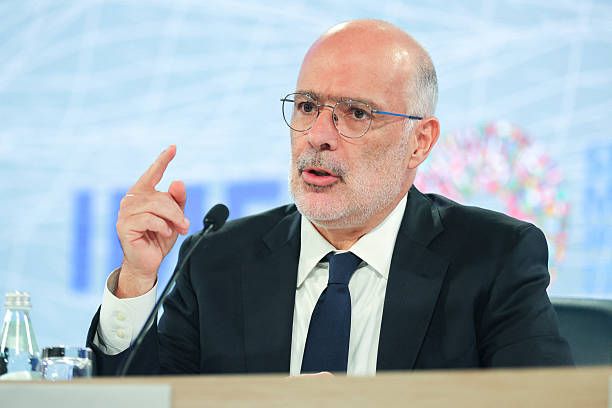
Rodrigo Valdés, director of the IMF’s Fiscal Affairs Department, made the recommendation during a press briefing at the 2026 annual meetings of the IMF and World Bank in Bangkok, Thailand, on Wednesday. His comments come amid growing calls for the Nigerian government to restore petrol subsidies as high fuel prices continue to affect transportation costs, inflation and household spending.
“Protecting people is not the same as protecting the price of fuels,” Valdés said.
He explained that governments should focus on helping people who cannot afford rising energy costs rather than subsidising fuel for everyone. Valdés said measures used to prevent energy prices from reflecting supply shortages had cost countries between one and 1.5 per cent of gross domestic product in 2026.
“It’s first fiscally very costly, and second, if you look at the pattern of consumption, it’s easy to see that that subsidy is readily regressive in many places,” he said.
A general subsidy reduces the price paid by all consumers, regardless of income. This means wealthier households, which often consume more fuel, can receive greater benefits than poorer households. The arrangement can also increase government spending at a time when funds are needed for infrastructure, healthcare, education and social protection. The IMF recommended using existing social protection systems and household data to identify Nigerians who need assistance most.
“There are better tools to deal with this,” Valdés said.
Davide Furceri, a division chief in the fund’s Fiscal Affairs Department, suggested that governments could redirect money previously spent on broad fuel subsidies towards specific groups affected by rising energy costs.
“For example, you mentioned transportation costs. Yeah, gasoline could go up, and perhaps bus fees may be subsidised in a way that is a much better policy at the end of the day than just a blanket subsidy for everybody,” Furceri said.
He also recommended support through school feeding programmes, assistance for vulnerable farmers and targeted interventions in areas where poverty is most severe. However, the fund acknowledged that some countries lack reliable household records and digital payment systems needed to deliver assistance effectively. It advised governments to use available alternatives while developing stronger systems to identify and support vulnerable citizens.
The recommendation comes as the Nigerian government implements a 30 day petrol discount at Nigerian National Petroleum Company Limited (NNPC) retail outlets. Finance Minister Taiwo Oyedele said the company would temporarily forgo its retail profit margin and sell petrol at cost. The government has maintained that the measure is temporary relief, not a return to the former subsidy regime. It has also proposed negotiating a petrol landing cost ceiling of N1,350 per litre, subject to monthly reviews.
Valdés warned that subsidising fuel could also prevent consumers from adjusting their demand when global supplies become limited.
“When you subsidise, you don’t allow, at the end of the day, demand to adjust,” he said.
He added that when less fuel is available in the global market, maintaining artificially low prices could shift the pressure onto other consumers and push market prices higher.
For Nigeria, the policy challenge is to protect households from rising living costs without creating unsustainable public spending. The IMF’s position is that assistance should be targeted, temporary and limited, with support directed towards those who need it most.