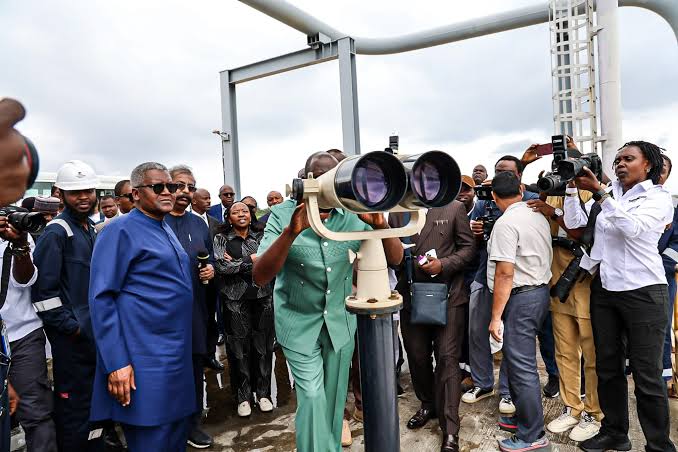

Kenyan President William Ruto on Friday, September 25, 2026, toured the Dangote Petroleum Refinery in Lekki, Lagos, ahead of the September 30 groundbreaking of the Dangote-backed East Africa Oil Refinery in Lamu, Kenya.
Ruto visited the Nigerian refinery at the invitation of Dangote Group President and Chief Executive Officer Aliko Dangote, according to a September 25, 2026, report by Punch. The visit came days after Ruto met Dangote and Africa Finance Corporation President and Chief Executive Officer Samaila Zubairu in New York to discuss financing and final preparations for the Kenyan project.
Speaking during the Lagos tour, Ruto described the Dangote refinery as an example of what African governments, investors and financial institutions can achieve through cooperation. He said the planned Kenyan facility would build on the industrial model represented by the Lagos refinery.
The Dangote Petroleum Refinery currently has a crude-processing capacity of 700,000 barrels per day, according to reports published in June 2026 following the refinery’s increase in processing capacity. The facility is also being expanded with a longer-term target of 1.4 million barrels per day.
The planned Lamu refinery is designed to process 700,000 barrels of crude oil per day, according to Kenyan government officials and project reports published in September 2026.
Ruto said the Kenyan project would be larger in its overall industrial impact and could create about 60,000 jobs, according to The Star in a September 21, 2026, report. Kenyan Deputy President Kithure Kindiki, however, put the projected employment impact at about 50,000 jobs in remarks reported by The Star on September 23, 2026.
The difference reflects separate government estimates rather than a confirmed final employment figure.
The Lamu project is expected to combine refining and petrochemical activities and support related industries around the facility. Ruto said the development could create opportunities in areas including chemicals, fertiliser and packaging, according to reports of his September 25, 2026 visit.
The cost of the project has also been reported differently. The Standard reported on September 15, 2026, that the refinery had been valued at about $15 billion, while Nairametrics reported on September 23, 2026, that the project was estimated at about $17 billion. The project should therefore be described as a multibillion-dollar refinery rather than assigning a single definitive cost without qualification.
Construction is scheduled to begin with the September 30, 2026, groundbreaking ceremony in Lamu. Kenyan officials expect the refinery to take about three years to build, according to The Standard’s September 15, 2026 report.
The project is intended to serve Kenya and wider East and Central African markets, while reducing the region’s dependence on imported refined petroleum products. Kenyan officials also expect the refinery to support storage, logistics, petrochemical production and other industrial activities around the Lamu port.
However, crude supply remains a major commercial issue. Reuters reported on September 9, 2026, that the proposed refinery would face a significant feedstock challenge because Kenya does not yet have commercial-scale crude production.
Kenyan government projections cited by The Star on September 21, 2026, indicate that regional producers could eventually provide more than 600,000 barrels per day, including about 350,000 barrels from South Sudan, 250,000 barrels from Uganda and 120,000 barrels from Kenya.
Those figures are projections rather than currently available supply. Their realisation will depend on the development of production, transportation and related infrastructure across the region.
The September 30, 2026 groundbreaking will therefore move the Lamu refinery from planning into its next stage, while its eventual success will depend not only on construction and financing but also on securing sufficient crude feedstock and developing the infrastructure needed to supply regional markets.