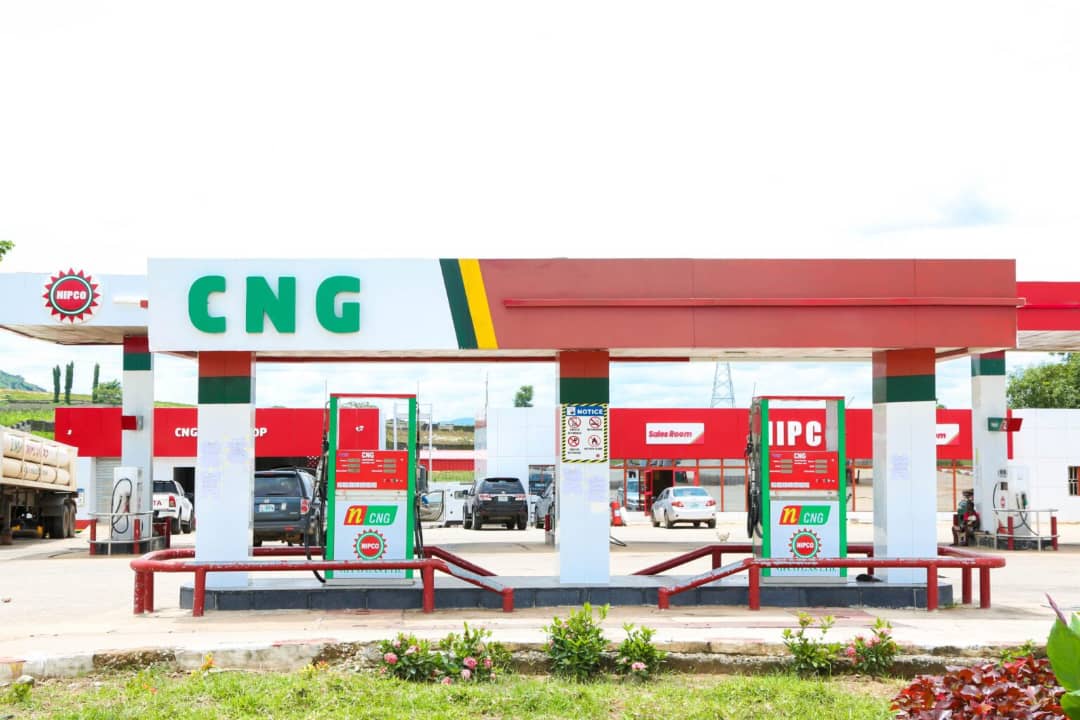

The Federal Government is expected to take delivery of the first batch of 500 Compressed Natural Gas (CNG) refuelling stations by the end of October as part of efforts to expand alternative fuel infrastructure and reduce transportation costs across Nigeria.
Executive Chairman of the Presidential Initiative on Compressed Natural Gas and Electric Vehicles (Pi-CNG & EV), Ismaeel Ahmed, disclosed this in an interview with Sunday PUNCH published on Saturday, September 19, 2026.
Ahmed said another 500 stations would subsequently be ordered, bringing the total number of CNG stations being procured under the Federal Government’s latest expansion plan to 1,000.
The development follows President Bola Tinubu’s August 27, 2026 directive for the rollout of an additional 500 CNG refuelling stations nationwide. The President said the new stations would complement 500 stations earlier ordered through the Midstream and Downstream Gas Infrastructure Fund (MDGIF).
Ahmed said the first batch had already been ordered and that deployment would involve construction, transportation, installation and connection.
“Filling stations are not something you order today and get it tomorrow. It has to be built, it has to be brought in, and it has to be installed and connected. The process has begun. The first batch will be at the end of October,” he said.
He said locations would be selected based on economic considerations, including traffic and the number of vehicles that could use the facilities, rather than political considerations.
“It is not a political decision; it is an economic decision. So you can’t just say, ‘Go and put it in this village when there are no cars there.’ You have to check the traffic, the cars; these are things that have to be taken into consideration,” Ahmed said.
The government is profiling potential locations in several parts of the country, including Lagos, Kano, Abuja, Port Harcourt, Zamfara, Borno, Enugu, Anambra and Lafia.
Nigeria currently has more than 90 operational CNG refuelling stations and over 400 certified vehicle conversion centres, according to the Pi-CNG & EV. More than 120,000 vehicles have been converted to CNG nationwide.
Ahmed also said Abuja currently has 26 operational CNG stations, the highest concentration in the country, while land availability remains a major challenge to further expansion in the Federal Capital Territory.
“The problem with Abuja is the land that will accommodate the station. So many people are interested in opening gas stations, but getting the land is a problem,” he said.
The expansion comes as the Federal Government and state governments work towards President Tinubu’s October 1 target for Nigerians to begin seeing measurable reductions in transportation costs.
In a statement on September 19, 2026, Tinubu said the National Affordable CNG Transit Programme was being implemented with states and other stakeholders to identify priority transport corridors and introduce measures that would reduce fares.
Tinubu has also said CNG-powered vehicles can spend between 60% and 80% less on fuel than comparable petrol-powered vehicles, with the government seeking to translate the lower operating costs into cheaper transportation for Nigerians.