
Everyone is talking about Dangote Refinery’s planned initial public offering: ₦525 per share, a potential ₦2.15 trillion raise and as many as 10 million retail investors. But at the filling station, where Nigerians encounter the refinery most directly, the question is much simpler: what does all of this mean for the price of petrol?
That question gives the Dangote IPO a very different meaning from the one being discussed in financial markets.
On 4 September 2026, the Securities and Exchange Commission approved the offering of 4.1 billion Dangote Refinery shares at ₦525 each, potentially raising about ₦2.15 trillion. Reuters reported that the offer is scheduled to run from 14 September to 13 October 2026, with the refinery valued at about $47 billion based on the SEC-registered shares.
For an investor, the question is whether the refinery can generate enough profit to justify that valuation. For a fuel attendant, transporter or motorist, the question is what happens when the economics behind the fuel change.
That is where the IPO story meets the pump.
On 14 July 2026, Dangote Refinery began pricing petrol, diesel and aviation fuel in US dollars, saying it was struggling to secure enough crude through the Federal Government’s naira-for-crude arrangement. Reuters reported that NNPC had increased its supply to seven crude cargoes a month, but the refinery said it needed between 13 and 15 cargoes and had to import the shortfall at international prices.
The significance was not simply that a Nigerian refinery quoted fuel in dollars. It was what the decision revealed about the economics of local refining.
A refinery can be physically located in Nigeria and still be exposed to international crude prices, foreign exchange and global supply conditions. Reuters reported on 16 July 2026 that the dollar pricing had already increased demand for foreign currency and added pressure to the naira.
The global market matters too. On 8 September 2026, Dangote Refinery chief executive David Bird told Reuters that global fuel shortages could persist because of damage to Middle Eastern refining infrastructure and the need to rebuild inventories. The refinery has benefited from the disruption, recording a $1.82 billion after-tax profit in the first half of 2026, according to its IPO prospectus.
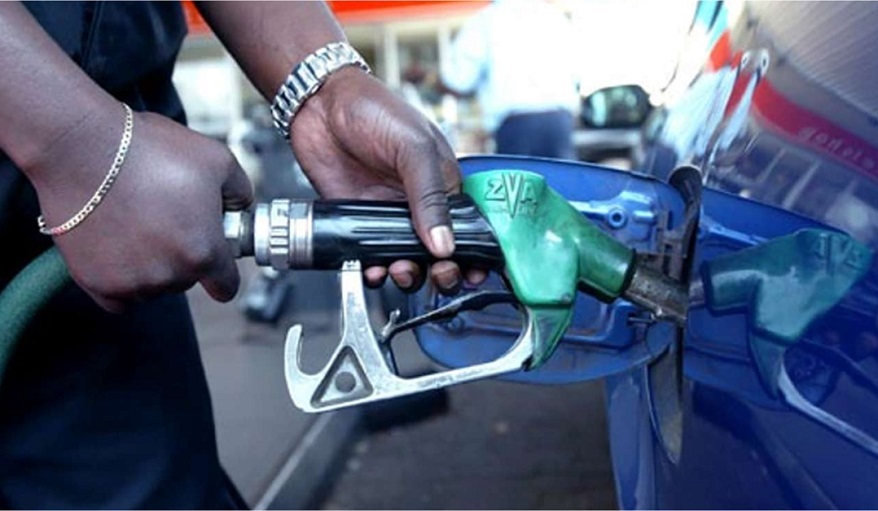
For the person at the pump, however, none of these figures arrives as an earnings report. It arrives as a new price.
A transporter sees it in the cost of filling a tank and the calculation of each journey. A motorist sees it when the amount needed to fill a car changes. A fuel attendant sees it when customers ask why the price is different from the last time they bought petrol.
That is why the structure of the IPO matters beyond the stock market.
On 4 September 2026, Dangote described the transaction as an “African listing” rather than simply a Nigerian one and said investors, including Nigerians, would be paid in dollar terms, Reuters reported.
For investors, that may make the offering more attractive. For consumers, it reinforces a different reality: the commercial success of the refinery and the affordability of its fuel are not necessarily the same thing.
Local refining can reduce dependence on imported finished petroleum products and strengthen domestic supply. But it does not completely shield fuel prices from the cost of crude, foreign exchange or international market conditions.
So while the capital market is asking whether ₦525 is a good price for a share, the person standing beside the pump has a much more immediate question:
What will all of this mean for the price Nigerians pay for petrol?
Millions of Nigerians may soon become shareholders in the refinery. They will also remain its customers.
You can own a piece of the refinery and still feel its fuel-price economics from the other side of the pump.