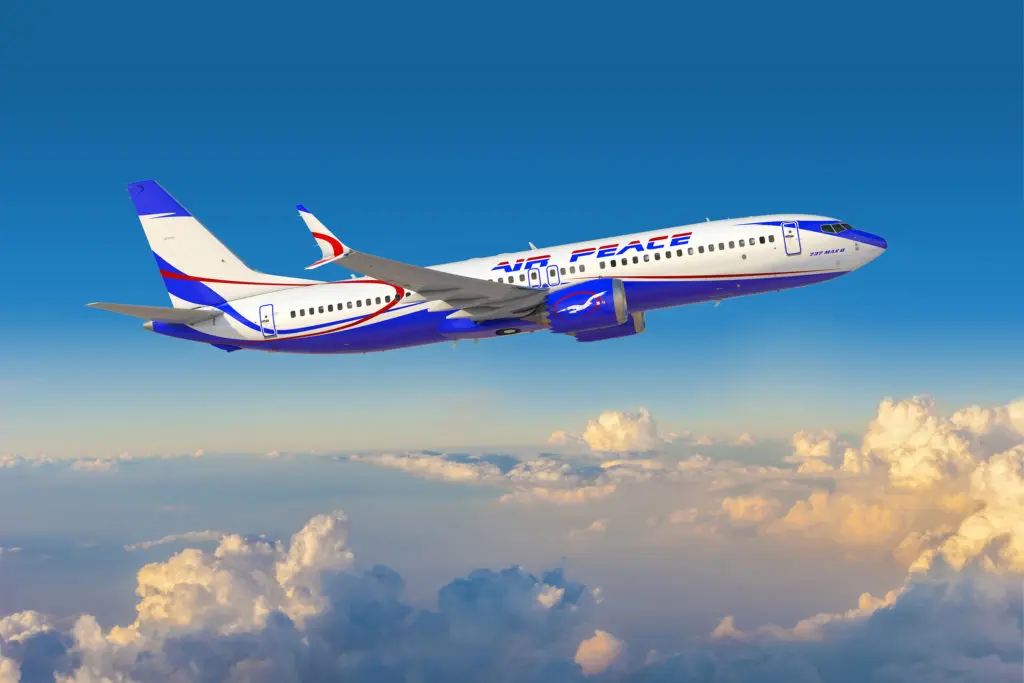

The industrial dispute that disrupted Air Peace operations at Lagos and Abuja airports on Tuesday, 11 August 2026, has exposed a major gap in the public record over how much the airline actually owes in Ticket Sales Charge (TSC) and related statutory aviation charges.
The National Union of Air Transport Employees (NUATE) and Air Transport Services Senior Staff Association of Nigeria (ATSSSAN), backed by the Nigeria Labour Congress (NLC) and Trade Union Congress (TUC), accused Air Peace of owing about ₦15 billion in TSC. The Guardian reported the figure on 11 August 2026 after the unions picketed Air Peace facilities at Murtala Muhammed Airport, Lagos, and Nnamdi Azikiwe International Airport, Abuja.
Other reports put the figure higher. New Telegraph reported on 12 August that the unions cited more than ₦17 billion in accumulated five per cent Ticket and Cargo Sales Charges, while Nairametrics reported on 13 August that NUATE alleged domestic airlines collectively owed more than ₦25 billion, with Air Peace accounting for more than ₦17 billion.
Air Peace, however, has pointed to the payments it has made. At an emergency meeting convened by Aviation Minister Festus Keyamo on 13 August 2026, the airline said it paid more than ₦17 billion to the Nigeria Civil Aviation Authority (NCAA) in five per cent Ticket and Cargo Sales Charges during 2025. Reports also quoted the airline as saying it had continued to make substantial monthly payments in 2026.
These figures do not necessarily contradict one another. A historical arrears figure is different from the amount an airline has paid during a particular period. What matters is whether the payments have been credited against the liabilities being cited and what balance remains after those credits.
NCAA Director-General Captain Chris Najomo has said domestic airlines were operating under structured repayment arrangements for historical TSC arrears. On 13 August, Keyamo directed the NCAA and airlines to agree on realistic repayment schedules, taking operating costs and prevailing economic conditions into account.
There is also a separate issue involving Air Peace’s London operations. Aviation Media Africa reported on 19 August that the NCAA had issued the airline an invoice of about ₦12 billion relating to its London service, with the amount to be repaid over three years. That figure should not automatically be added to the ₦15 billion or ₦17 billion figures without establishing whether it was already included in the unions’ calculations.
The dispute also has a separate financial dimension. On 12 August, Air Peace Chief Operating Officer Oluwatoyin Olajide said the disruption had caused the airline losses exceeding ₦2 billion. That is a claim concerning the industrial action and should not be confused with the TSC liability.
The central issue is therefore one of reconciliation.
No publicly available statement currently sets out the total TSC assessed to Air Peace, the periods covered, payments received, adjustments made and the precise balance outstanding.
Until such a reconciliation is published by the NCAA or otherwise independently established, the reported ₦15 billion to ₦17 billion figure should be treated as a disputed or alleged liability, not a confirmed outstanding debt.
The question is simple: what did Air Peace owe, what did it pay, what charges did those payments cover, and what balance remains?