
What if the ₦50,000 sitting in your bank account today could buy you a tiny piece of a company you use every day?
You may have heard someone say, “I bought MTN shares,” or “Dangote Cement paid me dividends.” What they mean is simple: they own a small stake in those businesses.
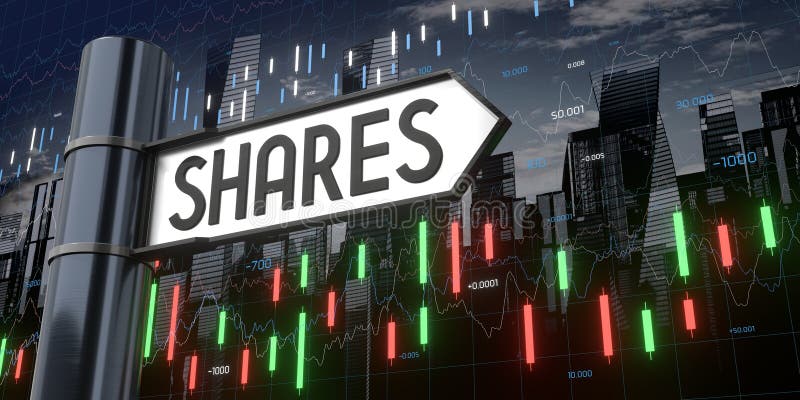
A share is a unit of ownership in a company. When you buy shares in a listed company, you become a shareholder, with an ownership interest based on the number of shares you hold. The Nigerian Exchange (NGX) describes shareholders as part-owners who can benefit from share-price growth and dividends.
Think of 10 people contributing ₦500,000 each to start a transport business. Each person owns a portion based on their contribution. The stock market works on the same basic idea, but on a much larger and more formal scale.
In Nigeria, shares of listed companies are traded on the Nigerian Exchange, while the Securities and Exchange Commission (SEC) regulates the capital market. The Central Securities Clearing System (CSCS) provides clearing, settlement and depository services.
So, how can you make money from shares?
There are two main ways.
The first is dividends. When a company makes a profit, it may distribute part of that profit to shareholders as dividends, subject to the necessary approvals. If a company declares a ₦2 dividend and you own 1,000 shares, your gross dividend would be ₦2,000. But dividends are not guaranteed. A company may choose to retain its profits for expansion or other business needs.
The second is capital appreciation. If you buy a share at ₦20 and later sell it at ₦30, you make ₦10 per share before applicable costs and taxes. But if it falls to ₦12, you lose ₦8 per share based on the market value.
This is one major difference between shares and ordinary bank savings: shares do not offer a fixed return. Their prices can rise or fall based on the company’s performance, investor expectations, interest rates, economic conditions and other market factors.
And don’t assume a ₦5 share is automatically cheaper than a ₦500 share.
Share price alone does not tell you how valuable a company is. Market capitalisation, which is the market value of all outstanding shares, is calculated by multiplying the share price by the number of shares outstanding.
There are risks too. A company can perform badly, its share price can fall, and you may not always be able to sell at the price you want. Inflation can also reduce the purchasing power of your investment returns.
For Nigerian investors, the business itself matters. A company that relies heavily on imported materials, for example, could face higher costs when the naira weakens. That can affect profits and, ultimately, investor returns.
So how do you start?
You need an account with a registered stockbroker or other authorised market operator. NGX says investors buying or selling securities on the exchange must use a Trading License Holder, while the SEC maintains a register for verifying operators.
But the most important question for a beginner is not, “Which stock will double my money?”
It is: “What business am I actually buying?”
Look at its profits, debt and financial statements. If dividend income matters to you, check its history of paying dividends. And be careful with WhatsApp groups promising a “hot stock” that will make you rich overnight.
Ultimately, buying shares means exchanging your money for an ownership stake in a business. That stake can become more valuable, pay you dividends or lose value.
The goal is not to eliminate the risk. It is to understand what you own, why you own it and how much risk you can afford to take.
That is the difference between gambling and investing. One is luck. The other is understanding what you own and why.