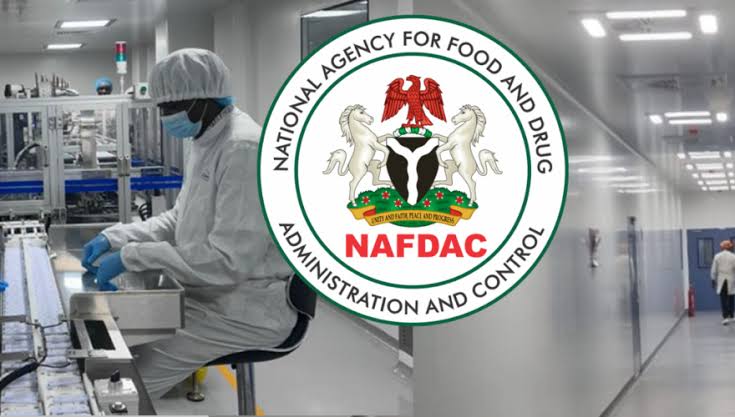

Nigeria’s local pharmaceutical manufacturing capacity has increased by 25%, while imports of medicines covered by the National Agency for Food and Drug Administration and Control’s (NAFDAC) localisation measures have fallen by 70%, the agency said on 6 September 2026.
NAFDAC Director-General Prof. Mojisola Adeyeye disclosed the figures at the Lagos Chamber of Commerce and Industry’s Invest in Nigeria Conference and Expo 4.0, saying the agency’s 5+5 Policy and Ceiling List had helped attract investment and encourage manufacturers to produce more medicines locally. The figures were reported by The Nation and Vanguard on 6 September 2026.
NAFDAC introduced the 5+5 Policy in 2019 to encourage companies importing medicines that can be manufactured in Nigeria to establish local production or enter arrangements with domestic manufacturers. Under the policy, affected companies are required to submit plans for migrating products to local manufacturing when seeking registration renewal. NAFDAC’s policy documents outline the measure as part of efforts to strengthen domestic pharmaceutical production.
Adeyeye said the number of products covered by the Ceiling List and related localisation measures had increased from nine in 2020 to 36. She said imports of products affected by the 5+5 Policy and Ceiling List subsequently declined by 70%.
The agency also reported an expansion in the manufacturing base. According to Adeyeye, the number of pharmaceutical manufacturers increased from 174 to 190, while 176 companies had undergone facility-layout review and approval as of June 2026. Of those companies, 106 were new entrants and 70 were existing manufacturers.
Contract manufacturing has also grown significantly. NAFDAC said the number of companies using the model increased from 10 in 2019 to 87 in 2026, enabling firms to manufacture through approved domestic facilities rather than building their own plants.
The Federal Government has complemented the regulatory measures with fiscal incentives. President Bola Ahmed Tinubu signed an Executive Order on 28 June 2024 providing zero tariffs, excise duties and value-added tax on specified pharmaceutical machinery, equipment and raw materials. The government said the measure was intended to reduce production costs and strengthen local manufacturing.
NAFDAC’s progress comes as Nigeria seeks to reduce its dependence on imported medicines and build a stronger domestic healthcare industry. However, the country still relies heavily on imported pharmaceutical inputs, particularly active pharmaceutical ingredients, meaning increased manufacturing capacity does not yet amount to full pharmaceutical self-sufficiency.
The latest figures nevertheless point to a measurable shift in Nigeria’s pharmaceutical market. The next test will be whether the investment encouraged by the reforms can translate into lower medicine costs, more reliable domestic supply and stronger export capacity across West Africa.