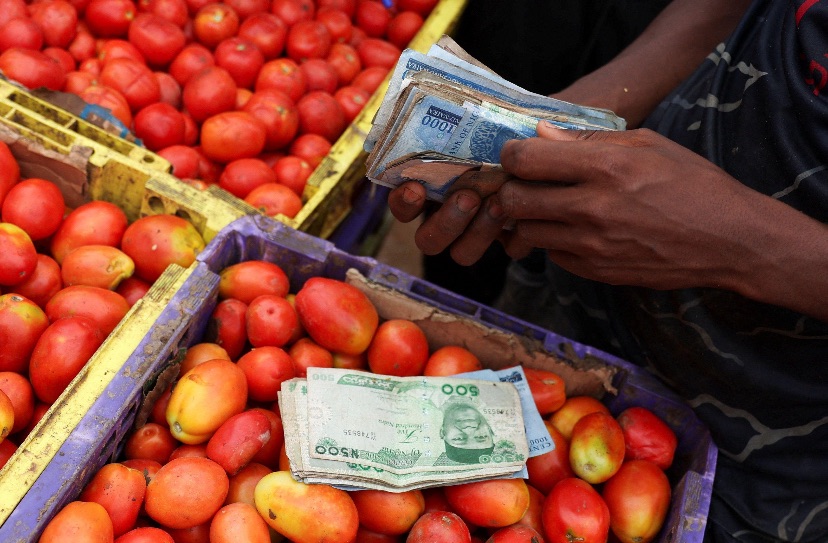

A year ago, ₦100,000 stretched further at the market, the fuel station, and the school run. Today, the same note buys visibly less — and the National Bureau of Statistics (NBS) now has the numbers to show exactly how much ground it has lost.
Nigeria’s headline inflation rate stood at 15.43% year-on-year in July 2026, according to the NBS Consumer Price Index (CPI) report. That means, on average, prices across the economy are 15.43% higher than they were in July 2025.
In plain terms: something that cost ₦100,000 in July 2025 now costs roughly ₦115,430. Flip it around, and ₦100,000 in your pocket today only has the purchasing power of about ₦86,600 a year ago — a real-terms loss of nearly ₦13,400 on every ₦100,000 held.
Headline inflation was as high as 26.82% in April 2025, before easing to 15.69% in April 2026, ticking up slightly to 15.91% in June, and settling back down to 15.43% in July. Disinflation is happening — prices are still rising, just more slowly than before.
Food is where Nigerians feel inflation most directly, and the numbers there are less forgiving. Food inflation came in at 20.31% year-on-year in July 2026, down from 26.20% in July 2025 — still a steep climb.
That means ₦100,000 worth of food from a year ago now costs about ₦120,310. Or seen from the other side, ₦100,000 spent on food today buys what roughly ₦83,100 would have bought last July — a gap of nearly ₦17,000 per ₦100,000, driven largely by price swings in staples like rice, tomatoes, pepper, garri, beef, and plantain.
On a month-on-month basis, food prices alone jumped 5.56% in July 2026, up sharply from 3.75% in June — a reminder that even as the annual trend cools, short-term price spikes can still hit household budgets hard.
The pain isn’t spread evenly. Urban inflation stood at 16.12% year-on-year in July 2026, noticeably higher than rural inflation at 13.77%, reflecting steeper cost-of-living pressure in cities.
Looking ahead, forecasters including Trading Economics project headline inflation easing toward 15.0% by the end of the current quarter, with longer-term projections trending near 13% in 2027 and 11.7% in 2028 — a sign that relief, while real, will likely be gradual rather than sudden.
₦100,000 hasn’t changed. What it can buy has. A year of double-digit inflation — sharper in food than in the general basket — means the same note today carries noticeably less weight at checkout than it did twelve months ago, even as the pace of price increases slows.