
Nigeria’s Federal Government has announced plans to increase electricity access to more than 80 per cent of the population within the next five years as it moves to tackle the country’s long-running power crisis.
The government also wants to close the wide gap between the country’s installed electricity capacity and the amount of power actually available to homes and businesses within three years.
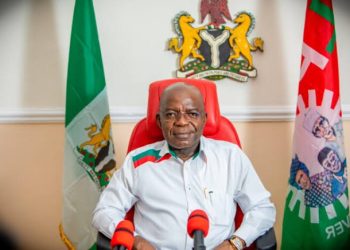
The Minister of Power, Joseph Tegbe, disclosed the plans during a presentation on Industrialisation and Regional Competitiveness: The Role of Power at a Nigeria Economic Summit Group event in Lagos.
According to the minister, improving electricity supply is critical to helping Nigerian businesses reduce operating costs and compete more effectively, particularly as the African Continental Free Trade Area (AfCFTA) opens access to a market of about 1.4 billion people.
The government is also targeting a reduction in Aggregate Technical, Commercial and Collection losses to below 16.92 per cent within three years, in line with the target of the Nigerian Electricity Regulatory Commission.
Tegbe said the government had started strengthening major transmission corridors, including Lagos, Enugu-Port Harcourt and Abuja-Kaduna-Kano. These routes are expected to improve the movement of electricity to major population and industrial centres.
The government is also rolling out seven million electricity meters and has begun training about 5,000 people as part of efforts to improve the sector.
Nigeria currently has about 13,625 megawatts of installed grid capacity, but only around 4,854MW is available on average each day. This means a large portion of the country’s existing generation capacity is not being fully utilised.
At the same time, realistic peak electricity demand is estimated at about 20,000MW, highlighting the huge gap between what Nigerians need and what the grid can supply.
The poor supply has forced manufacturers and other businesses to depend heavily on diesel generators and other alternative sources of electricity. This has added significantly to production costs and made Nigerian-made goods more expensive.
The power ministry said Nigerians spent about N16.5tn on self-generation in 2023, compared with roughly N1tn generated from grid electricity revenue. The World Bank has also estimated that unreliable electricity costs Nigeria about $25bn every year.
Manufacturers say the situation is hurting their ability to compete.
The Manufacturers Association of Nigeria said inadequate energy supply was the biggest challenge identified by manufacturers in its Q2 2026 CEO Confidence Index.
MAN’s Director of Research and Economic Policy, Dr Oluwasegun Osidipe, said companies had invested heavily in their own power-generating facilities because of unreliable grid electricity.
He explained that the money spent on alternative energy comes on top of manufacturers’ regular electricity bills, increasing their overall production expenses.
Beyond electricity, manufacturers are also dealing with regulatory bottlenecks, exchange-rate pressures, expensive imported machinery and raw materials, as well as poor coordination between monetary and fiscal policies.
The Federal Government now plans to create a more independent and financially sustainable electricity market while reducing sector debts and losses.
If successfully implemented, the reforms could give manufacturers more reliable power, lower production costs and improve Nigeria’s chances of attracting investment and becoming more competitive in the African market.