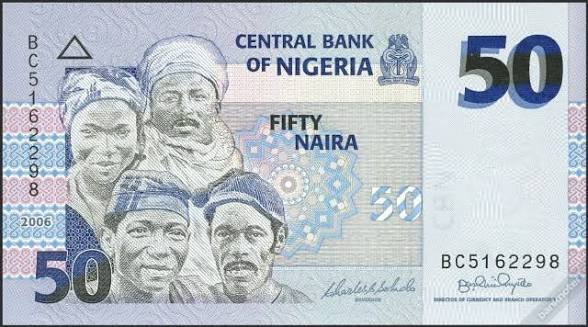

For millions of Nigerians, the ₦50 and ₦100 notes were once familiar fixtures of everyday commerce, used for transport fares, snacks, small market purchases and other low-value transactions.
Today, they are increasingly difficult to find in circulation. Yet neither denomination has been withdrawn.
The Central Bank of Nigeria (CBN) continues to recognise the ₦50 and ₦100 notes as legal tender. The CBN’s currency information lists ₦50 and ₦100 among the banknote denominations currently issued in Nigeria.
The issue became particularly visible around the ₦100 note in July 2026, when reports emerged that some members of the public and businesses were rejecting the standard ₦100 note because of uncertainty over its status.
The CBN responded on July 8, stating that both the standard ₦100 banknote and the commemorative ₦100 note remain legal tender and must be accepted for transactions nationwide. It also clarified that the commemorative note, introduced to mark Nigeria’s centenary, did not replace the standard ₦100 note.
The CBN subsequently warned that rejecting the standard note could constitute a violation of the CBN Act and said it could take enforcement action against violators.
The apparent disappearance of the notes is therefore not a formal redenomination.
Instead, it reflects a combination of changing economic conditions and payment behaviour.
Inflation has significantly reduced the purchasing power of lower denominations. A ₦50 or ₦100 note buys far less today than it did several years ago, making the notes less useful for many everyday purchases.
At the same time, Nigerians increasingly use electronic payment channels, including bank transfers, cards and POS services. The CBN itself encourages electronic payment options as convenient alternatives to physical cash.
CBN Governor Olayemi Cardoso has also explained that the circulation of lower denominations is influenced by demand. If consumers and businesses increasingly use higher denominations or digital payments, the economic demand for very small notes naturally falls.
A currency denomination can become uncommon without losing its legal status. The ₦50 and ₦100 notes may be less visible in daily transactions, but scarcity does not amount to cancellation.
The CBN has previously stated that banknotes it has issued remain legal tender unless formally withdrawn. In a November 2023 notice, the bank reiterated that all CBN-issued denominations then in circulation remained legal tender and should not be rejected.
For Nigerians, the practical lesson is simple: the ₦50 and ₦100 notes have not disappeared by law. They are becoming less economically important in everyday transactions.
What looks like a quiet disappearance is better understood as the gradual shrinking of the role played by Nigeria’s lower-value cash denominations as inflation and digital payments reshape the way Nigerians transact.