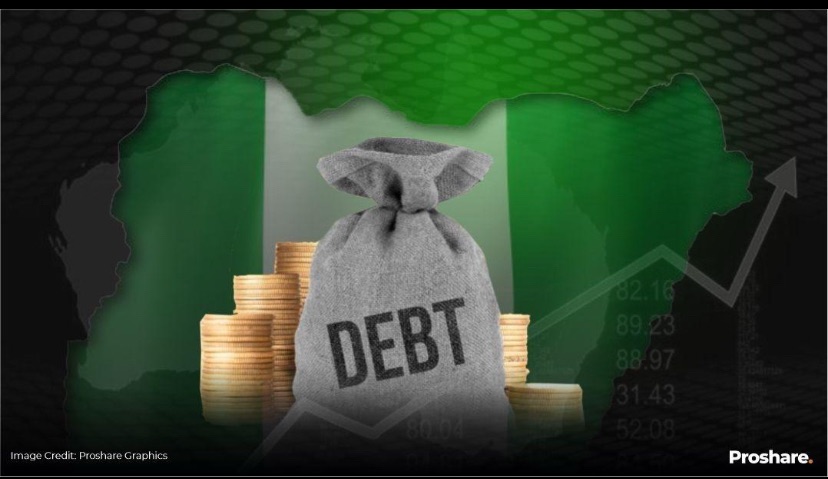

Nigeria’s debt burden has grown significantly over the past two decades, transforming the country from one that secured a major debt-relief deal in the mid-2000s into a country carrying a public debt stock of more than N159 trillion.
The latest official figures from the Debt Management Office (DMO) show that Nigeria’s total public debt stood at N159.28 trillion, or $110.97 billion, as of December 31, 2025. The figure covers both domestic and external obligations.
Of the total, domestic debt accounted for N84.85 trillion, while external debt stood at N74.43 trillion.
Nigeria’s current debt position is particularly notable because the country went through a major debt-relief programme just over two decades ago.
In 2005, Nigeria reached an agreement with the Paris Club of creditor nations that resulted in an $18 billion debt relief package. The deal was designed to reduce the country’s huge external debt burden after years of negotiations with its creditors.
The agreement was completed in 2006, when Nigeria made its final payment and cleared its Paris Club debt. At the time, the relief significantly reduced the country’s external obligations.
However, Nigeria gradually returned to international borrowing as successive governments sought funds for infrastructure, budget financing and other government expenditure.
By 2023, Nigeria’s total public debt had reached N87.38 trillion, according to the National Bureau of Statistics. This represented a sharp increase from the N49.85 trillion recorded in the first quarter of that year.
The debt figure continued rising. By June 2025, total public debt had reached about N152.39 trillion, before increasing to N153.29 trillion by September 2025.
By the end of December 2025, the figure had climbed further to N159.28 trillion.
The growing debt burden has also raised concerns about how much government revenue is being used to repay loans and service existing obligations instead of funding infrastructure and social programmes.
In July 2026, Nigeria’s Finance Minister said savings from fuel-subsidy removal and foreign-exchange reforms had largely been absorbed by higher debt-servicing costs and increased government spending.
For Nigeria, the challenge is therefore no longer simply how much it owes, but how effectively borrowed money is converted into economic growth.
Borrowing can support development when funds are invested in productive infrastructure, industries and projects capable of generating economic returns. However, persistent borrowing to finance recurrent expenditure can increase pressure on future government budgets.
Nigeria’s debt story has therefore moved through three major stages: heavy indebtedness before 2005, significant relief after the Paris Club agreement, and renewed borrowing that has pushed public debt to record levels.
With the country continuing to finance large budget deficits, managing the debt burden while maintaining investment in economic development will remain one of Nigeria’s biggest fiscal challenges.