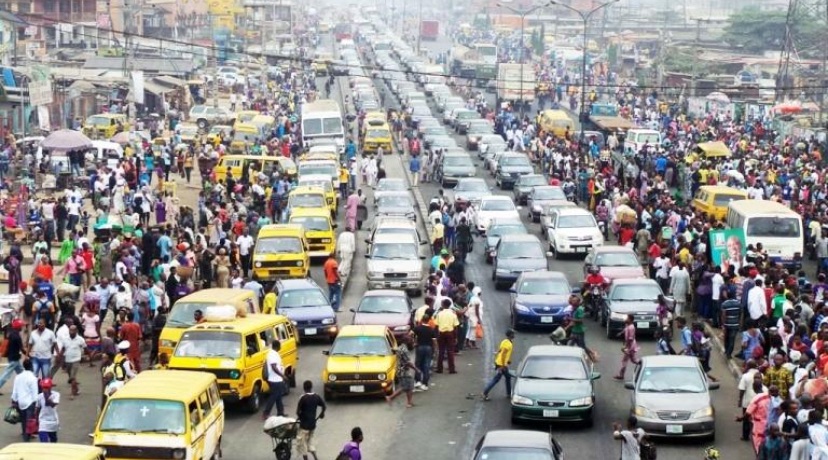

Lagos is widely regarded as Nigeria’s commercial powerhouse, but the city’s persistent traffic congestion is creating a costly problem for businesses and workers.
Every day, hours are lost on major roads as commuters, commercial vehicles, trucks and private cars struggle through overcrowded routes. The impact goes beyond frustration. For businesses, time spent in traffic can translate into higher fuel bills, delayed deliveries, increased vehicle maintenance costs and lost working hours.
Recent reports show just how serious the problem has become. Lagos ranked as Africa’s most congested city in a 2026 traffic ranking, with an average one-way commute of about 68 minutes.
For businesses that depend on moving people or goods around the city, the consequences can be significant.
A delivery company, for example, may plan to complete several deliveries in a day but find that traffic reduces the number of trips its drivers can make. The company then spends more on fuel and vehicle maintenance while completing fewer jobs.
Retailers and wholesalers face a similar challenge. When trucks and delivery vehicles spend hours on the road, products take longer to reach shops and customers. Businesses may eventually pass the additional logistics costs on to consumers through higher prices.
The problem is particularly visible around the Lagos ports. Recurring congestion on the Mile 2-Apapa corridor has disrupted the movement of containers and created additional difficulties for businesses that depend on imported goods. The Guardian reported in July that businesses and transport operators were warning that the congestion was affecting commercial activities and increasing transportation costs.
The economic cost extends beyond companies.
Workers who spend several hours commuting have less time available for productive activities. Some businesses have responded by adopting hybrid or remote-work arrangements as transport costs and commuting pressures increase.
Nigeria as a whole also bears the cost. Transport stakeholders estimated in June 2026 that the country loses about $4 billion annually because of transport inefficiencies, including congestion, weak integration between transport systems and fragmented logistics networks.
For small businesses, the pressure can be even greater because they often operate with thinner profit margins. A trader who spends more on transporting stock may have little choice but to increase prices, reduce the quantity purchased or absorb the additional expense.
Traffic also increases vehicle wear and tear. Vehicles that would normally complete a journey in a short period may remain on the road for hours, consuming more fuel and requiring more frequent repairs.
Recent gridlock on the Lagos-Ibadan Expressway illustrated how quickly transportation disruptions can affect consumers and businesses. During one major traffic episode, fares between Mowe and Berger reportedly rose from about N700–N800 to N1,500–N2,000.
As Lagos continues to grow, solving congestion is therefore not simply a matter of improving commuters’ comfort. It is increasingly a business and economic necessity.
Better roads, stronger public transportation, improved traffic management, efficient freight movement and coordinated urban planning could reduce the amount of money businesses lose simply because their workers, vehicles and goods cannot move efficiently.
For Lagos businesses, every hour trapped in traffic represents more than lost time—it can mean lost sales, higher costs and lower productivity.